To the Church in Sardis (Revelation 3:1-6)
3:1 “And to the angel of the church in Sardis write,
‘These things says He who has the seven Spirits of God and the seven stars: “I know your works, that you have a name that you are alive, but you are dead. 2 Be watchful, and strengthen the things which remain, that are ready to die, for I have not found your works perfect before God. 3 Remember therefore how you have received and heard; hold fast and repent. Therefore if you will not watch, I will come upon you as a thief, and you will not know what hour I will come upon you. 4 You have a few names even in Sardis who have not defiled their garments; and they shall walk with Me in white, for they are worthy. 5 He who overcomes shall be clothed in white garments, and I will not blot out his name from the Book of Life; but I will confess his name before My Father and before His angels.
6 “He who has an ear, let him hear what the Spirit says to the churches.” ’ (Revelation 3:1-6, NKJV)
Introduction
In the messages to the churches Jesus speaks words that are fitting for the situation faced by each fellowship. In each address the First and Last (Revelation 1:17) provides an assessment of the recipient church’s work as a lampstand (Revelation 1:20). Some churches are commended for the courage to let their light shine in the midst of growing hostilities toward Christ-following. Other churches are criticized for their cowardly conformity to the spiritual and sexual immorality of the people around them.
Each communication contains material that is specific to the church being addressed, but it also contains a general word to anyone reading the prophecy (Revelation 1:3). The general word is truth that transcends the particulars of Ephesus, Smyrna, Pergamos, Thyatira, Sardis, Philadelphia, or Laodicea. It is for anyone and everyone who desires to live effectively in the service of Jesus.
In this general word, the Spirit of Jesus turns from the announcement to the individual church and appeals to all who will hear. The formula that introduces this broader call to consider and apply what was said is: “He who has an ear, let him hear what the Spirit says to the churches” (Revelation 2:7, 11, 17, 29; 3:6, 13, 22). In Revelation 3:1–6, the reader of the larger work is taken to the fifth of the seven churches — the church in Sardis (Revelation 1:11; 3:1).
The message to the church in Sardis may be broadly characterized as containing a revelation of the quality of their work as a lampstand (Revelation 3:1), a resuscitation through an abrupt call (Revelation 3:2), requirements for remediating stated problems (Revelation 3:3), encouragement for a remnant of faithful followers (Revelation 3:4), an uplifting message about the record of the faithful and the eventual confession of Christ (Revelation 3:5), and the relevance of this message for a readership that is not from Sardis (Revelation 3:6).
The Revealing (Revelation 3:1)

Figure 1: Patmos and the Seven Churches. In a route that starts with Ephesus, the church at Sardis is the fifth of seven.
The reference to the sevenfold Spirit of God in Revelation 3:1 is not isolated. The same expression has already appeared in the opening of the prophecy, where grace and peace are said to come from “the seven Spirits who are before His throne” (Revelation 1:4). It appears again in the vision of the Lamb, who has “seven horns and seven eyes, which are the seven Spirits of God sent out into all the earth” (Revelation 5:6). The language is therefore not a new idea introduced in the message to Sardis, but a deliberate reminder of the fullness of the Spirit associated with the reign and work of Christ.
For readers familiar with the Old Testament, this points vigorously to Isaiah’s prophecy concerning the anointed Branch from the line of Jesse: “The Spirit of the LORD shall rest upon Him, the Spirit of wisdom and understanding, the Spirit of counsel and might, the Spirit of knowledge and of the fear of the LORD” (Isaiah 11:2). The sevenfold description in Isaiah is the basis for the mention of the Spirit in this symbolic fullness. This sevenfold Spirit is the Spirit of Christ. So then, the Christ who speaks to Sardis has power, perception, wisdom, counsel, and authority. He possesses the fullness of the Spirit of God seen in his earthly ministry (Luke 4:14-21; Acts 10:38). He is the King who sees all, understand all, and ultimately is in control of all.
Stars are luminaries in highly visible positions. In Scripture they can function figuratively as signs or representatives that point beyond themselves to Christ. E.g., at the birth of Christ, the magi saw “His star” in the East and came to worship Him (Matthew 2:2). Later, the same star went before them “till it came and stood over where the young Child was” (Matthew 2:9–10). In a similar witness-bearing role, John the Baptist is described not as the Light itself, but as one sent to bear witness to the Light, so that others might believe through him (John 1:6–8). Jesus later described John as “the burning and shining lamp,” adding that the people “were willing for a time to rejoice in his light” (John 5:35).
In Revelation, the “stars” are specifically identified as the angels or messengers of the churches (Revelation 1:16, 20). Therefore, when Christ introduces Himself to Sardis as the One who has the seven Spirits of God and the seven stars (Revelation 3:1), the image speaks of His authority over those appointed to serve as visible witnesses within the churches. These messengers are not the light themselves; their purpose is to point the church to Christ, the true Lord of the lampstands. Now the Lord of the lampstands is about to provide an assessment of their work as a lampstand.
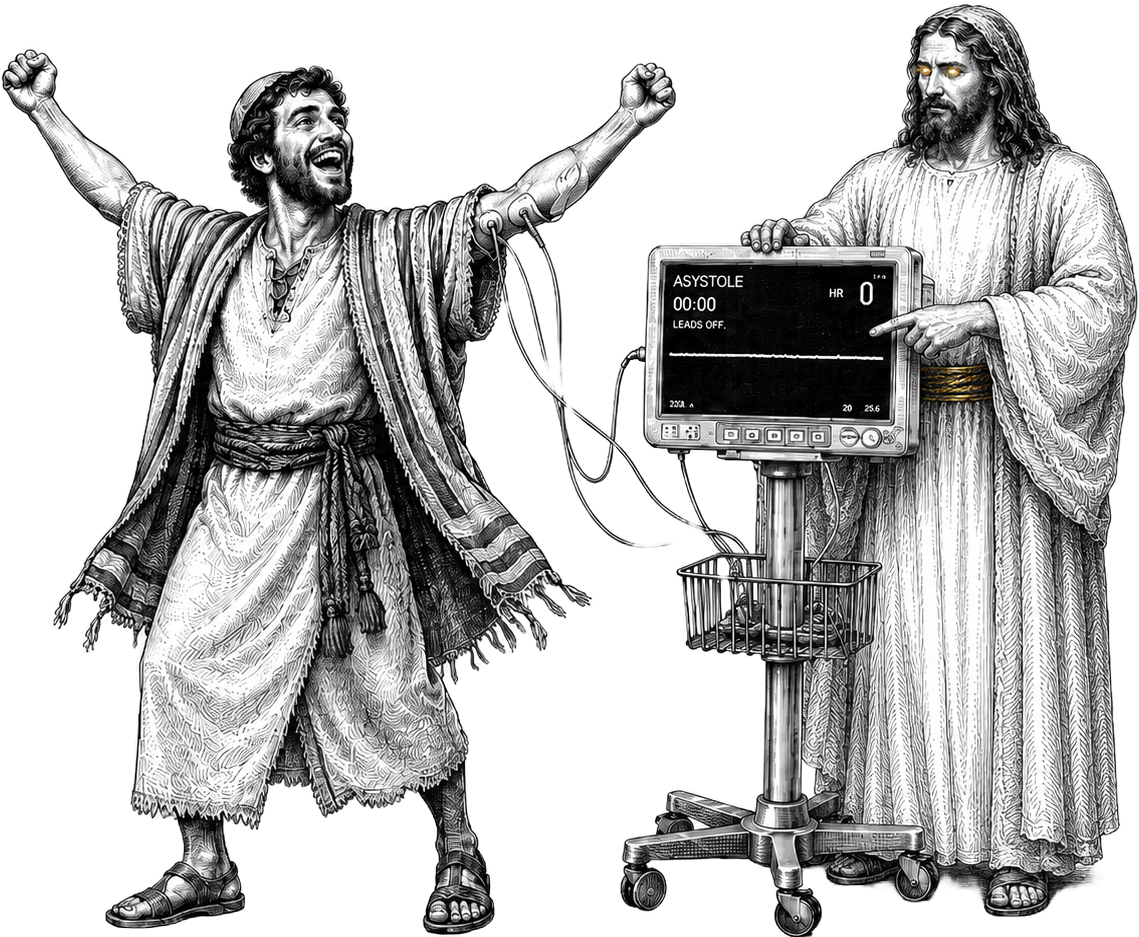
Figure 2: Although the church in Sardis looks healthy, Jesus says it is dead. They look festive but they have already flatlined.
The church in Sardis had a reputation or a name – you are alive. But the one who has eyes like a flame of fire (Daniel 10:6; Revelation 2:18) and who tests the minds and hearts sees things differently (Jeremiah 17:9-10; 1 Samuel 16:7). Jesus is not concerned with reputations; He sees the more substantial matter of the contemplations of the heart, resulting character, and outworking conduct. Jesus says that the truth is that you are dead (Revelation 3:1). This is a reveal that would have surprised the recipients and the surrounding churches. And yet, considering the history of Sardis, it is not a surprised that they are caught off guard. Leon Morris says,
The city’s easy wealth seems to have made for slackness. It was captured by Cyrus the Persian (549 BC) and by Antiochus (218 BC), both times because of its slackness. The city was built on a hill so steep that its defences seemed impregnable. On both occasions enemy troops scaled the precipice by night and found that the overconfident Sardians had set no guard. (Morris, 1987, Vol. 20, p. 78)
Sardis is situated high on a hilltop. This has repeatedly led to inaccurate feelings of security and a lack of watchfulness. There is no mention of persecution for this church. Why is that? Because they are not being persecuted. They have been assimilated; they are not witnesses and, although they have the trappings of a lively church, with regard to the matter of their witness, they are dead.
The Resuscitation (Revelation 3:2)
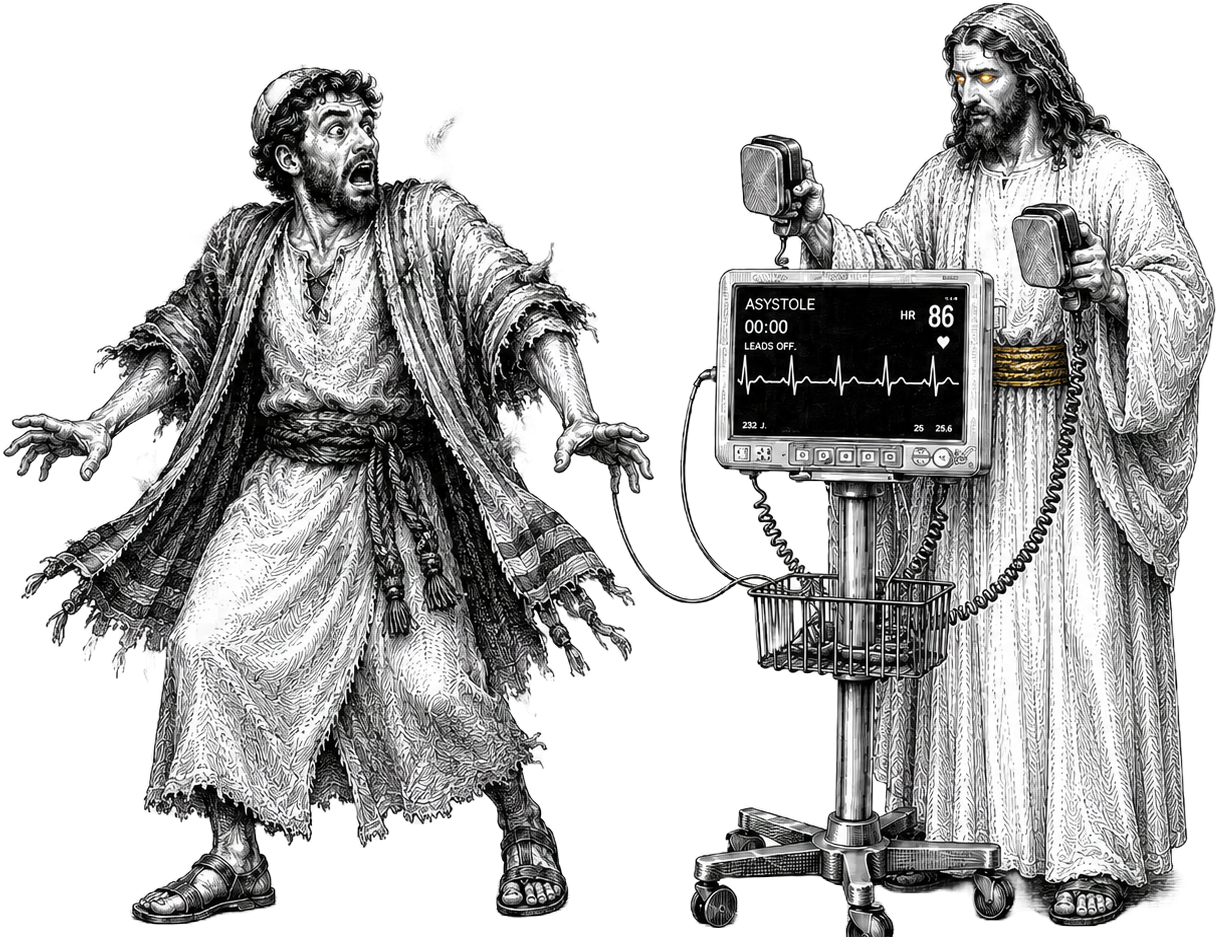
The word of God calls Sardis out of its dead slumber.
Jesus resuscitates the church. His word is enough to bring about a good stirring in the people in the Sardis fellowship who needed the jolt. Wake up, church at Sardis! (cf. Romans 13:11; 1 Corinthians 16:13) The Be watchful is a present active participle; since particles are commentary on verbs we should view this as saying be watchful in an ongoing fashion for another activity. This must have felt to some like the paddles they use to get a heart restarted on someone who thought they were alive. It would have arrived to their ears with a “peculiar force to the church in a city which had twice been captured owing to its failure to watch. Lack of spiritual vigilance may likewise be costly (Morris, 1987, Vol. 20, p. 78-79). But what is the spiritual activity to which being watchful is attached?
Their fellowship is not fully necrotic; there remains some things in the church need to be strengthened. Jesus says to strengthen the things which remain, that are ready to die. The verb translated strengthen (στήρισον) has the idea of causing something to be firmly established, to be built up, and to be confirmed (Lk 22:32; Ac 18:23; Ro 16:25). The things that needed to be strengthened are not called out; evidently, for a watchful person it would be obvious. Be watchful, church at Sardis, as you build up, as you bolster, and as you establish what is left of the good works left uncompleted. But Jesus will not leave it there. In case they still do not know what to do, He takes it a step further.
The Requirements: Remember and Repent (Revelation 3:3)
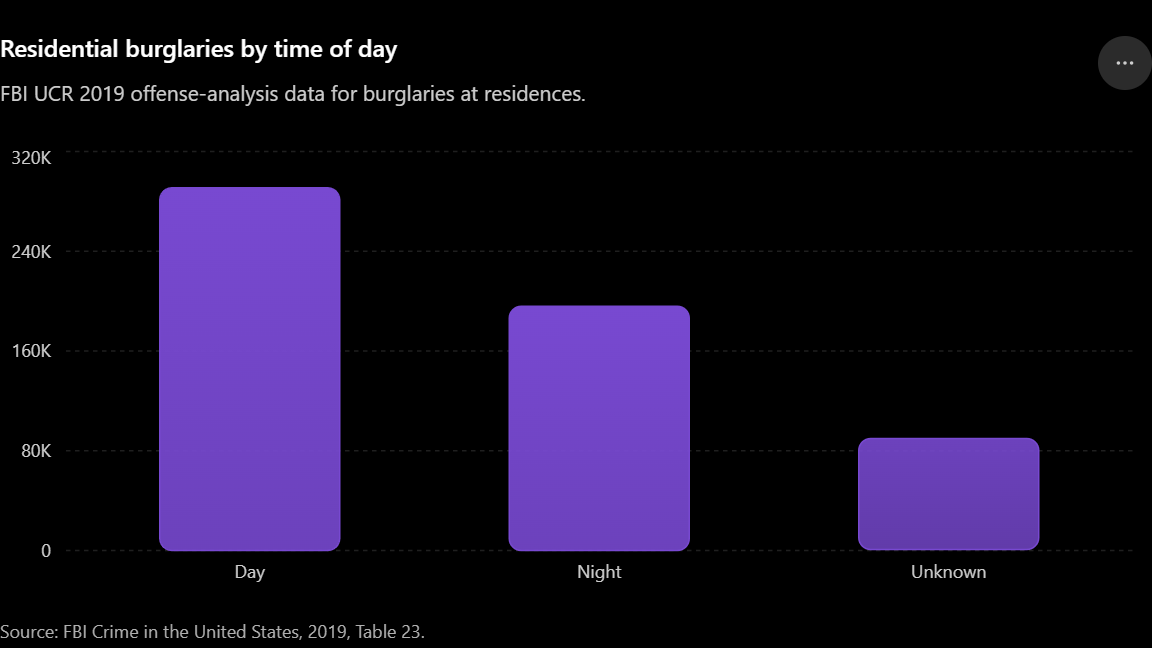
In the FBI’s 2019 offense-analysis table, residential daytime burglaries outnumbered residential nighttime burglaries: 290,909 during the day versus 195,884 at night, with 89,814 classified as unknown.
Go back to the basics, church. Remember or recall the manner in which you received the gospel. Someone shared it with you. You are believers today because believers declared to you the word of truth or gospel of your salvation (Ephesians 1:13). Remember how you heard or kept that word; you were obedient to that word and began to both be a light and to change your ways. Stay with that! Keep receiving the gospel and keep changing your ways. You have wandered away. Wander back! Repent! Morris puts it this way: “Obey (better ‘keep’, as RSV) is present imperative and enjoins a continuing activity, while repent (aorist) is urgent.” (Morris, 1987, Vol. 20, p. 79)
If the church does not watch or look out for places where it is becoming less than what Christ wants, the same Christ will come to it like a thief. This, for their time and culture, is a proverbial expression for unexpected visitation (Matt. 24:43; 1 Thess. 5:2; 2 Pet. 3:10). In case they were not getting it, Jesus goes on to say that He will not let them know when that visit will take place; he is coming like a thief and thieves don’t do not try to work with you to find a time that suites your calendar.
| Pattern | What the Data Suggests | Summary |
|---|---|---|
| Daytime is common | FBI data shows more residential burglaries during the day than at night in the cited U.S. table. (Federal Bureau of Investigation) | “A thief does not always come in the dark; he comes when vigilance is low.” |
| Nighttime still matters | Nighttime residential burglaries are still substantial, even though fewer than daytime incidents in the FBI table. (Federal Bureau of Investigation) | “The issue is not the clock; it is the surprise.” |
| Weekdays are significant | A U.K. College of Policing summary, drawing from ONS data, reports about 70% of domestic burglaries on weekdays and 30% on weekends; it also reports 40% from 6 a.m.–6 p.m. and 60% from 6 p.m.–6 a.m. (College of Policing) | “Thieves study routines. Judgment catches the careless in their routine.” |
| Precise timing is hard to know | Temporal crime research notes that residential burglary timing is often difficult to estimate precisely because victims may only know a time window, not the exact hour. (MDPI) | “The victim often does not know the hour — which is exactly Jesus’ point.” |
| Day and night risks differ | Criminological research distinguishes daytime and nighttime burglary patterns and argues that prevention frameworks differ by time period. (Twente Research Info) | “The thief adapts to the condition of the house.” |
This unexpected visit is not a reference to the second coming. How do we know that? The second coming will take place whether the Sardians are watchful or not; it is not conditional. So what is this visit? Christ comes in many ways and this is clearly a limited coming in judgment on unrepentant sinners. (Morris, 1987, Vol. 20, p. 79)
The Remnant (Revelation 3:4)
Beale’s statement accords with the idea of not being ashamed of Christ and the fact that he will not be ashamed of them (Revelation 3:5).
As already mentioned in regard to the letters to Pergamum and Thyatira, these Christians were probably succumbing to the temptation not only of maintaining a low profile as Christians in such contexts, but also of paying token acknowledgment to the pagan gods (whether to Caesar or the patron gods of the guilds). As also in the other churches, the motive for this was probably fear of persecution, especially economic ostracism. (Beale, 1999, p. 276)
The likeness of the noncompromisers to Jesus is intensified, since, as with him, their worthiness is not only a prior state but is included in the resulting condition of their overcoming. The worthiness of Jesus in 5:9 is a result of his overcoming (νικάω, 5:5). The same connection may be implicit in 3:4b–5a, where “they are worthy” (ἄξιοί εἰσιν) is directly followed by “the one who overcomes” (ὁ νικῶν). The acknowledgment of the saints’ worthiness anticipates the allusion to Matt. 10:32 at the end of 3:5. In that Synoptic context “worthy” (ἄξιος) is repeated three times to indicate the final reward for those who remain faithful to acknowledging Jesus despite persecution (see Matt. 10:33–39, and cf. “reward” in 10:41–42). Likewise, the main qualification for consummate worthiness here is a faith that testifies openly to Jesus. (Beale, 1999, p. 277)
That v 4b concerns a reward because of perseverance through suffering is further evident from 7:14, which refers to “the ones coming out of the great tribulation” and to those who “have washed their robes” (ἔπλυναν τὰς στολὰς αὐτῶν) and “made them white in the blood of the lamb” (ἐλεύκαναν αὐτὰς ἐν τῷ αἵματι τοῦ ἀρνίου). The parallel with 7:14 is confirmed further by περιπατήσουσιν μετʼ ἐμοῦ ἐν λευκοῖς … περιβαλεῖται ἐν ἱματίοις λευκοῖς in 3:4b–5a (“they will walk with me in white … he will be clothed in white robes”), wording that is developed in 7:9, 13, which both read περιβεβλημένους στολὰς λευκάς (“having been clothed in white robes”; cf. 3:18a). (Beale, 1999, p. 277)
Like the churches at Pergamum and Thyatira this one has a mixed membership. But in those the faulty members are a minority. At Sardis they predominate. Only ‘a few people’ have not ‘soiled their clothes’. (Morris, 1987, Vol. 20, p. 78)
The Record (Revelation 3:5)
The statement that their names will not be erased from the book of life presents a problem to some. But a person who is truly born again remains regenerate, as John said elsewhere (John 5:24; 6:35–37, 39; 10:28–29). While this passage may imply that a name could be erased from the book of life, actually it only gives a positive affirmation that their names will not be erased (cf. Walvoord, Revelation. pp. 82, 338). This is one of the most debated verses in Revelation because it sits at the intersection of two biblical themes:
- The certainty of God’s saving work (e.g., John 10:27–29; Romans 8:29–39; Philippians 1:6).
- The necessity of perseverance (e.g., Matthew 24:13; Hebrews 3:14; Revelation 2–3).
The question is whether Revelation 3:5 teaches that a genuinely saved person can lose salvation or whether Christ is making a positive promise of assurance.
After weighing the grammar, the context of Revelation, and the theology of the New Testament, I believe Revelation 3:5 is best understood as a promise of assurance rather than a warning that true believers can lose salvation. It is a promise to the overcomer, not a description of someone whose salvation has been revoked. The emphasis of the verse is positive, not negativ. The verse reads:
“He who overcomes… I will never blot out his name from the Book of Life…”
The Greek is especially emphatic:
οὐ μὴ ἐξαλείψω (ou mē exaleipsō)
The construction οὐ μή is one of the strongest ways Greek expresses denial. It could legitimately be translated:
“I will certainly never erase his name.”
Notice what Jesus does not say. He does not say:
“Some names will be erased.”
Instead He says:
“The conqueror’s name will never be erased.”
That is the emphasis. Further, the promise parallels the other promises in verse 5.
| Promise | Meaning |
|---|---|
| White garments | Acceptance and purity |
| Never blot out the name | Security |
| Confess the believer before the Father | Public acknowledgment |
Each is positive. It would be unusual if the middle promise suddenly became a veiled threat while the other two are straightforward assurances. The context of Sardis supports assurance. The church at Sardis had three standout characteristics: (1) a reputation for life, (2) but was spiritually dead, and (3) a faithful remnant (Rev. 3:4). Jesus distinguishes between:
- those merely appearing alive
- those who genuinely overcome
The overcomers are not earning salvation. Throughout Revelation, overcoming characterizes genuine believers (cf. 1 John 5:4–5).
Revelation itself explains who is in the Book of Life
- Revelation 13:8 – Those whose names are written in the Book of Life do not worship the Beast.
- Revelation 17:8 – Those whose names were written from the foundation of the world do not follow the Beast.
Notice the direction of logic. John does not say: They persevered, therefore their names stayed. Instead: Their names were written, therefore they persevered. This is a very important theological observation.
Consider with me for a moment the ancient civic atmosphere; it helps explain the promise. Most commentators point out that Sardis maintained citizen registers. When someone died—or occasionally lost citizenship—their name could be removed from the city’s roll. Jesus appears to use that familiar civic image. The point becomes:
“Earthly cities may erase your name. I never will.”
That fits beautifully with the church’s situation.
But you will say, “What about Moses asking to be blotted out?” In fact, you will answer me saying, “Several Old Testament passages mention blotting out.” This is true. Let us consider them:
| Passage | What it clearly proves | What it does not clearly prove |
|---|---|---|
| Exodus 32:32–33 | God has a “book”; blotting out is judgment against sinners after covenant rebellion. | That Moses believed a regenerate person could lose eternal salvation. |
| Psalm 69:28 | “Book of the living” language is tied to the righteous and the wicked. | That David is teaching a doctrine of losing salvation. |
These Old Testament texts provide the imagery of erasure from God’s book; they do not, by themselves, prove that Revelation 3:5 teaches the loss of eternal salvation. Also, it must not be overlooked that they were given under a different covenant – not of grace but of law. Revelation 3:5 must be read in its own context (eschatological) and covenant (grace); seen in this setting, Christ gives the overcomer a promise of security: “I will not blot out his name from the Book of Life.”
Those who believe salvation may be forfeited argue:
- Jesus would not mention blotting out unless it were possible.
- Warnings throughout Hebrews and Revelation are genuine.
- “He who overcomes” implies that some believers fail to overcome.
This is a respectable interpretation and has been defended by Arminian scholars such as Grant R. Osborne and Robert H. Mounce. Both men generally understand Revelation’s warnings as real conditions for final salvation. However, even these scholars recognize that Revelation’s emphasis is perseverance rather than speculation about losing salvation.
Several observations, for me, tip the scales in favor of assurance.
| Reason | Explanation |
| The Grammar | The verse is framed as an emphatic promise. It does not say, “I may erase.” Rather, it says, “I certainly never will.” |
| Revelation’s Doctrine of Election | Revelation 13:8 and 17:8 describe those written in the Book of Life as preserved from apostasy. That makes the Book of Life the explanation for perseverance—not the reward for it. |
| Jesus’ Gospel Language | Jesus repeatedly promises security (John 6:37–40; 10:27–29). No one can snatch Christ’s sheep from His hand. Revelation 3:5 harmonizes naturally with those promises. |
| The Literary Purpose | Every promise to the seven churches is designed to encourage faithful believers. The emphasis is:
“Remain faithful because Christ keeps His own.” rather than “Remain faithful or I might erase you.” |
There is also an important pastoral distinction. The New Testament consistently teaches (1) professing believers may fall away and (2) true believers persevere because God preserves them. From the human perspective, we are called to overcome. From God’s perspective, those written in the Book of Life do overcome. Those two truths are held together throughout the New Testament.
The phrase “I will never blot out his name” is best read as an emphatic promise of eternal security to genuine believers rather than evidence that salvation may be lost. The grammar is strongly affirmative, the immediate context emphasizes encouragement, and Revelation later teaches that those whose names are written in the Book of Life are preserved from ultimate apostasy. This reading also fits comfortably with Christ’s promises in John 10 and the broader New Testament doctrine of God’s preserving grace. Nevertheless, the verse still functions as a serious call to perseverance, because the New Testament never separates God’s preserving work from the believer’s continuing faith. Christ does not say, “I might blot out your name.” He says, “I will confess your name.” The final chord struck in this message to the needy church of Sardis is one of hope and encouragement not a veiled threat.
The Relevance (Revelation 3:6) – Seven Takeaways Toward Better Fellowship with Jesus
| Takeaway | Personal question | Practice for the week |
|---|---|---|
| 1. Refuse to live on reputation. | “Am I known as alive, but spiritually coasting?” | Ask God to show you where your public image is stronger than your private obedience. |
| 2. Wake up spiritually. | “Where have I become careless, dull, or sleepy toward the Lord?” | Begin each morning with this prayer: “Lord, make me watchful today.” |
| 3. Strengthen what remains. | “What is still alive in me that needs attention before it dies?” | Identify one neglected spiritual practice — prayer, Scripture, worship, service, confession — and rebuild it. |
| 4. Remember how you received the gospel. | “Have I drifted from the simplicity and seriousness of what I first received?” | Spend time rehearsing the gospel: what Christ saved you from, what He saved you for, and what He is calling you to now. |
| 5. Hold fast, not loosely. | “What truth have I begun treating as optional?” | Choose one command of Christ you already know and deliberately obey it this week. |
| 6. Repent urgently. | “What has God already confronted that I keep delaying?” | Name the sin plainly before God and take one concrete step away from it today. Not vague regret — actual turning. |
| 7. Don’t be harmless because you are spiritually dead. | “Would the world even notice if I stopped following Jesus?” | Look for one visible way to identify with Christ this week — in speech, ethics, generosity, witness, or refusal to compromise. |
| 8. Refuse low-profile Christianity when faithfulness is required. | “Am I hiding my allegiance to Jesus to avoid discomfort or cost?” | In one setting where you tend to stay silent, speak or act in a way that makes loyalty to Christ clear. |
| 9. Keep your garments clean. | “What am I allowing to soil my walk with Christ?” | Review entertainment, relationships, business habits, online conduct, and speech. Remove one defiling influence. |
| 10. Find encouragement in the remnant. | “Who else is trying to walk faithfully?” | Connect with one faithful believer for prayer, encouragement, or accountability. Sardis had “a few”; find your few. |
| 11. Live before God, not applause. | “Are my works complete before people but unfinished before God?” | Do one hidden act of obedience this week that no one else needs to see. |
| 12. Let Christ’s warning sober you, not crush you. | “Where is Jesus mercifully warning me before judgment comes?” | Treat conviction as grace. Write down what the Spirit is pressing on you, then respond before the feeling fades. |
| 13. Walk toward the promise, not merely away from sin. | “Do I see holiness only as restriction, or as walking with Christ?” | Meditate on the promise: “They shall walk with Me in white.” Let the goal be fellowship with Jesus, not merely moral cleanup. |
| 14. Remember that Jesus knows the truth. | “What does Jesus know about me that my reputation hides?” | Pray Psalm 139:23–24 and invite the Lord to search the difference between appearance and actual. |
| 15. Leave listening, not merely having heard. | “Did I hear what the Spirit says, or only attend another service?” | Before leaving the gathering, write one sentence: “Because of Revelation 3:1–6, I will ______ this week.” |
References
Beale, G. K. (1999). The book of Revelation: a commentary on the Greek text (p. 260). W.B. Eerdmans; Paternoster Press.
Boldt, M., Borg, A., Svensson, M., & Lavesson, N. (2016). Evaluating temporal analysis methods using residential burglary data. ISPRS International Journal of Geo-Information, 5(9), 148.
College of Policing. (2022). The nature of neighbourhood crime.
Federal Bureau of Investigation. (2020). Crime in the United States, 2019: Burglary. U.S. Department of Justice.
Federal Bureau of Investigation. (2020). Crime in the United States, 2019: Table 23—Offense analysis, number and percent change, 2018–2019. U.S. Department of Justice.
Montoya, L., Junger, M., & Ongena, Y. (2016). The relation between residential property and its surroundings and day- and night-time residential burglary. Environment and Behavior, 48(4), 515–549.
Morris, L. (1987). Revelation: an introduction and commentary. InterVarsity Press.
Walvoord, J. F. (1985). Revelation. In J. F. Walvoord & R. B. Zuck (Eds.), The Bible Knowledge Commentary: An Exposition of the Scriptures. Victor Books.