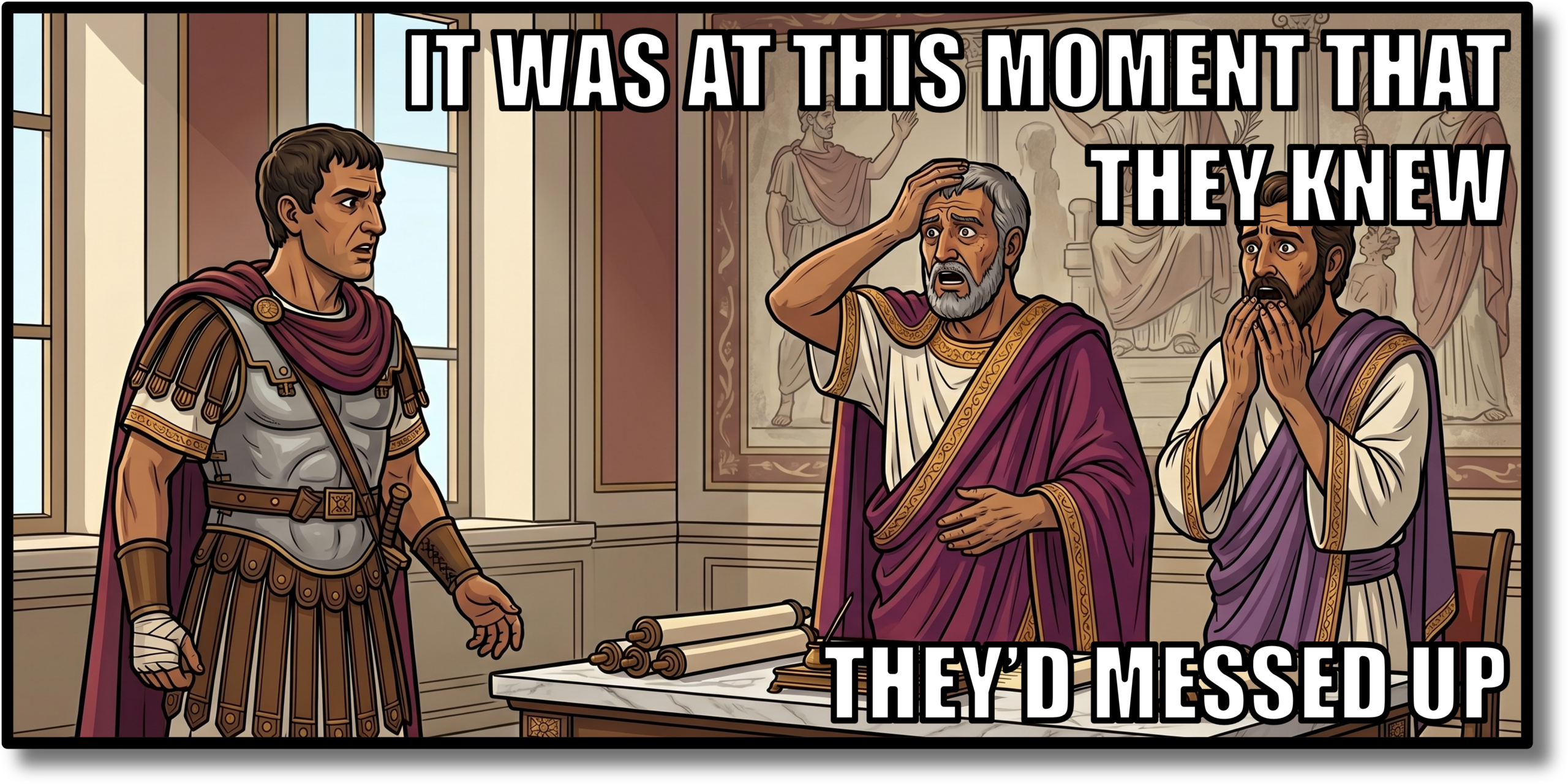
It was in that moment that they knew…
38 And the officers told these words to the magistrates, and they were afraid when they heard that they were Romans. 39 Then they came and pleaded with them and brought them out, and asked them to depart from the city. The magistrates were likely not expecting much of a report. Perhaps, having taught the Jews a lesson, they were primarily concerned with matters of the day in Philippi. But the officers did have a report: They have beaten us openly, uncondemned Romans, and have thrown us into prison. And now do they put us out secretly? No indeed! Let them come themselves and get us out. (Acts 16:38-39)
The officers told these words to the magistrates. It was not what they thought they would hear and they were taken by fear. Their fear was the kind that has the dreadful expectation that something bad could happen. What caused their reaction? It was hearing that they were Romans. It was in that moment that they knew… they’d messed up. Instead of rushing to get out of jail the prisoners remained in their cells and filed charges against the magistrates.
The situation was ironic. Paul and Silas had been treated as criminals but were innocent. The magistrates who condemned them now found themselves genuine lawbreakers. (Polhill, 1992, p. 357)
There had been no inquiry and no trial. But there had been shaming in public, shutting away in prison, and shackles to cause pain. For the Jesus follower there are a few things to be observed about why Paul did not just go. He was not arrogant or lacking in meekness; it was not about him. “Injustice anywhere is a threat to justice everywhere.” Paul knew that if he had just left the prison and city he would have missed an opportunity to be in conflict on purpose for the good of others. The apostle to the Gentiles was concerned for others:
- Concern for the Community – The magistrates had pandered to the crowd, played along with mob violence, and persecuted men for being Jews. If Paul leaves quietly he will endorse this treatment of his Jewish brethren. He cannot.
- Concern for those Coming After – Preaching the gospel was said to be unlawful. In fact it was not. If Paul had left he would be approving the decision to prohibit preaching Christ. He cannot.
- Concern for the New Christ Followers – New believers like Lydia will still be in the city after Paul leaves. Just as there was angst and injustice against him, there will also be animosity toward the new church. If Paul does not stand up for what is right he will be a partaker and passive promoter of the violence against the new fellowship of Jesus followers. He cannot.
We should avoid conflict when we can. And in some cases we should even allow ourselves to be wronged (1 Corinthians 6:7; Matthew 5:39–40). But there are times when we are called to courageously confront injustice and be in conflict. Our anointing enables us to do for others what is needed in such moment. When it happens our decision to be in conflict will be because we see the broader picture and realize it is not about ourselves. Like Christ, our willingness or eagerness to be in conflict will be rooted in our care and concern for others.
In His grip by His grace,
Roderick L. Barnes, Sr.