Spirit-Filled People
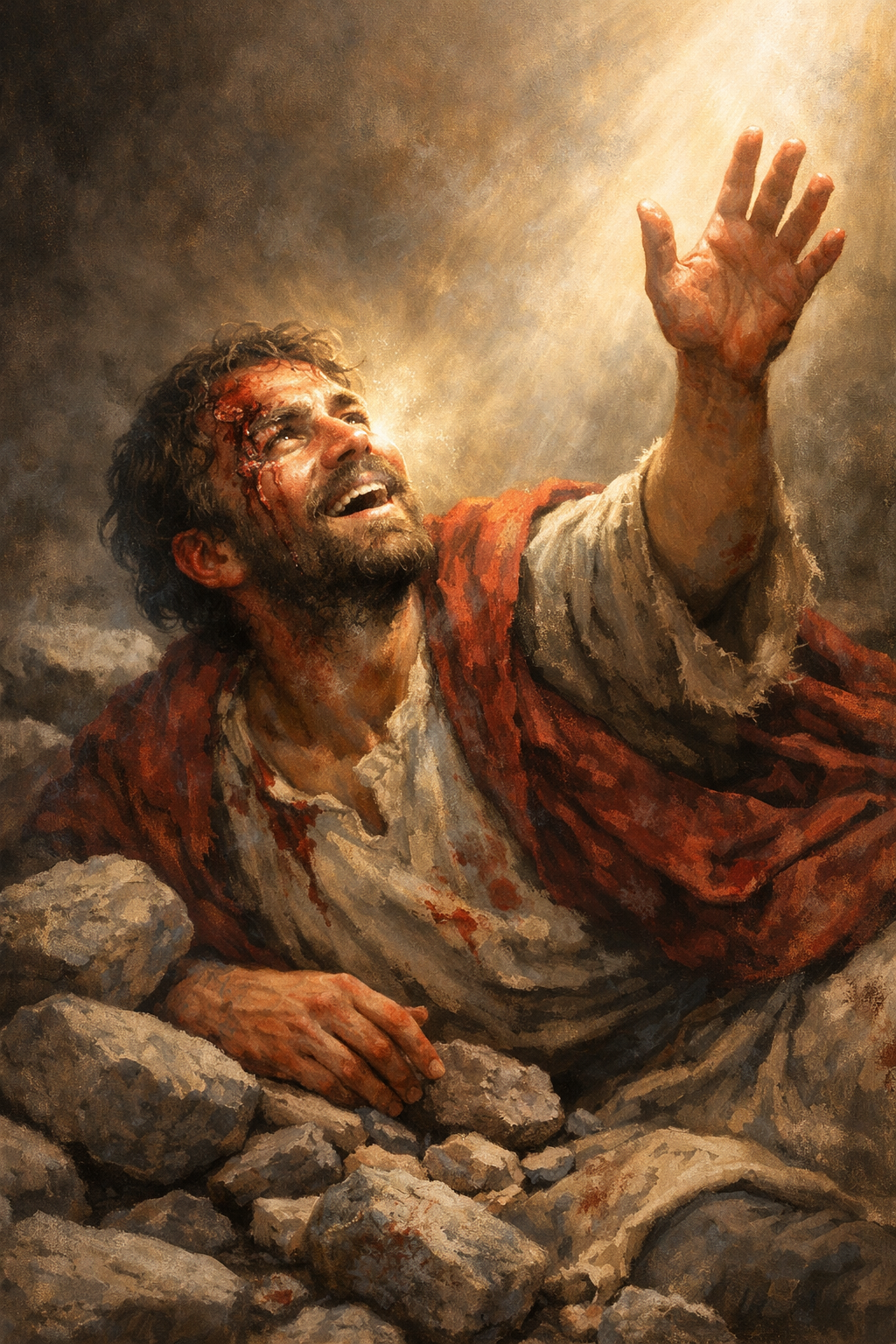
54 When they heard these things they were cut to the heart, and they gnashed at him with their teeth. 55 But he, being full of the Holy Spirit, gazed into heaven and saw the glory of God, and Jesus standing at the right hand of God, 56 and said, “Look! I see the heavens opened and the Son of Man standing at the right hand of God!”
57 Then they cried out with a loud voice, stopped their ears, and ran at him with one accord; 58 and they cast him out of the city and stoned him. And the witnesses laid down their clothes at the feet of a young man named Saul. 59 And they stoned Stephen as he was calling on God and saying, “Lord Jesus, receive my spirit.” 60 Then he knelt down and cried out with a loud voice, “Lord, do not charge them with this sin.” And when he had said this, he fell asleep. (Acts 7:55-60 See also Zechariah 4:6)
God is pleased to accomplish His work in this world through men and women who are yielded to Him. Again and again in Scripture, when the Lord purposes to build, guide, strengthen, confront, comfort, or advance His saving mission. He does so by filling surrendered vessels with His Spirit. Zechariah 4:6 over a list like this one below giving it summary: “Not by might nor by power, but by My Spirit,” says the Lord of hosts. The names below remind us that the progress of God’s kingdom does not rest finally on natural talent, human energy, or earthly strength. The Spirit of God, working through those who are willing to be used by Him, is the means by which His ministry moves.
On this list, Stephen shines as one of the clearest examples of what Spirit-filled surrender looks like. He was full of faith, full of power, and full of the Holy Spirit in life. When the hour of his death came, he remained full of the Holy Spirit still. Even as he was opposed, falsely accused, and finally killed, Stephen stood as a surrendered vessel through whom Christ was put on display. In him we see that to be filled with the Spirit is not merely to be useful in moments of visible ministry, but to belong so wholly to God that one may bear witness to Christ faithfully even unto death. Stephen, therefore, does not merely appear on this list; he epitomizes the very meaning of being surrendered and used by the Spirit of God.
- Bezalel was filled for craftsmanship, tabernacle work, and teaching (Exodus 31:2–5; 35:31-34)
- Seventy elders of Israel were filled and enabled to help bear leadership (Numbers 11:16–17, 25)
- Joshua was full of the spirit of wisdom for leadership (Deuteronomy 34:9)
- Othniel was a man upon whom the Spirit for judgment and deliverance for oppressed people (Judges 3:9–10)
- Gideon was also a judge; the Spirit clothed him for leadership in battle (Judges 6:34)
- Jephthah was a judge; the Spirit came upon him for conflict and deliverance (Judges 11:29)
- Samson was empowered by the Spirit to help God’s oppressed people (Judges 14:6, 19; 15:14)
- Saul was anointed by the Spirit and for a while served with extraordinary good character and courage (1 Samuel 10:6, 10)
- David was anointed and used by the Spirit to lead God’s people as Israel’s second king (1 Samuel 16:13)
- Micah was full of power by the Spirit to confront sin (Micah 3:8)
- John the Baptist was filled with the Holy Spirit from the womb (Luke 1:15)
- Elizabeth was filled with the Holy Spirit and spoke blessing (Luke 1:41–45)
- Zechariah was filled with the Holy Spirit and prophesied (Luke 1:67–79)
- Jesus was filled with the Holy Spirit and ministered in the Spirit’s power (Luke 4:1, 14, 18)
- The believers at Pentecost were all filled and spoke as the Spirit gave utterance (Acts 2:4)
- Peter was filled with the Holy Spirit for bold witness (Acts 4:8–12)
- The gathered church was filled and spoke the word boldly (Acts 4:31)
- Stephen was full of the Holy Spirit, did wonders, and remained full of the Spirit at his death (Acts 6:5, 8; 7:55–60)
- Barnabas was full of the Holy Spirit and faith, with fruitful ministry (Acts 11:24)
- Paul was filled with the Holy Spirit in powerful confrontation and ministry (Acts 9:17; 13:9–11)
