Tag Holy Spirit

Spirit-Filled People

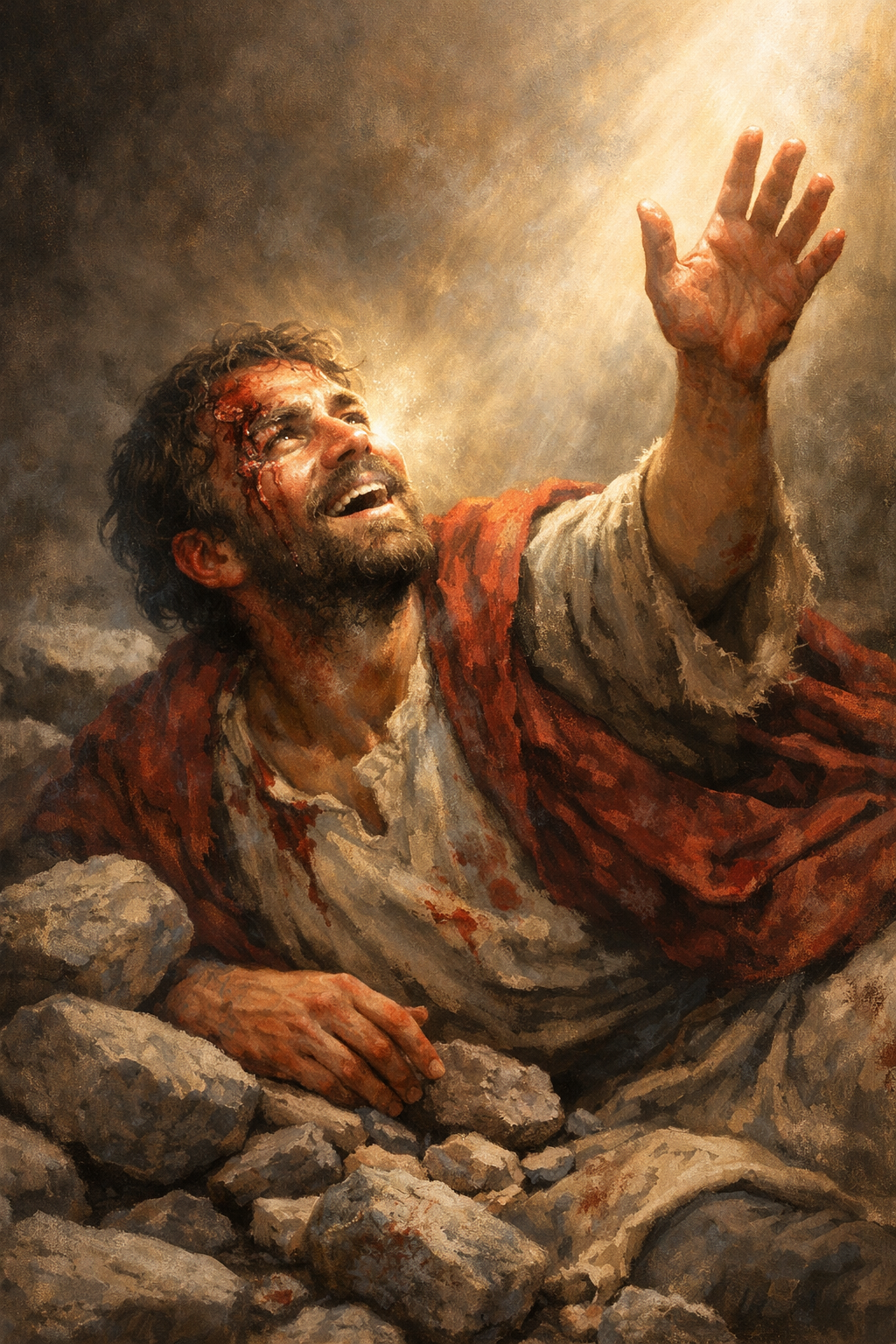
54 When they heard these things they were cut to the heart, and they gnashed at him with their teeth. 55 But he, being full of the Holy Spirit, gazed into heaven and saw the glory of God, and Jesus standing at the right hand of God, 56 and said, “Look! I see the heavens opened and the Son of Man standing at the right hand of God!”
57 Then they cried out with a loud voice, stopped their ears, and ran at him with one accord; 58 and they cast him out of the city and stoned him. And the witnesses laid down their clothes at the feet of a young man named Saul. 59 And they stoned Stephen as he was calling on God and saying, “Lord Jesus, receive my spirit.” 60 Then he knelt down and cried out with a loud voice, “Lord, do not charge them with this sin.” And when he had said this, he fell asleep. (Acts 7:55-60 See also Zechariah 4:6)

God is pleased to accomplish His work in this world through men and women who are yielded to Him. Again and again in Scripture, when the Lord purposes to build, guide, strengthen, confront, comfort, or advance His saving mission. He does so by filling surrendered vessels with His Spirit. Zechariah 4:6 over a list like this one below giving it summary: “Not by might nor by power, but by My Spirit,” says the Lord of hosts. The names below remind us that the progress of God’s kingdom does not rest finally on natural talent, human energy, or earthly strength. The Spirit of God, working through those who are willing to be used by Him, is the means by which His ministry moves.

On this list, Stephen shines as one of the clearest examples of what Spirit-filled surrender looks like. He was full of faith, full of power, and full of the Holy Spirit in life. When the hour of his death came, he remained full of the Holy Spirit still. Even as he was opposed, falsely accused, and finally killed, Stephen stood as a surrendered vessel through whom Christ was put on display. In him we see that to be filled with the Spirit is not merely to be useful in moments of visible ministry, but to belong so wholly to God that one may bear witness to Christ faithfully even unto death. Stephen, therefore, does not merely appear on this list; he epitomizes the very meaning of being surrendered and used by the Spirit of God.

  • Bezalel was filled for craftsmanship, tabernacle work, and teaching (Exodus 31:2–5; 35:31-34)
  • Seventy elders of Israel were filled and enabled to help bear leadership (Numbers 11:16–17, 25)
  • Joshua was full of the spirit of wisdom for leadership (Deuteronomy 34:9)
  • Othniel was a man upon whom the Spirit for judgment and deliverance for oppressed people (Judges 3:9–10)
  • Gideon was also a judge; the Spirit clothed him for leadership in battle (Judges 6:34)
  • Jephthah was a judge; the Spirit came upon him for conflict and deliverance (Judges 11:29)
  • Samson was empowered by the Spirit to help God’s oppressed people (Judges 14:6, 19; 15:14)
  • Saul was anointed by the Spirit and for a while served with extraordinary good character and courage (1 Samuel 10:6, 10)
  • David was anointed and used by the Spirit to lead God’s people as Israel’s second king (1 Samuel 16:13)
  • Micah was full of power by the Spirit to confront sin (Micah 3:8)
  • John the Baptist was filled with the Holy Spirit from the womb (Luke 1:15)
  • Elizabeth was filled with the Holy Spirit and spoke blessing (Luke 1:41–45)
  • Zechariah was filled with the Holy Spirit and prophesied (Luke 1:67–79)
  • Jesus was filled with the Holy Spirit and ministered in the Spirit’s power (Luke 4:1, 14, 18)
  • The believers at Pentecost were all filled and spoke as the Spirit gave utterance (Acts 2:4)
  • Peter was filled with the Holy Spirit for bold witness (Acts 4:8–12)
  • The gathered church was filled and spoke the word boldly (Acts 4:31)
  • Stephen was full of the Holy Spirit, did wonders, and remained full of the Spirit at his death (Acts 6:5, 8; 7:55–60)
  • Barnabas was full of the Holy Spirit and faith, with fruitful ministry (Acts 11:24)
  • Paul was filled with the Holy Spirit in powerful confrontation and ministry (Acts 9:17; 13:9–11)

Criticizing Other Ministers and Their Ministries

12:22 Then one was brought to Him who was demon-possessed, blind and mute; and He healed him, so that the blind and mute man both spoke and saw. 23 And all the multitudes were amazed and said, “Could this be the Son of David?” 24 Now when the Pharisees heard it they said, “This fellow does not cast out demons except by Beelzebub, the ruler of the demons.” (Matthew 12:22-24)

Jesus did a great work in the life of a man who had been blind, unable to speak (mute), and demon-possessed. The rabbi from Nazareth healed the man thoroughly. When He was done the same man had the ability to see, to speak, and live free from the controlling presence of evil spirits. People familiar with the man were amazed (ἐξέστησαν – verb, imperfect, middle, indicative, third person, plural). The word translated amazed, where it is used in other places, carries the connotation of the person or persons being astonished and moved to ask questions. Here below are some examples:

    • Forgive Sins? (Mark 2:12) – In response to hearing Jesus claim to forgive sins (Mark 2:5-6) and then support that claim by healing a paralytic (Mark 2:8-10), the surrounding scribes and crowd declared that this was unprecedented. They were struggling to handle the assertion that the Son of Man had power on earth to forgive sin; but they could not deny the supporting proof. Their amazement was a mix of astonishment and wonder about who this Man is and what is possible. The work of the Spirit through Jesus left them asking questions and scratching their heads.
    • Are These Not Galileans? (Acts 2:7) – Galileans speak with a very distinctive accent (Matthew 26:73). That accent was still present when speaking in another language. (People from Texas speak with a drawl. When they speak in French or Spanish, they still speak with a drawl. An accent is not a language. It’s a phonetic overlay; it is how my vocal system has been trained to form sounds. Growing up in a region like Texas, my vowel shapes, consonant timing, stress patterns, and intonation curves become neurologically wired. When I speak another language, unless I am trained to mask my natural speaking tendencies, I will typically carry those patterns with me.) When a crowd constituted of people from many language backgrounds hears Galileans speaking fluently in other languages, they are both astonished and now have questions. “These are obviously Galileans. Right? How are they doing this?” They crowd is wowed and wondering what is going on. The work of the Spirit through them has the crowd confused and asking questions.
    • How Can I Do This? (Acts 8:13) – There was a Simon that was a practitioner of witchcraft in the region of Samaria. (He is not to be confused with the Simon Peter the apostle or Simon the tanner.) When the Spirit of God began working through the deacon Philip to heal disease and cast out demons (Acts 8:4-8), Simon the sorcerer was convinced that the power was great (Acts 8:13) and he wanted wield it himself (Acts 8:18-19) to regain control of the people. He was both amazed by the work of the Spirit and move into asking questions. The work and gift of the Spirit through the saints made Simon think and inquire.
    • Is This Not Him? (Acts 9:21) – Saul has been changed. Prior to his encounter with Jesus of Nazareth on the road to Damascus, he was a violent and insolent persecutor of the church; enroute to Damascus he was breathing threats and murder against Jesus followers that he would find in the city. Whether it was a man or woman, if they would not denounce faith in Christ, he supported their execution. He was the leading adversary of the church. Now he is preaching Christ to the Jews in Damascus. The change is confusing. What the Jews are seeing is completely contrary to what they had heard about Saul. The work of the Spirit has washed, regenerated, and equipped Saul to preach Christ (Titus 3:5); that work has amazed onlookers and the results are raising questions.
Persecution Type Passage What it reveals
Historical action Acts 8:3 He imprisoned believers
Violent intent Acts 9:1 Threats and murder
Self-confession Galatians 1:13 Tried to destroy the church
Personal description 1 Timothy 1:13 Blasphemer, persecutor, violent
Zeal Philippians 3:6 Saw persecution as religious duty
Participation in executions Acts 26:10 Approved deaths
Christ’s rebuke Acts 9:4 Persecuting believers = persecuting Christ

Table 1: Paul’s Record of Persecuting the Church

  • Can Anyone Forbid Water? (Acts 10:45) – The Jewish brethren that had accompanied Peter to the house of Cornelius the centurion were not expecting much. That is, they did not expect their leader’s preaching to lead to saving faith in the Gentiles that would be validated by a response from heaven. “These Gentiles, upon hearing and receiving the message of the gospel, have been baptized by Jesus… just like us.” The Jewish observers were amazed and asked “Can anyone forbid water, that these should not be baptized who have received the Holy Spirit just as we did?” (Acts 10:45–47).

In each of the verses where amazed (ἐξίστημι – lemma) is used, the astonished persons ask questions. Why? That is, why do they ask questions? Because their thinking is being challenged. They are prompted to ask why their expectations are not met, why their model of the world did not predict or accommodate reality, and why they did not see the outcome coming. In most cases that is the point of the work performed, the mission of the miracle, and the goal of that particular work of God: challenge and change our thinking.

When the perspectives of the multitudes were challenged they questioned their own understanding. But when the Pharisees were faced with the disquieting power of Jesus to do what they could not, they protected their faulty models and egos by attributing the work of the Son of Man to an alliance with Satan (Matthew 12:24). Rather than ask if there was something about Jesus that needed to be considered, they asserted that there was something evil about Jesus that should be openly condemned. This is the way of religious folk who love to be in control. When faced with the genuine power of the Spirit and the prospect or promise of becoming less important, they strike at the work or worker to reduce credibility. The work of the Spirit through a surrendered vessel exposes them and causes them to lose their controlling hold on people. Because the Spirit, the person led by the Spirit, and the work of the Spirit cannot be controlled, it must be condemned. They are threats to those who want to hold sway in the life of God’s people. If it cannot be utilized for selfish purposes it will be criticized and people will be counseled to characterize it as evil. But don’t look down on the Pharisees. I can get more out this passage by prayerfully considering ways in which I am guilty of the same thing. And I hereby admit that sometimes I am guilty of a pettiness that criticizes others because of my own insecurities or threatened ego. Lord, have mercy.

Questions for Self Examination

  1. When in close proximity to great works of God through others, do I reflexively ask questions that guard my assumptions, or do I open my heart to reconsider what I think I know in the light of Scripture?

  2. Do I ever label the work of others as “evil” or “wrong” simply because it challenges my expectations, my thoughts on excellence, or personal worth?

  3. How do I respond when the work of another person exposes pride or control in my own ministry? Do I resist or repent?

  4. In what ways might I have criticized the work of others instead of praying for discernment and humility?

  5. Before judging another minister’s gift or calling, do I first examine my own heart for bias, insecurity, or fear? Do I evidence a willingness to help or a wanton desire to undermine the work of other ministers.


I’ve Got the Power (Acts 2:5-13)

Galileans Speaking Other Languages (Acts 2:5-6)

5 And there were dwelling in Jerusalem Jews, devout men, from every nation under heaven. 6 And when this sound occurred, the multitude came together, and were confused, because everyone heard them speak in his own language.

The sound of Jesus’ disciples declaring the wonderful works of God cannot be ignored (Acts 2:5-6,11). When His followers had been baptized with the Holy Spirit they began, as led and enabled by the Spirit, to speak in other tongues – and not too quietly. When the devout Jewish men from every nation under heaven hear their excited voices they respond by going to investigate. As the curious multitude begins arriving on the scene where the sound is coming from it is a bit much to take in. A crowd that has come looking for answers gets something else: confusion. Why? This scene does not make sense. Imagine it. Regardless of where you are from you hear people in this group exalting God in your native tongue. And this is all the more remarkable because the people doing this have a hard time speaking their own language.

The Power of God in a yielded person

works to make them worship and to

make those who watch… wonder why.

How Is This Happening ?(Acts 2:7-11)

7 Then they were all amazed and marveled, saying to one another, “Look, are not all these who speak Galileans? 8 And how is it that we hear, each in our own language in which we were born? 9 Parthians and Medes and Elamites, those dwelling in Mesopotamia, Judea and Cappadocia, Pontus and Asia, 10 Phrygia and Pamphylia, Egypt and the parts of Libya adjoining Cyrene, visitors from Rome, both Jews and proselytes, 11 Cretans and Arabs—we hear them speaking in our own tongues the wonderful works of God.”

It does not take long for the arriving observers to take stock of the people making the noise: Look,… all these who speak are Galileans. How did the crowd know that the people speaking were Galileans? There were a few things that may have marked the Spirit-filled group as being from the region of Galilee. Of those things accent ranks foremost. Remember, the multitude was drawn by the sound of their speech. It would be natural as they neared the group to be able to hear them with increasing clarity. Arriving at the place where the apostles and other disciples were speaking in tongues it would have been obvious to people of that time and region; the Galilean accent could not be hidden.

The pronunciation, the dialect, ἡλαλία of the Galilæans was defective in the utterance of the gutturals, so that no distinction was perceptible between ה ,ע ,א. Besides, the Galilæns also pronounced the שׁ like ח.” De Wette. The pronunciation of the people of Galilee was uncouth and indistinct; hence they were not allowed to read aloud in the Jewish synagogues. The Talmudists relate a number of amusing anecdotes about the curious misunderstandings occasioned by the indistinctness of pronunciation in Galilee. See Friedlieb, p. 84.

Lange, J. P., & Schaff, P. (2008). A commentary on the Holy Scriptures: Matthew (p. 498). Bellingham, WA: Logos Bible Software.

Galilaean speech was easily recognized because of its loss of laryngeals and aspirates; cf. A. Neubauer, “The Dialects of Palestine in the Time of Christ,” in Studia Biblica, I (Oxford, 1885), p. 51; G. Dalman, Grammatik des jüdisch-palästinischen Aramäisch (Leipzig, 1894), pp. 33–40, 42–51; F. Rosenthal, Die aramäistische Forschung (Leiden, 1939), p. 108 n.; E. Y. Kutscher, Studies in Galilaean Aramaic (Bar-Ilan University Press, Israel, 1976)

Only weeks prior to all of this Peter, in a moment of terrible weakness, attempts to deny association with on-trial Jesus. But try as he might his accent gives the big fisherman away:

And a little later those who stood by came up and said to Peter, “Surely you also are one of them, for your speech betrays you.” (Matthew 26:73, NKJV)

The onlookers are all amazed and marveling. These devout Jews cannot

  • The Numerous Languages – There are fifteen countries mentioned in this list. The people from each country came with their own dialect of common languages (Aramaic) or an entirely different tongue (Assyrian).
  • The Notorious Limitations – Without question it is striking that the Galileans are speaking with these other tongues. Although they are considered weak in their language skills they are displaying the power of God for being a witness.

What looked like a horrible handicap was actually God’s plan for ensuring that the disciples understand this simple truth:

The Holy Spirit is Himself the sufficiency

of the weak for the work of being a witness.

9 And He said to me, “My grace is sufficient for you, for My strength is made perfect in weakness.” Therefore most gladly I will rather boast in my infirmities, that the power of Christ may rest upon me. 10 Therefore I take pleasure in infirmities, in reproaches, in needs, in persecutions, in distresses, for Christ’s sake. For when I am weak, then I am strong.

Let us not miss what it seems that the crowed did or could not observe: There is no mention made of the multitude marveling about the sound of the wind or the divided tongues of fire that sat upon each of the recently baptized disciples (Acts 2:3). While the sound of wind and flames were apparent to the people who were baptized it seems that those who had not received the Holy Spirit either (1) arrived too late to view the tongues of fire or (2) were not able to see the tongues of fire. In either case this sign was not mentioned by the people that entered the company of Jesus’ disciples; it seems that they were only given the words of Jesus witnesses – in their own tongues. These signs are sent to simply to say, “I am with you!” They come to create confidence that Christ is in me. They have indeed been baptized with the Holy Spirit and fire (Matthew 3:11; Luke 3:16; cf. Mark 1:8 with emphasis on the Spirit).

Stephen’s Last Stand Part 2 (Acts 6:8-10)

The Ministry of the Spirit in Stephen (Acts 6:8-15)

8 And Stephen, full of faith and power, did great wonders and signs among the people. 9 Then there arose some from what is called the Synagogue of the Freedmen (Cyrenians, Alexandrians, and those from Cilicia and Asia), disputing with Stephen. 10 And they were not able to resist the wisdom and the Spirit by which he spoke.

The Special Abilities of Stephen (Acts 6:8) — The former mentions of signs and wonders among the people were about work done by the Spirit through the apostles (Acts 2:43; 3:1-9; 4:33; 5:12, 15). This is the first time that we hear of supernatural work being done by the Spirit through people outside of the twelve. Why? That is, (1) why were these abilities formerly only seen in the apostles and (2) what changed?

The signs, miracles, and wonders of the apostles, and Jesus before them, served to certify that they were sent by God (John 3:1-2; Acts 2:22). Think with me on the purpose of such power in the life of the Lord. Jesus pointed to the signs and wonders being done through Him when He encountered detractors. He used them to reinforce His claims when people expressed reservations about receiving a Messiah from Nazareth:

  • The Works Were Given to Help Get Over Unbelief (John 10:37-38) — If I do not do the works of My Father, do not believe Me; but if I do, though you do not believe Me, believe the works, that you may know and believe that the Father is in Me, and I in Him.
  • The Works Were to Help Deal with Doubt (John 14:11) — Believe Me that I am in the Father and the Father in Me, or else believe Me for the sake of the works themselves.

The supernatural works being done through Jesus were aimed at helping people believe in Jesus. Through the works the Father attested to the veracity of the Son’s claims (Acts 2:22). The ministry of Jesus was validated by His miracles.

The ministry of the apostles was also validated by signs, wonders, and miracles (Hebrews 2:3-4). Through supernatural acts Jesus was made more credible. And through similar works the apostles were also validated. And so it is with the new deacons. That is, the signs and wonders serve as validation for deacons Stephen (Acts 6:8) and Philip (Acts 8:5-8). Stephen is now doing great wonders and signs among the people (Acts 6:8). In this way the new deacon is authenticated. Like Jesus and his apostles, the man upon whom the apostles have laid their hands is now being certified by miracles. Through the miracles Stephen is given a platform for promoting faith in Christ. Like Jesus and the apostles, Stephen is using the spotlight created by the miracles for declaring the word of God. And the Holy Spirit is on board with this plan; it is all part of the plan. Stephen is now someone to be regarded as having sound doctrine and speaking the words of life (Titus 1:9; 1 Timothy 3:9). And he was teaching!

The Speech of Stephen (Acts 6:9-10) — The teaching ministry of Stephen was controversial. He was saying things that disturbed both the camps of the Pharisees and the Sadducees. On account of Stephen’s teachings there arose men from five different synagogues disputing with him.

Freedmen were former slaves (or the children of former slaves) who had been emancipated by their owners; if their owners were Roman citizens, their freedmen were enrolled as members of their family. Many Jews who were taken captive to Rome at the time of Pompey’s conquest of Judaea (63 B.C.) were subsequently emancipated and thenceforth had the status of freedmen. (Bruce, 1988, p. 125)

Those who argued with Stephen were Hellenists; they were Greek-speaking Jews that were formerly dispersed among the nations. They have now come back to Jerusalem and gather according to cultural affinities.

In this verse, the term “synagogue” is singular, but Luke named five of them. First, there was the synagogue of the Libertines, a word that means “freedmen.” These were Jews who were once slaves of Rome or sons of Jewish slaves of Rome, but now had been freed. They came from Rome and built their own synagogue. Second, there was the synagogue of the Cyrenians, Jews from North Africa. Third, there was the synagogue of the Alexandrians, Jews from Egypt. The Jerusalem Talmud states that they built their synagogue at their own expense. The Babylonian Talmud tells the story of Rabbi Eliezer Ben Zadok, who acquired from some Alexandrian Jews a building formerly used as a private synagogue[ 148] “and turned it to his own use.”[ 149] Fourth, there was the synagogue of Cilicia, built by Jews who came from Asia Minor or present-day Turkey. The province of Cilicia included the city of Tarsus. Hence, these were people who came from the same region as Paul, and this synagogue of the Cilicians may very well have been his place of worship. That may also mean that he would have been involved in the disputations with Stephen and would have been among those who lost their arguments with him. Finally, there was the synagogue of Asia, meaning other parts of Asia Minor. (Fruchtenbaum, 2020, Kindle Locations 2805-2815)

But in their midst is a Hellenist full of faith and power, performing miracles, and preaching things that sound like blasphemy. They tried to take Stephen on and refute his statements. But he defeated all of them; they were not able to resist the wisdom and the Spirit by which he spoke (Acts 6:10). What is going on? Is Stephen so smart that he can best anyone in an argument? While he was likely intelligent and certainly wise (Acts 6:3), that is not why he has become unbeatable in debate. Stephen, my fellow Jesus follower, is filled with the Spirit. (See the previous post in this series.) His invincible power in verbal combat is actually the outworking of God’s presence in a chosen vessel.

  • The Precedent of God’s Presence for His Servant’s Speech (Exodus 4:12; Numbers 11:17) — Between 1,300 and 1,500 years before Jesus, God told a man who was not a capable speaker that he be helped with speaking. What man? Moses. Here below is Moses’ self assessment of his speaking abilities:

O my Lord, I am not eloquent, neither before nor since You have spoken to Your servant; but I am slow of speech and slow of tongue. (Exodus 4:10, NKJV)
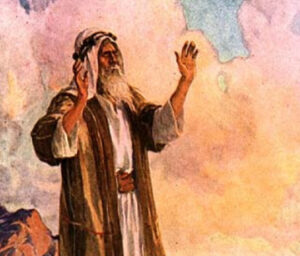
Figure 1 – Moses protested his calling to lead based on his difficulty speaking.

Do you see it? That is, do you see Moses’ low view of his own speaking abilities? In his own words he was not eloquent. No. Instead he had some problem speaking that made his oration slow in delivery and perhaps pronunciation. Did he stammer? Whatever the problem was, in light of the help he had, it was actually not a problem. In the moment and as needed God would enable Moses to speak. His mouth was aided by the indwelling Spirit in saying what the occasion required. This is God’s response of encouragement and about the help His servant would have in speaking:

Now therefore, go, and I will be with your mouth and teach you what you shall say. (Exodus 4:12, NKJV)

  • The Power is Unbeatable (Isaiah 54:17) — Between 700 and 740 years before Christ, Isaiah the prophet will add some clarity to what God will do through to make his spokespersons effective. Isaiah says that dealing successfully with opposition in our response to attacks is our heritage; when the time comes, we do not back down from the difficulty or danger associated with declaring the truth. This will be played out in the text that follows. The weapons formed against Stephen will not prosper.

“No weapon formed against you shall prosper,
And every tongue which rises against you in judgment
You shall condemn.
This is the heritage of the servants of the Lord,
And their righteousness is from Me,”
Says the Lord. (Isaiah 54:17, NKJV)

Further, instead of being condemned, the man of God will speak cutting truth about his accusers (Acts 7:54).

  • The Promise of In-the-Moment Provisions of Irresistible Speech (Luke 21:12-15) — Jesus prepared his disciples for the moments when they would need to give an answer to their adversaries. He told them that they would be put on trial for the benefit of His Person and program (Luke 21:12). Jesus said those trials will look, at first glance, like a day of triumph for the enemy. However, it will be your opportunity! The Son of Man says, in effect, “What the devil would use as a time to demean you and discourage you will become a singular time of telling them the truth about who I am” (Luke 21:13); “The setback of being made to stand before your accusers will actually be a setup for you to stand for the Truth” (John 14:6).

What do we do with this? We are not far enough through the narrative of what happens to Stephen to say. Not enough of Luke’s account of the trial of Stephen has been considered. We need more to know how to operate in our day to face opposition? But here are some questions that will help us to think deeply about the text and God’s reasons for wanting us to be filled with the Spirit.

Questions for Group Discussion

  1. What is the purpose of exceptional or supernatural work in the life of a believer?
  2. Am I ever guilty of taking credit for what God is doing through me for His own purposes?
  3. What would God have me do with the attention garnered through great work?
  4. Am I preparing to use the platform occasioned by good performance to proclaim the truth about Jesus? Things that can help me to prepare for questions are (1) a time to pray for understanding, (2) a reading plan, and (3) study aimed at learning to explain the truth to others (Ezra 7:10).
  5. Do I regard the company of God as sufficient equipping for everything I will face (Joshua 1:9; Matthew 28:20)? In what ways do I discount the value of God’s help? How could I be more positive about the provisions of God (Luke 21:12-15; Philippians 4:8)?

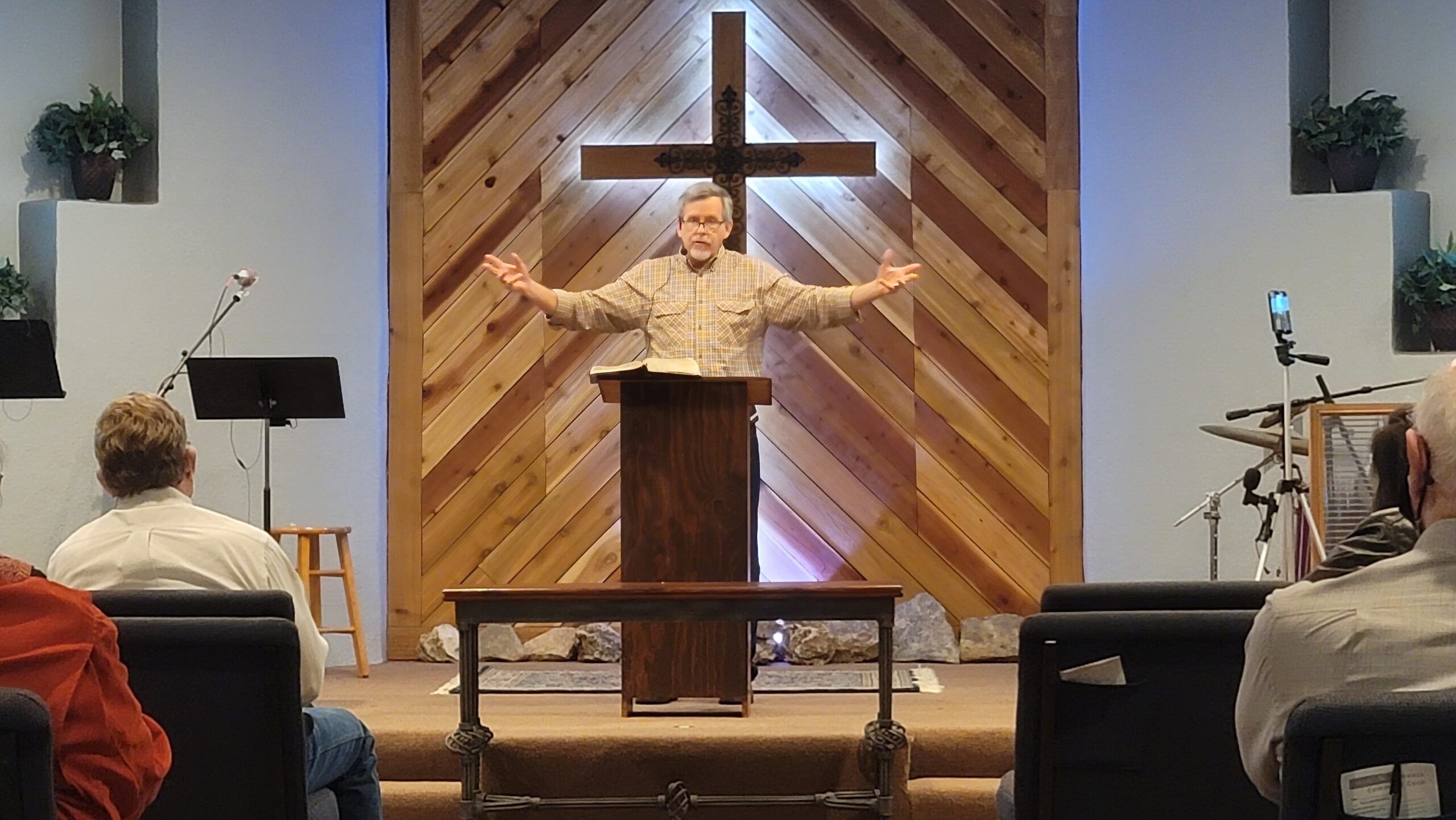
Note: The featured image for this post is of a friend and mentor — Pastor Dave Smith. One thing that Dave has taught me about being effective as a speaker is the importance of reviewing the entire message a few times before presenting. In the photo it is Sunday, 21 March 2021 and Pastor Dave is guest speaking at Communion Chapel.
Stephen’s Last Stand Part 1 (Acts 6:1)

Introduction

When we receive Jesus we receive pardon, we receive purpose, and we receive the Person of the Holy Spirit (Ephesians 1:13). Once He has come gone are the days of being without power, without counsel, without comfort, without companionship (John 14:15-18). Through the Holy Spirit the Lord keeps His promise to (1) never leave us nor forsake us (Matthew 28:20; Hebrews 13:5) and (2) enable us for amazing acts of service. But with His coming also comes the unresolvable conflict that results from being indwelt by the Spirit of Christ. When the Jesus follower surrenders gladly and becomes Spirit-filled, he also becomes, from the world’s perspective, as irritating as Jesus.

While we should always endeavor to promote peace, love our enemies, and be a blessing to the community – we should not be surprised when living like Jesus brings out unavoidable angst toward us from the world. Some believers, having failed to see or accept this truth, are working in vain to make peace with the world. They have a great zeal for Jesus. But the same believer is terribly wrong in thinking that their white hot faith is compatible with a society that is surrendered to Satan and cold toward Christ. The account in Acts 6:8-8:4, with the focus on Stephen, shows us as much.

The narrative about Stephen constitutes a major turning point in Acts. It ends a series of three trials before the Sanhedrin. The first ended in a warning (4:21), the second in a flogging (5:40), and Stephen’s in his death. (Polhill, 1992, p. 183)

In the few verses under consideration we see the consequence of being Spirit-filled.

Called to Conflict (Acts 6:8)

Luke has presented the Lord and His apostles as having power to perform signs and wonders (Luke 2:40; 4:1,14-15; Acts 2:43; 5:12). Now, for the first time in the records of Luke we are hearing of wonders and signs among the people being done through someone other than the Lord or one His apostles.

[Stephen] was the first other than the apostles to be described as working miracles. (Polhill, 1992, p. 184)

A naive reading of this verse begins to cheer about this new thing: regular people of faith are doing great work. But do not miss the fact that Stephen has already been introduced as a (1) a man full of the Holy Spirit and wisdom (Acts 6:3), (2) man full of faith and the Holy Spirit (Acts 6:5). If you are mindful of his introduction the words of Acts 6:8 seem odd. You might think, “Okay. He was full of the Holy Spirit. It has been said three times. Got it!” But this third mention should make me ask if the author is trying to tell me something through the pattern of words (full of the Holy Spirit) and their rapid repetition (Acts 6:3, 5, 8). What do we find in the writings of Luke?

  • Before Jesus’ Temptation in the Wilderness (Luke 4:1) – Jesus is said to be full of the Holy Spirit before He enters terrible conflict with Satan. He is victorious but certainly worn down and needed refreshing (Matthew 4:11).
  • Before Jesus Rejection at Home (Luke 4:14-15) – Again Luke relates that the presence and power of the Spirit are pronounced in the man from Nazareth. This is what we are told just before Jesus’ claims cause anger in His hometown synagogue. He is successful in demonstrating the nearness of the kingdom but they try to kill him by throwing Him down over a cliff (Luke 4:28-30).
  • Before Peter Preaches to the Sanhedrin (Acts 4:8-12) – These words are used before Peter indicts the court and makes one of the most inflammatory remarks of Scripture – especially to a group that had just murdered the Messiah.

It does not take a Bible sleuth to see that where these words occur in the writings of Luke, we can expect to see conflict that cannot be resolved. The Spirit-filled person was called to it! The story with Stephen is no exception. Indeed, because of the threefold mention of his filling with the Spirit we should expect unprecedented animosity.

References

Polhill, J. B. (1992). Acts. Nashville: Broadman & Holman Publishers.

Missional Living — When the Kingdom Comes (A Couple Brings Corruption) Part 3 (Acts 4:32-5:11)

1 But a certain man named Ananias, with Sapphira his wife, sold a possession. 2 And he kept back part of the proceeds, his wife also being aware of it, and brought a certain part and laid it at the apostles’ feet. 3 But Peter said, “Ananias, why has Satan filled your heart to lie to the Holy Spirit and keep back part of the price of the land for yourself? 4 While it remained, was it not your own? And after it was sold, was it not in your own control? Why have you conceived this thing in your heart? You have not lied to men but to God.” 5 Then Ananias, hearing these words, fell down and breathed his last. So great fear came upon all those who heard these things. 6 And the young men arose and wrapped him up, carried him out, and buried him. 7 Now it was about three hours later when his wife came in, not knowing what had happened. 8 And Peter answered her, “Tell me whether you sold the land for so much?” She said, “Yes, for so much.” 9 Then Peter said to her, “How is it that you have agreed together to test the Spirit of the Lord? Look, the feet of those who have buried your husband are at the door, and they will carry you out.” 10 Then immediately she fell down at his feet and breathed her last. And the young men came in and found her dead, and carrying her out, buried her by her husband. 11 So great fear came upon all the church and upon all who heard these things.

The But of Acts 5:1 antagonizes the message of Acts 4:32-35. Where Barnabas sold his land and brought the entire proceed to the church for its use, Ananias merely claimed to do this. His sin, with Sapphira his wife, was not in keeping back part of the price of the land. Peter makes it clear that he could have done that (Acts 5:4). There would have been no fault in giving only a portion of the sale to the church. In fact, Ananias could have kept the land in his own possession without there being a problem. His contribution was not compulsory (Acts 5:3-4).

Why did he do it? He and his wife wanted to be counted with the highly committed while still keeping a foot in the world. They wanted a positive nickname too. But, with a discernment that was given to him by the Holy Spirit, Peter explains why the plan would not work:

The Seriousness of Not Seeing the Anointing — Ananias failed to acknowledge the Anointing as he acted out his trespass. Even in the presence of continuous expressions of Heaven’s power (Acts 4:33) he made the mistake of regarding men after the flesh and the fellowship as being no more than what he could see. But the men leading the fellowship were anointed by God and able to do and see things above and beyond what is possible for mere mortals. The fellowship before Ananias and Sapphira is not only with the seen but also with the unseen Spirit of the Lord. The fellowship, treated as common and something to be manipulated, was in fact consecrated. That couple was tragically unholy in dealing with a people made holy by the Spirit of Holiness.

In light of all that Ananias had seen in the way of wonders it is amazing and confounding to Peter that he could have been so dull in thinking that his sin would not be seen. How did Ananias arrive at this point? The answer is that Satan had filled his heart to lie to the Holy Spirit (Acts 5:3). Satan had been at work trying to ruin the new creation. Just as in the garden, that serpent of old (Genesis 3:1,4; 2 Corinthians 11:3; Revelation 12:9; 20:2) had been working to (1) deceive people in paradise and (2) ruin relationships. After a while the arch nemesis of God was able to convince Ananias to lie to the Spirit. What could have been worse than bringing Satan’s corrupting influence entry into the new fellowship? Ananias had allowed Satan to furnish the rooms of his heart with worldly intentions.

Doors for Demonic Activity — When we fail to take our thoughts captive (2 Corinthians 10:4-5; Philippians 4:8) and and refuse to rigorously exclude ungodly desires that would take up residence in our hearts we (1) open doors for demonic activity and (2) create conditions conducive to crimes against God and His community (Ephesians 4:25-27; Romans 12:19; James 4:7).

Action Steps — Let us stop lying and speak truth (Zechariah 8:16; Ephesians 4:15, 25; Colossians 3:9).

    1. Stop Active Lying – Deceptive statements
    2. Stop Passive Lying – Omissions that mislead

Peter does not punish the man but explains the great foolishness of trying to deceive God; the sin, in this case, is judged by God Himself. Upon hearing these words Ananias dies (Acts 5:5). Sapphira colludes with her husband to mislead the church. But the plan will fail with tragic results. Asked if what she brought was the entire sale price of the land Sapphira, says that it was (Acts 5:8). As in so many Old Testament cases the opportunity to confess was given. Here are ten passages from the Old Testament where God asks a question aimed at prompting confession or self-reflection:

  • Genesis 3:9 – After Adam and Eve sinned, God asks Adam, “Where are you?”
  • Genesis 4:9 – God asks Cain, “Where is Abel your brother?”
  • Genesis 18:13 – “And the Lord said to Abraham, ‘Why did Sarah laugh, saying, ‘Shall I surely bear a child, since I am old?'”
  • Genesis 21:17 – God asks Hagar, “What ails you, Hagar?”
  • Genesis 32:27 – God asks Jacob, “What is your name?”
  • Job 38:4 – God asks Job, “Where were you when I laid the foundations of the earth?”
  • 1 Samuel 15:14 – “But Samuel said, ‘What then is this bleating of the sheep in my ears, and the lowing of the oxen which I hear?'”
  • Jonah 4:4 – “Then the Lord said, ‘Is it right for you to be angry?'”
  • Jeremiah 2:5 – God asks Israel, “What injustice have your fathers found in Me, that they have gone far from Me?”

These passages are instances where God’s questions are used to initiate introspection, catalyze confession, or to elicit a response that reveals deeper truths about the individuals involved. Sapphira did not make the most of her opportunity. If she had, mercy would have been shown:

He who covers his sins will not prosper, But whoever confesses and forsakes them will have mercy. (Proverbs 28:13)

Instead she took the opportunity to confirm her decision to test the Spirit of the Lord. What was the test?

The Test of Ananias and Saphira — Can we get away with lying about our giving in order to get a better status in our church community? Will God know?

She also dies and was carried away to be buried with her husband. Although this is bad, consider with me the consequences. Luke says that the result of this rebuke was that great fear came upon all the church and upon all who heard these things (Acts 5:11). The loss of earthly life has produced in the church a profound reverence for the presence of Christ and the position of the apostles. Christ in our midst at communion is serious; by treating it lightly we bring upon ourselves judgement. Christ at work through the leadership of the apostles is serious; by treating them as mere men the meaning of the miracles is missed and the Presence at work in them is disrespected.

Figure 1 – Signs and their Significance in the Opening of Acts

The immediate deaths of this deceptive couple were a sign indicating a spiritual reality – God does not want or tolerate lying in his church. Just as the signs of Pentecost and the fellowship prayer were not going to be repeated, the immediate deaths of liars in the church is not happening today. But the spiritual reality indicated in the narrative is that with God there is a deep displeasure associated with people in the church lying to one another and to Him. Former is unloving. The latter is dumb; He knows all. Today is the day to stop lying and start telling the truth. We should do this out of reverence for the Holy Spirit in our midst, out of caring for concern for the people that are our brother and sisters in the faith, and with the goal of protecting the quality of our witness. The whole idea of lying is from Satan the father of lies; it is what he had done from the beginning (Genesis 3:1-4). The notion should be arrested and rejected. When we fail to do that the suggestion eventually looks reasonable and becomes sin (Genesis 3:6).

Questions for Community Discussion

  1. In the verses of Acts 4:32-37 we are given a general description of the character of the new community. How does Luke give us an example of that character?
  2. Would you be willing to part ways with your stuff to ensure that the needs of other believers in our fellowship are met? What encouragement did they have (Acts 4:33)?
  3. What explains their ability to show this level of generosity (Ephesians 4:17-21; Romans 5:5; 1 John 5:1)?
  4. What was the difference between the gift of Barnabas and the gift of Ananias (Acts 4:36-37; 5:1-4)?
  5. Is your giving about gratitude toward God and worship or is it about garnering praise, creating a perception of piety, and generating an image of generosity.
  6. Does it matter if your presentation of an offering does not line up with the truth (John 4:24)?
  7. Do you think that Ananias was saved? Consider the words of 1 Corinthians 5:5 as you formulate an answer.