Where Am I?

Figure 1 – Possible route of Jesus from Capernaum
Luke 10:38–42 (NKJV)
38 Now it happened as they went that He entered a certain village; and a certain woman named Martha welcomed Him into her house. 39 And she had a sister called Mary, who also sat at Jesus’ feet and heard His word. 40 But Martha was distracted with much serving, and she approached Him and said, “Lord, do You not care that my sister has left me to serve alone? Therefore tell her to help me.” 41 And Jesus answered and said to her, “Martha, Martha, you are worried and troubled about many things. 42 But one thing is needed, and Mary has chosen that good part, which will not be taken away from her.”
The En Route Rabbi (Luke 10:38) – Jesus is on His way to Jerusalem; it is time for Him to be received up (Mark 16:19; Acts 1:2; Luke 9:51). The Son of Man is determined to be where the Father would have Him to be doing what the Father would have Him to do. In this case, the Father would have His only begotten Son to be in Jerusalem. Eventually He must be in the Holy City for the Passover as the Lamb (Matthew 10:28; Mark 10:45; John 1:29).
But there is some time between this record of Jesus’ travels with His disciples and the Passover. As they went to Jerusalem, Jesus entered a certain village (Luke 10:38). Laying the gospels alongside one another, we can see that the village mentioned by Luke was Bethany (John 11:1). The figure at the right shows a possible route from where Jesus was in Capernaum to Bethany.
In this certain village there is a family that is dear to Jesus – two sisters and their brother (John 11:5). The oldest sibling in the Bethany household is most likely Martha. How did I get that? I base this supposition on her apparent role as head of the household. In first-century Jewish and Greco-Roman culture, hospitality was ordinarily administered by the household’s senior authority. The eldest unmarried woman or the person bearing primary domestic responsibility (Keener, 1993). The act of formally welcoming a guest — particularly a traveling rabbi — normally fell to the individual who managed or governed the household. Luke’s description of Martha as the one who welcomed Jesus into her house suggests that she is the household’s senior figure. She is also possibly the owner of the house.
An Israelite Indeed (Luke 10:39; Deuteronomy 18:15, 19) – The account from Luke introduces the sister of Martha after the welcome; her name is Mary. She is presented to the reader doing two things: (1) sat as Jesus’ feet and (2) heard his word (Luke 10:39). Luke wants us to see her alignment with the expectations of God. Luke says, “Look, at her reader, and see that Mary is enacting obedience by taking a subordinate and teachable posture.” Why do I think that is what Luke is saying? Consider the words of Moses in his blessing on the children of Israel before his death (Deuteronomy 33:3):
Yes, He loves the people;
All His saints are in Your hand;
They sit down at Your feet;
Everyone receives Your words.
Moses said there are two things that an Israelite can do to indicate submission to Yahweh. Mary is doing both. That is, Mary is doing both things that Moses described as expressions of covenant loyalty for an Israelite: (1) sitting down at the feet of God (Jesus) and (2) receiving His words. (And there are other places where being at the feet indicates discipleship, submission, and readiness to obey. See Judges 4:10; 2 Kings 4:27). Further, if we are going to truly appreciate Mary, we must give special attention to the fact that she is hearing Jesus words. Hearing, for the Jew means more than the passive activity of allowing oneself to hear spoken words. It combines intentional listening and willful obedience (Deuteronomy 6:4). At this point Luke 10:39 becomes an unavoidable and unmistakable declaration of Mary’s decision to receive Jesus as the promised Prophet. How did I get that? Moses told that people
15 “The Lord your God will raise up for you a Prophet like me from your midst, from your brethren. Him you shall hear,… 18 I [Yahweh] will raise up for them a Prophet like you from among their brethren, and will put My words in His mouth, and He shall speak to them all that I command Him. (Deuteronomy 18:15, 18)
She is seated in surrender and listening intently to the words of the rabbi from Nazareth. Mary is telling Jesus and anyone who will look at her actions in the light of God’s covenant with His people, “I see the Prophet that Moses mentioned. And I am hearing him.” Mary is an Israelite indeed.
Sidelined by Service (Luke 10:40) – The activities of Martha, the woman who welcomed Jesus into her home, are brought back into focus. While Mary is sitting at Jesus’s feet hearing his word, the other sister is distracted with much serving. Distracted? That is the word that Luke uses to describe Martha. The underlying verb (περισπάω) indicates that her attention has been drawn, pulled, or dragged away from one thing to another thing. That is, Martha’s has been drawn, pulled, or dragged away from one thing (Jesus words) to another thing (serving Jesus). It is worth noting that the word translated serving (διακονία) is normally translated ministry (Ephesians 4:12; Acts 6:4). Martha is drawn away by work for Jesus from the words of Jesus.
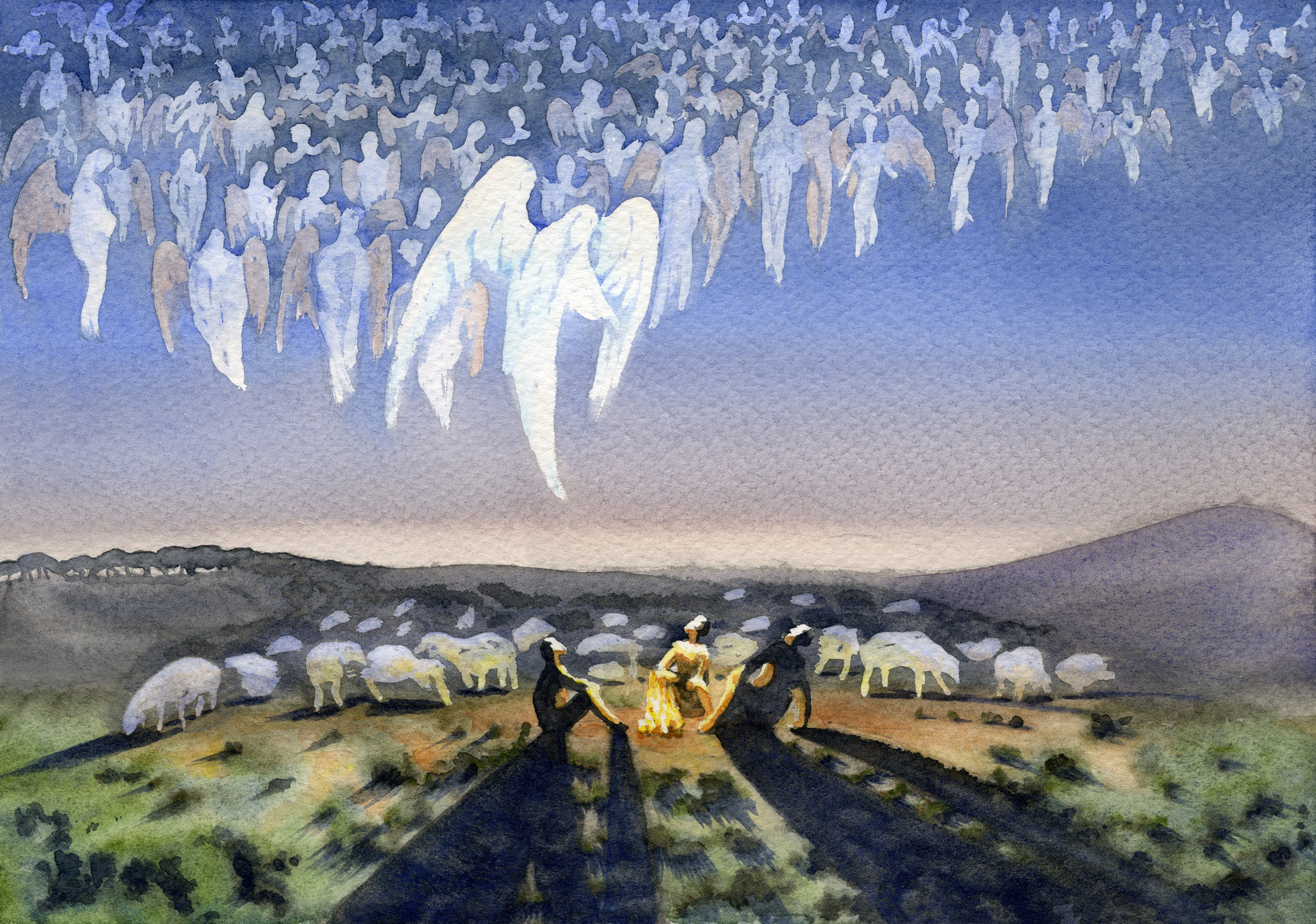
Picture the scene with me. Martha is going back and forth from the kitchen to the place where Jesus is teaching. She is bringing food items and drinks to the Master and His disciples. Meanwhile, Mary is absorbed in the teaching of Jesus. Every time Martha, in the midst of her ministry, passes by her sister with a tray of food she becomes more irritated. In quiet words she says as she goes back and forth, “Oh no, don’t get it up, Mary!” And later, “Excuse me, Mary! Didn’t mean to come between you and this message with my menial work of ministering alone to the Master and His disciples.” Finally, it becomes too much and she interrupts the Teacher’s teaching with her tirade:
Lord, do you not care that my sister has left me to serve alone? Therefore tell her to help me.
Martha reminds me of so many people caught up in their self-imposed ministry that find fault with everyone not doing what they are doing. The Holy Spirit can rest a little easier when these people are around; they will eagerly assist in convicting the world of the sin of not measuring up to their standard of righteousness and their requirements for service. (O reader, calm down. This is sarcasm and not heresy.)
Answered Prayer (Luke 10:41) – Jesus answers. And although it looks like just a response to her question and suggestion. It should be seen as an answer to prayer. After all, He is God (John 1:1-3; Hebrews 1:8-10). Saying her name twice is an indicator that there is great emotion associated with the address (Genesis 22:11; 1 Samuel 3:10; 2 Samuel 18:33; Luke 22:31; Matthew 7:21-23; Matthew 23:37; Acts 9:4). This way of speaking to someone is called the double vocative and it means that the speaker is talking with great concern, distress, urgency, or tenderness. Although she accuses him of not caring, Jesus answers her prayer out of His great concern.
Martha is worried and troubled about many things. In this case, her worry and troubles are ministry. Ministry matters. But it should not have been a worry to her. She is not doing it right.
Gentle Correction and Warning (Luke 10:42) – The one thing needed is to hear Him (Deuteronomy 18:15, 19). This is the commandment of God through His servant Moses and reiterated earlier in the transfiguration (Luke 9:33-35).
| Moment | Distraction | Divine Correction |
|---|---|---|
| Luke 10:38-42 | Martha’s service | “Mary has chosen the good part” |
| Luke 9:33-35 | Peter’s ministry plan | “Hear Him!” |
Jesus tells the woman absorbed in busyness that this is not the Father’s business. Mary has chosen the one thing that is needed – hearing His words. And Mary’s choice is being protected by the Lord Himself; it will not be taken away from her. Don’t try to come between me and Mary. Serving Jesus cannot come before being served by Jesus (John 15:1-5). We are not sent (Mark 3:14) until we have been with Him (Acts 1:8; Acts 4:13).
Action Items for Us
Take time to sit with Jesus today. How? There is a reading plan on this site; that is a good place to start. Prayerfully consider His words and what they mean for your life. Let ministry ideas and initiatives be shaped by time spent listening; hear Him (Luke 9:33-25; Deuteronomy 18:15).
Questions for Consideration
- Where am I? Would my position best be described as sitting at the feet of the Teacher receiving His word or busy around the Teacher with my many worries?
- What worry needs to wait until after I have spent time with Jesus? Properly seen those worries are weeds that would choke out the word, cares that cut me off from the best Christ has to offer, and second-rate pleasures that pull me away from the real joy of just being with Jesus (Matthew 13:22; Mark 4:18-19; Luke 8:14).
References
Keener, C. S. (1993). The IVP Bible background commentary: New Testament. InterVarsity Press.