Missional Living – Pressing On (Acts 17:1-4)
17:1 Now when they had passed through Amphipolis and Apollonia, they came to Thessalonica, where there was a synagogue of the Jews. 2 Then Paul, as his custom was, went in to them, and for three Sabbaths reasoned with them from the Scriptures, 3 explaining and demonstrating that the Christ had to suffer and rise again from the dead, and saying, “This Jesus whom I preach to you is the Christ.” 4 And some of them were persuaded; and a great multitude of the devout Greeks, and not a few of the leading women, joined Paul and Silas.
Pressing On (Acts 17:1)
Although Paul and Silas had been shamefully treated in Philippi, their ministry there had been remarkably fruitful. The gospel was preached to a gathering of Gentile women (Acts 16:13); Lydia and her household believed and were baptized (Acts 16:14–15); a demonically oppressed girl was delivered (Acts 16:16–18); prisoners heard prayers and praises offered to God (Acts 16:25); and the Philippian jailer and his household were brought to faith in Christ and baptized (Acts 16:30–34). Before leaving Philippi, Paul and Silas returned to Lydia’s home, encouraged the newly formed fellowship of believers, and departed (Acts 16:40). The Now of Acts 17:1 introduces the next stage of Paul’s second missionary journey.
From Philippi, Paul and Silas pressed onward through Amphipolis and Apollonia until they reached Thessalonica (Acts 17:1). The journey covered approximately one hundred miles along the Via Egnatia. Traveling westward from Philippi along the Via Egnatia, they passed approximately 33 miles through Amphipolis. They may have lodged there, but Luke records no extended ministry. They were traveling through. They continued approximately 28 miles to Apollonia and then another 37 miles to Thessalonica. Altogether, they traveled nearly 100 miles on foot before beginning their next recorded season of ministry.
Their perseverance becomes even more striking when we remember what they had just endured. They had been stripped, severely beaten, confined in the inner prison, and fastened in stocks (Acts 16:22–24). Paul later reminded the Thessalonians that he and Silas had “suffered before and were spitefully treated at Philippi” (1 Thessalonians 2:2). Yet they did not retire from their mission. Although they were still recovering from persecution and may have borne its visible marks, they entered another city and began proclaiming Christ again.
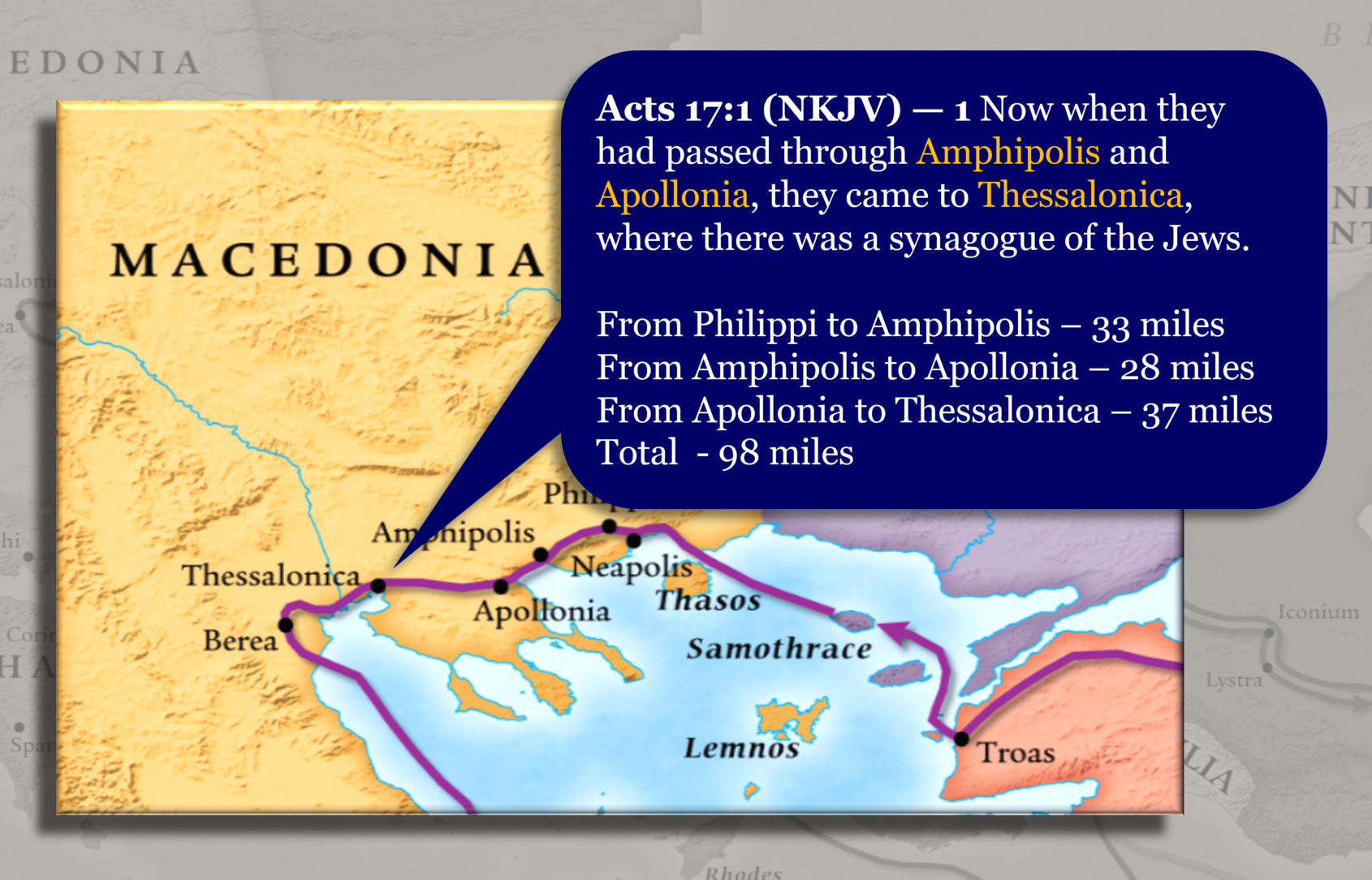
Figure 1 – From Philippi to Thessalonica
We possess advantages Paul did not have: automobiles, airplanes, telephones, livestreams, social media, printed Bibles, electronic libraries, and instant communication. We can carry the gospel farther in hours than Paul could travel in days or weeks. Yet greater convenience is not necessarily accompanied by greater commitment.
Paul did not remember the journey principally as an impressive feat of physical endurance. He remembered that, after suffering in one city, God gave them boldness to preach in the next (1 Thessalonians 2:2). They pressed on!
Their wounds did not silence their witness. Their mistreatment did not diminish their mission. Their disappointment did not determine their direction.
How do we compare? Paul and his companions traveled nearly 100 miles on foot, perhaps while still bearing the wounds of Philippi, to tell strangers that Jesus is the Christ. We often find it burdensome to go next door, to cross the street, to drive across town, to alter an evening’s schedule, or to endure an uncomfortable conversation to speak about Jesus.
The question raised by this journey is not merely, “How far would we walk?” It is:
What inconvenience, discomfort, rejection, or sacrifice are we willing to endure so that someone else may hear that Jesus is the Christ?
Paul’s 100-mile trek makes me see the relative weakness of my own Christianity; it is often the case that it serves only when service is convenient. These missionaries did not wait until they were completely rested, emotionally restored, socially appreciated, and physically comfortable. They went because Christ was worthy, the gospel was true, and Thessalonica needed to hear it.
They had been beaten, but they kept walking. They had been rejected, but they kept their resolve to carry the message of reconciliation where it was needed. They had suffered for Christ in Philippi, and they were still willing to speak for Christ in Thessalonica.
A Strategic Starting Point (Acts 17:2)
Why did they stop in Thessalonica? That is, why did Paul and Silas not stop to preach Christ in Amphipolis or Apollonia? Luke supplies a strategically important detail and deciding factor:
where there was a synagogue of the Jews. (Acts 17:1)
Paul was not wandering aimlessly hoping to meet people with whom he could have dialogue about religious stuff. He was moving purposefully toward population centers in which he had common ground for conversation about the Christ. The synagogue provided people who also knew the Scriptures and would have copies (Luke 4:16-21; Acts 15:21), who also anticipated the Messiah, and who also could understand an argument drawn from Moses and the Prophets. Paul, therefore, was being strategic when he entered the synagogue, and for three Sabbaths reasoned with them from the Scriptures (Acts 17:2). His ultimate goal was to reach everyone with the offer of reconciliation. But the laborers were few (Matthew 9:37-38; Luke 10:2). Paul’s custom of going to the synagogue was two-pronged in purpose. First, it was part of his hope to reach his brethren (Romans 1:16; 9:1-3; Acts 13:46). Second, it was his strategy for getting help in bringing the gospel to the nations (Acts 18:1-4, 24-28). Synagogues gathered God-fearers and Jews already grounded in the Law and the Prophets; the attendees were, again, the most prepared candidates to receive Christ and immediately assist in carrying the gospel to the surrounding Gentile world.
Explaining and Demonstrating (Acts 17:3)
How did the apostle go about reaching the people in the synagogue with the gospel? In Acts 17:3, Luke uses two vivid, complementary Greek verbs—dianoigō (διανοίγω – explaining) and paratithēmi (παρατίθημι – demonstrating)—to describe how Paul methodically engaged the synagogue in Thessalonica from the Scriptures.
- Explaining: dianoigō (διανοίγω) – The verb dianoigō (διανοίγω) literally means “to open thoroughly” or “to open completely” (dia, “through,” + oignymi, “to open”). In classical and biblical usage, it describes unbarring what was closed or bringing clarity to what was hidden. Luke uses dianoigō three times in Luke 24 to establish the post-resurrection pattern of scriptural illumination:
-
Luke 24:31: In this case the opening of eyes is not literal but figurative. After His crucifixion and resurrection, two of Jesus’ followers were joined by Him as they walked to Emmaus. Although they were walking and talking with Someone they had been in close company with for years, they did not realize it was Jesus in their company. During time together in the house they broke bread together; then their eyes were opened (diēnoichthēsan) and they recognized Him. When it says that their eyes were opened it does not mean they had been walking with their eyes closed for seven miles. Their eyes had been restrained (Luke 24:16). It means that they were finally given the ability to perceive who the Stranger in the midst really was (Matthew 11:27; John 12:39-40).
-
Luke 24:32: It is more than an epiphany. Looking back they realized that something was happening as He explained the fact that the Christ had to suffer. Scriptures that they had formerly not seen as clearly stating the necessity of the Christ suffering as he redeemed His people were made plain. The disciples on the Emmaus road asked, “Did not our heart burn within us while He talked with us on the road, and while He opened (diēnoigen) the Scriptures to us?”
-
Luke 24:45: “And He opened (diēnoixen) their understanding, that they might comprehend the Scriptures.”
-
- Demonstrating: Paratithēmi (παρατίθημι) – The verb paratithēmi combines para (“beside”) and tithēmi (“to place” or “to set”). It literally means “to place side by side” or “to set before.” In this context, paratithēmi carries the sense of adducing evidence or setting proofs side-by-side. Paul placed the Old Testament prophecies of the suffering Servant and Messiah (e.g., Isaiah 53, Psalm 16, Psalm 22) alongside the historical facts of Jesus’ life, death, and resurrection.
By placing the prophecy next to the historical fulfillment, the conclusion was inescapable: “This Jesus whom I preach to you is the Christ” (Acts 17:3). Paul was not the only one capable of doing this. On Pentecost, Peter had done the same thing (Acts 2:14–36). Using passages from Joel and the Psalms (Joel 2:28–32; Psalm 16:8–11; Psalm 110:1), the big fisherman explained the recent crucifixion and resurrection of Jesus and the strange occurrence of people speaking in other languages as evidence that Jesus of Nazareth is both Lord and Christ (Acts 2:4–11, 22–24, 31–36).
After years under the teaching of Peter and the other apostles, this skill is also seen in members of the Jerusalem church (Acts 2:42; 5:42; 6:7). Philip was able to show the Ethiopian eunuch that the passage he was reading from Isaiah was a prophecy concerning Jesus of Nazareth (Isaiah 53:7–8; Acts 8:26–35). Philip was not an outlier. When persecution broke out, the church was scattered (Acts 8:1–3). The people who had been discipled in Jerusalem went everywhere preaching the word (Acts 8:4; 11:19–21). What word? They preached Christ and explained the connection between the Scriptures and the life, death, and resurrection of Jesus (Acts 8:5, 12, 35). Being separated from the apostles did not render the church members incapable of advancing the cause of Christ. After being mentored by the apostles, they were able to speak about Christ effectively and to give a reason for the hope that was in them (1 Peter 3:15).
This raises an important question for modern Jesus followers: Can we do this? Are we developing the skill needed to explain and demonstrate from the Scriptures that Jesus is the Christ? Are the people whom we are discipling being taught to do this? The apostles taught the believers in Jerusalem this skill through their doctrine and public witness (Acts 2:42; 4:33; 5:42). When persecution broke out and the church was scattered, they went everywhere preaching the word (Acts 8:1, 4). This is how the early church spread.
The Outcome – Persuaded People Join the Mission (Acts 17:4)
So, what came out of all that explaining, demonstrating, and reasoning? Luke says that Paul’s reasoning from the Scriptures produced results. The beloved physician says that some of the Jews were persuaded. Luke presents their persuasion as the result of sustained reasoning from the Scriptures. Paul explained the prophetic testimony, placed it alongside the historical facts concerning Jesus, and called his hearers to consider the conclusion. They were convinced by the evidence Paul presented from the Scriptures. The prophecies concerning the suffering and resurrection of the Messiah corresponded with the historical facts concerning Jesus of Nazareth (Acts 17:2–3). Their faith was reasonable because it rested upon revelation and evidence.
But persuasion was not the end of their response. Those who were persuaded joined Paul and Silas. The word translated joined indicates that they associated themselves with the missionaries and became part of the new community being formed around Jesus. They did more than agree with Paul’s interpretation. They publicly aligned themselves with Paul, Silas, and the gospel they preached. In Thessalonica, where opposition would soon become violent, this identification required courage (Acts 17:5–9; 1 Thessalonians 2:14). Genuine faith produces a change in allegiance and association.
The response extended beyond the Jewish members of the synagogue. A great multitude of the devout Greeks believed. These were Gentiles who had turned away from pagan religion to worship the God of Israel and had become associated with the synagogue, although they had not necessarily become full Jewish proselytes. Paul’s message showed them that they did not have to become Jews before coming to God. Through faith in Jesus Christ, believing Jews and Gentiles were brought into the same redeemed community (Acts 10:34–35, 43; 15:7–11; Galatians 3:26–29).
Luke also reports that not a few of the leading women joined Paul and Silas. His expression means that a significant number of prominent and influential women believed. Women had already played an important role in the Macedonian mission. In Philippi, Lydia believed the gospel, opened her home to Paul’s company, and helped provide a place from which the new church could grow (Acts 16:14–15, 40). Leading women would also respond to the gospel in Berea (Acts 17:12). Luke refuses to treat these women as incidental or invisible. Their conversion mattered both to the church and to the cities in which they lived.
Acts 17:4 presents a diverse beginning for the Thessalonian church: some Jews, a great multitude of God-fearing Greeks, and a significant number of leading women. The gospel crossed ethnic, cultural, and social boundaries. These people had different backgrounds, but they were brought together by one conviction: Jesus is the Christ. Their shared faith created a new fellowship and gave them a new allegiance. This verse also shows the relationship between explanation, persuasion, and identification. Paul explained and demonstrated the truth from the Scriptures; the hearers were persuaded; and those who were persuaded joined themselves to the people advancing the gospel. Healthy evangelism seeks more than momentary agreement. It calls people to believe in Jesus, identify with His people, and participate in His mission (Matthew 28:19–20; Acts 2:41–42).
In His grip by His grace,
Roderick L. Barnes, Sr.
Questions for Discussion
- What does Paul and Silas’s decision to continue toward Thessalonica reveal about their understanding of calling, suffering, and perseverance?
- How does the fruitful ministry in Philippi help us see that hardship is not necessarily evidence that a ministry has failed (Acts 16:13–40)?
- Paul and Silas traveled approximately one hundred miles after being beaten and imprisoned. What physical, emotional, or spiritual wounds are most likely to cause us to withdraw from serving Christ?
- Why did Paul begin his ministry in the synagogue? What does his choice reveal about intentional and strategic evangelism?
- Paul “reasoned,” “explained,” and “demonstrated” from the Scriptures that Jesus is the Christ (Acts 17:2–3). What does each of these activities contribute to an effective presentation of the gospel?
- How well prepared are we to show someone from Scripture that the Christ had to suffer, die, and rise from the dead?
- Paul’s message was not merely that a Messiah would come. His conclusion was, “This Jesus whom I preach to you is the Christ.” Why must faithful evangelism bring the conversation specifically to Jesus?
Questions for Prayer
- Where have disappointment, mistreatment, or exhaustion caused me to lose momentum in serving Christ?
- What wounds do I need to bring honestly before God so that they do not become reasons for disobedience?
- Am I asking God only to remove difficulties, or am I also asking Him for strength to remain faithful through them?
- Do I know the Scriptures well enough to explain clearly why Jesus is the Christ? In what area do I need greater preparation?
Closing Prayer
Lord, give us the courage to press on when obedience is costly. Heal the wounds that tempt us to retreat, and keep hardship from turning into bitterness or fear. Ground us deeply in Your Word so that we can reason clearly, explain faithfully, and demonstrate that Jesus is the Christ. Lead us to people who are ready to hear, and work through the gospel to persuade them. Make us faithful in going, speaking, praying, giving, and supporting others until the work You have entrusted to us is complete. In Jesus’ name, amen.