All posts by Roderick Barnes

On Purpose

Introduction

We make decisions every day about what deserves our time, whom we will trust, and what kind of people we hope to become. In college, those decisions can feel especially urgent. We choose a major, pursue relationships, and prepare for a career. Yet beneath those choices lies a question that reaches further than graduation: Who will have the authority to direct my life?

In the Gospel of Matthew, Jesus brings that question into focus. He asks His disciples who they believe He is, calls them to follow Him, and teaches them what following Him requires. As they walk with Him, they discover that His purposes reach into their ambitions, challenge their assumptions about other people, and extend far beyond the boundaries of their familiar world.

Our first message, The Commitment (Matthew 16:13–27), begins with Peter’s confession that Jesus is the Christ, the Son of the living God. But Peter soon discovers that confessing Jesus’ identity and accepting Jesus’ direction are not the same thing. The Lord he rightly identifies announces a cross he strongly resists. Jesus then calls every disciple to surrender the right to govern life independently of Him.

Our second message, The Commandment (Matthew 9:1–13), shows us the mercy that must shape that surrendered life. The One who commands us to love God and our neighbor demonstrates His heart toward people burdened by sin and dismissed by others. He forgives, calls Matthew to follow Him, and shares a table with sinners. In His company, we learn to see people as those He came to call and restore.

Our final message, The Commission (Matthew 28:16–20), brings us before the risen Jesus. The disciples gathered there are still imperfect, and some doubt. Yet Jesus entrusts them with making disciples of all nations, grounding their mission in His authority and sustaining it with His presence.

The movement of these messages is from confession to commitment, from commitment to compassion, and from compassion to commission. Together, they show how recognizing who Jesus is reshapes whose purposes we pursue, how we treat people, and what we do with the life He has entrusted to us.

The Great Commitment

The Great Commitment (Matthew 16:13-27)

13 When Jesus came into the region of Caesarea Philippi, He asked His disciples, saying, “Who do men say that I, the Son of Man, am?” 14 So they said, “Some say John the Baptist, some Elijah, and others Jeremiah or one of the prophets.” 15 He said to them, “But who do you say that I am?” 16 Simon Peter answered and said, “You are the Christ, the Son of the living God.” 17 Jesus answered and said to him, “Blessed are you, Simon Bar-Jonah, for flesh and blood has not revealed this to you, but My Father who is in heaven.

18 And I also say to you that you are Peter, and on this rock I will build My church, and the gates of Hades shall not prevail against it. 19 And I will give you the keys of the kingdom of heaven, and whatever you bind on earth will be bound in heaven, and whatever you loose on earth will be loosed in heaven.” 20 Then He commanded His disciples that they should tell no one that He was Jesus the Christ.

21 From that time Jesus began to show to His disciples that He must go to Jerusalem, and suffer many things from the elders and chief priests and scribes, and be killed, and be raised the third day. 22 Then Peter took Him aside and began to rebuke Him, saying, “Far be it from You, Lord; this shall not happen to You!” 23 But He turned and said to Peter, “Get behind Me, Satan! You are an offense to Me, for you are not mindful of the things of God, but the things of men.”

24 Then Jesus said to His disciples, “If anyone desires to come after Me, let him deny himself, and take up his cross, and follow Me. 25 For whoever desires to save his life will lose it, but whoever loses his life for My sake will find it. 26 For what profit is it to a man if he gains the whole world, and loses his own soul? Or what will a man give in exchange for his soul? 27 For the Son of Man will come in the glory of His Father with His angels, and then He will reward each according to his works.

The Revelation of the Person (Matthew 16:13-17) – We are now nearing the end of Jesus’ endeavor (1) to make fishers of men, (2) to make known the will of God through signs and teaching, and (3) to call the Jews to Himself and the mission of God in the world. By this time His offer of the kingdom has been rejected by the leaders of the people and His attempts to reveal the will of God have been largely misunderstood or ignored by the multitudes. Jesus reveals the state of his efforts through an assessment. Using a few questions he uncovers the great lack of understanding among the masses, the insights of the men he has been mentoring, the reason why some have realized the truth, and who he really is.

When Jesus asks his disciples about the crowds comprehension of his identity, he is not getting the information for Himself. He knows all men and has no need that anyone should testify of what was in man; he is asking for the sake of the disciples. In their answers it becomes clear that the multitudes are not getting it. “Some say you are John the Baptist.” But, by this time John the Baptist is dead. Furthermore this does not make sense when we consider that Jesus and John were contemporaries. Indeed sometimes they were in the same place at the same time. So, how could men say this? The answer is both appalling and simple; they do not get it. Others were saying that Jesus was Elijah. They saw in the ministry of the Son of Man the fulfillment of prophecies saying that Elijah would return before the coming of the Messiah. Jesus, like the Elijah of old, called people to repentance and was mighty in deed. But saying that Jesus is Elijah was to either be ignorant of the message of John the Baptist or to reject it. John said that Jesus was the Son of God and the Lamb of God who takes away the sin of the world. Whether they did not know what John had said or missed that Jesus taught with an authority befitting the Christ, they reason is the same. They do not get it.

Finally, some said that Jesus was Jeremiah or one of the prophets (Luke 9:19). Although there were prophecies foretelling a time when Elijah would come to prepare the way before the Christ, nothing in the Law or the Prophets said that Jeremiah was coming back. This theory seems to be the outworking of a misreading of extrabiblical material (2 Maccabees 15:12-16; 2 Maccabees 2:4-8). In any case, what becomes obvious is that there not only are the people not getting it, some are farther from getting it than others.

The question is a catalyst for comprehension and a tool for pushing insights into the heads of his disciples. Jesus wanted his men to marvel at what had not happened in the multitude. He wanted his closest and hand-picked followers to realize that among men there was a range of misunderstanding about His identity. Through the inquiry he instigates seeing that the people cannot see.

And their Rabbi is not done. He wants them to observe another thing, to acknowledge and appreciate the grace of God on their lives, and know why they know what others do not. That there is a significant difference between the disciples and the crowd is already known to Jesus. He wants them to know it as well. Do not miss the But of Matthew 16:15. Through the conjunction the disciples are presented a contrast, an lack likeness, and a dissimilitude. All the disciples are given the question, “But who do you say that I am?”

It should come as no surprise that Peter responded for the rest of the disciples. He was created and called to lead the other men. His nature is to step up, to speak up, and to get out of the boat. That is what he is doing now and will continue to do throughout his life. Hear the answer of the big fisherman: You are the Christ, the Son of the living God. And now comes the assessment and explanation of Peter’s understanding and explanation: Blessed are you, Simon Bar-Jonah, for flesh and blood has not revealed this to you, but My Father who is in heaven.

If they have considered the answer to the prior question they can readily appreciate what Jesus says about Peter’s understanding. They were supposed to see that the crowds of people from all walks of life were not able to to make sense of what they were seeing in Jesus. But somehow Peter did. Why? The answer is that Peter or Simon Bar-Jonah is blessed. Flesh and blood did not reveal or disclose this to the Galilean. His brain or intellect is not the cause for Peter’s right answer. Smarter people were not getting it. People with a lot more training in the Scriptures and powerful intellects were not able to make sense of Jesus. And neither was Peter. Jesus’ Father who is in heaven had intervened to make it known to Peter what people could not get on their own.

People, without a special work of God, cannot get this on their own! Now, O Disciples, in light of the total and various misunderstandings of the multitude, see that Peter’s perception born out of a blessing from above, a loving act of the Almighty, and a grace that gets for Man what he cannot get for himself.

The Great Confiding (Matthew 16:18-20) — Do you see the conjunction And at the beginning of Matthew 16:18? Having revealed that the disciples are different and that their company has uncommon insight, Jesus goes on to tell them why. What Jesus says next is to be viewed as part of the earlier revelation. He says, And I say to you (singular) in order to unveil more of what Peter has come to comprehend. In particular, Peter’s understanding is presented by Jesus as having purpose in the undertaking of building a community created and called out for God. He says what He says to Peter in front over everyone so that there will be no debate later on about where the big fisherman stands. Jesus has, by the great grace of the Father, appointed Peter to a special position for a special work:

  • you are Peter – Jesus was speaking to the disciples in Aramaic. Although Matthew has made the narrative available to us in Greek, in Aramaic Jesus told Peter that he is Cephas (John 1:41-42). The name Cephas means stone. Simon Bar-Jonah, you are a stone. Although the Galilean fisherman will be unreliable and unable to keep his promises, he will become steadfast and immovable. Jesus speaks Simon Bar-Jonah about his future not his failings.
  • on this rock – There is much debate about the meaning of this rock () . However, because (1) the word changes from petros to petra and (2) because Jesus says that He is continuing from what Peter said earlier, this rock is best understood as Jesus Himself. The context and earlier confession show this to be true.
  • I will build my church – The church is not built on creeds or Peter. It is built on the truth. What truth? Jesus is the Truth upon which His church (ekklesia) is built. Three things are clear. First, the building of the church is being done by Christ; we must never forget that. Although men and women may be used by God to establish discipleship communities, the work is being done by Jesus Himself through them. He receives all the glory. Second, the church is built over time. The local communities that are made by Jesus start small but are being built up by the Lord. Do not despise small beginnings. Even a mustard seed community, if Christ is in it, is growing according to his plan and power. Third, the community of Christ is not of this world. It is created to be eclectic (ekklesia) and non-conformist.
  • the gates of Hades will not prevail against it – The gates of Hades, for these Jewish men is a way of talking about death. They would not have used the word Hades; that is the Greek translation of a the Jewish word Sheol (). Notice how the term is used in the Psalms and by the prophet Isaiah.
Reference Passage excerpt Context and significance
Isaiah 38:10 “I shall go to the gates of Sheol” Hezekiah anticipates dying. The Septuagint renders gates of Sheol as gates of Hades, providing the closest verbal parallel to Matthew 16:18. Gates of Sheol would be the way it would stated in Hebrew.
Job 38:17 “the gates of death” God questions Job about his knowledge of death’s domain, emphasizing the limits of human understanding.
Psalm 9:13 “lift me up from the gates of death” The psalmist identifies God as the One who can rescue him from impending death.
Psalm 107:18–20 “gates of death” Afflicted people approach death, cry to God, and receive His deliverance.

These passages establish death and the realm of the dead as the background of the expression gates of Hades. Isaiah’s Septuagint wording makes the Sheol–Hades connection particularly explicit. Jesus is here alluding to the fact that even His own eminent death will not succeed in stopping this work. The death of the Builder will not stop the building.

Peter is then declared to have special authority in the building program of Jesus: I will give you the keys of the kingdom of heaven. Keys are used to open and deny access. Jesus says that Peter will be given special authority in the unseen kingdom of heaven to open doors (whatever you loose) and close doors (whatever you bind). The kingdom is no longer being offered to the nation; they have rejected the offer (). Therefore there is no point in telling people that Jesus is the Christ. So Jesus commanded His disciples that they should tell no one.

The fisherman has learned that his unusual understanding is a gift from the Father. Now he discovers that his privileged understanding carries a purpose: he has been given a place in the work of Christ. Jesus will build His church, death will not defeat His undertaking, and Peter will exercise the authority Jesus entrusts to him under Jesus’ direction. Peter is being called into a life that is unapologetically Christ-centered.

The next revelation will test whether Peter is as willing to follow Christ’s plan as he is to confess Christ’s person.

The Revelation of the Plan and the Problem (Matthew 16:21-23) – Going forward Jesus began to show His disciples things that had formerly only been mentioned in allusions (John 2:19; Matthew 9:15; Matthew 12:39-40). Now He makes them plain to His men and women. (Although the term disciples often means the twelve, sometimes it refers to the larger group of people that were following him. The women were also made aware of what lay ahead. The angel that meets them at the tomb explained that they should not expect the living among the dead because He, as He said, is risen.) What did Jesus show His disciples? Only what the Scriptures had already said concerning the Christ:

What Jesus Was Showing Old Testament Support Connection to Matthew 16:21
He must go to Jerusalem. Zechariah 12:10 — Jerusalem mourns the pierced one. Connects His piercing with Jerusalem; does not explicitly predict the journey.
He must suffer many things. Isaiah 53:3–7 — The Servant suffers rejection, wounds, and oppression for others’ sins. His suffering fulfills God’s saving purpose.
He must suffer through the elders, chief priests, and scribes. Psalm 118:22 — The builders reject God’s chosen cornerstone. Jesus applies this rejection to Israel’s leaders in Matthew 21:42–45.
He must be killed. Isaiah 53:8–9, 12 — The Servant dies and is buried. Daniel 9:26 — The Messiah is cut off. Anticipates His death; Isaiah explains its sin-bearing purpose.
He must be raised. Psalm 16:10 — God’s Holy One escapes abandonment to Sheol and decay. Isaiah 53:10–12 — Life and victory follow the Servant’s death. Peter explicitly applies Psalm 16 to Jesus’ resurrection in Acts 2:25–32.
He must be raised on the third day. Jonah 1:17; 2:10 — Deliverance follows three days inside the fish. Hosea 6:2 — Israel anticipates third-day restoration. Jesus applies Jonah’s pattern to Himself in Matthew 12:40. Hosea provides an indirect parallel.

Peter is prompted by what he has heard and pulls his Rabbi away for a brief word. Once they were away from the group, the Son of Jonah begins to refute the plan and rebuke the Son of God. Do not get caught up in the wrong of Peter’s action; his audacity reveals an underlying problem. The action of rebuking of Jesus is not the sickness; it is merely a symptom. Who corrects Christ? Someone with a wrong view of (1) himself, (2) Christ, and (3) the mission. Peter’s mental preoccupation is with worldly concerns, secular things, and matters that are no more than the ambitions of mere men.

Jesus has recently commended Peter for his confession. Actually he pointed out that Peter has been the recipient of a great grace from God; that is how he came to see that Jesus is the Christ and the Son of God. Now he speaks with emotional contempt for what he is hearing and the heart behind it. Peter does not know it, but he has aligned himself with God’s greatest adversary – Satan. In fact, the man upon whom there is a great calling for good is in this moment and instrument of evil and arch antagonist to the agenda of God through the Christ. Who had tried to thwart the plan of redemption earlier? Satan had (Matthew 4:8-10). Now that serpent of old () was at work through a disciple to deter the Son of Man from the plan to save His people from their sins. There is a lesson in this. And we do well to stop and think on it.

The goals of the godly do not necessarily come from God. They must be examined in light of the revealed will of God to ascertain whether they are contributing to or conflicting with the call of Christ. Peter’s problems are not difficult to see. First, He elevated Himself from disciple to The Director of God’s Son. Second, he prioritized his own preferences above God’s plan.

The Revelation of the Price and Prize (Matthew 16:24-27; John 12:25) – Jesus turns to the disciples to speak a word they all need to hear. Peter’s problem is also theirs. And ours. Although only Peter had the audacity to actually rebuke Jesus, he was not alone in his way of thinking. He is every man that means well but whose mind has not been renewed. He is all of us that have become committed Christ followers but have not fully parted ways with worldly ambitions. Just like Peter we are found trying to manipulate the Messiah, rebuke the Redeemer, and convince the Christ to go with our plan. After all, our plan does some good and avoids inconvenience and suffering while allowing us to have a great time. Such plans promote the planner and demote Jesus Christ to the role of Tonys Stark’s Jarvis. Jesus takes a moment to explain the way it is going to work for anyone who is going to follow Him.

I want to be a Jesus follower! Do you? Jesus says His followers are not able to go around the things that He goes through. He denied Himself worldly pleasures. It is not possible to follow Jesus and indulge my own appetites… especially when they are in conflict with the commandments of God. There has to be an unconditional willingness to surrender my plan, set aside my preference, and take up my cross. Cross? Wait, Roderick. What cross? When did I get my own cross? Read the passage again. Jesus says that His follower has to take up his cross, and follow Me. An indispensable element of following Jesus is the cross. It is a non-negotiable component of coming to Christ. That is what he said. But then, what is my cross. It is likely not a literal wood structure with two beams joined at 90 angles on which you will eventually be hung. (This is not certain. A literal crucifixion is still in view for some Jesus followers.) The cross as a concept is all of the suffering that is inseparable from doing God’s will, all of the persecution from people that comes obedience, and all of the dying daily that happens when what I want dies. Why would I do that? That is, why would I carry a cross? Trying to be happy the world’s way will lead to tragic loss. In the end those who gains all the world has to offer will have rejected the will of God and forfeit their souls.

No worldly gain can compensate for the loss of my soul, and no sacrifice for His sake escapes His notice. Will I spend my life trying to make Jesus serve my ambitions, or surrender my ambitions to follow Jesus?

Questions and Action Items

Questions for Reflection Action Items
Who do I say Jesus is—and does my life agree with my confession? (Matthew 16:13–17) State your answer personally. Identify one area where your choices contradict what you confess about Him.
How am I using what God has revealed and entrusted to me to serve Christ’s purposes? (Matthew 16:18–20) Name one way you can use your time, abilities, or relationships to strengthen His church. Commit to a specific step this week.
Where am I asking Jesus to approve my plan while resisting His revealed will? (Matthew 16:21–23) Bring one ambition, relationship, or decision before God. Examine it in light of Scripture and surrender whatever conflicts with His direction.
What obedience am I avoiding because it will cost me comfort, approval, or opportunity? (Matthew 16:24–25) Identify the cost you have been avoiding. Take one concrete step of obedience within the next seven days.
Am I pursuing something that looks profitable now but will prove worthless when Christ returns? (Matthew 16:26–27) Review one major priority in your calendar or spending. Make a change that reflects the lasting value of faithfulness to Christ.

Before you leave, complete this statement: “Because Jesus is the Christ, I will surrender __________ and take this step of obedience: __________.”

Share that commitment with a trusted believer and ask them to follow up with you this week.

Will I spend my life trying to make Jesus serve my ambitions, or surrender my ambitions to follow Jesus?

The Great Commandment

The Great Commandment (Matthew 9:1-13; Matthew 22:34-40)

9:1 So He got into a boat, crossed over, and came to His own city. 2 Then behold, they brought to Him a paralytic lying on a bed. When Jesus saw their faith, He said to the paralytic, “Son, be of good cheer; your sins are forgiven you.” 3 And at once some of the scribes said within themselves, “This Man blasphemes!” 4 But Jesus, knowing their thoughts, said, “Why do you think evil in your hearts? 5 For which is easier, to say, ‘Your sins are forgiven you,’ or to say, ‘Arise and walk’? 6 But that you may know that the Son of Man has power on earth to forgive sins”—then He said to the paralytic, “Arise, take up your bed, and go to your house.” 7 And he arose and departed to his house. 8 Now when the multitudes saw it, they marveled and glorified God, who had given such power to men.

9 As Jesus passed on from there, He saw a man named Matthew sitting at the tax office. And He said to him, “Follow Me.” So he arose and followed Him.

10 Now it happened, as Jesus sat at the table in the house, that behold, many tax collectors and sinners came and sat down with Him and His disciples. 11 And when the Pharisees saw it, they said to His disciples, “Why does your Teacher eat with tax collectors and sinners?” 12 When Jesus heard that, He said to them, “Those who are well have no need of a physician, but those who are sick. 13 But go and learn what this means: ‘I desire mercy and not sacrifice.’ For I did not come to call the righteous, but sinners, to repentance.”

The Example and Proof (Matthew 9:1-8)

Jesus Makes the Most of His Moments (Matthew 9:1; Mark 2:1-2) — Jesus has recently been asked to leave a place where He has delivered two men from demon-possession (Matthew 8:33-34). What does He do when asked to leave? He leaves. That is, Jesus departed from the country of the Gergesenes, got into a boat, crossed the sea of Galilee, and came to His own city (καὶ ἦλθεν εἰς τὴν ἰδίαν πόλιν).

His own city is no longer Nazareth; Jesus has been ousted from there (Luke 4:16, 28-30). The Son of Man now resides in Capernaum (Mark 2:1). Outside of Nazareth Jesus is regarded favorably and news of His presence in Capernaum draws a crowd. In the crowd are Pharisees and teachers of the law; they have come from the regions of Galilee, Judea, and the city of Jerusalem (Luke 5:17). And the moment is seized; He preached the word to them (Mark 2:2). His time is short and He does not want to waste a second of it. His agency is used to help people; His urgency leads him to use His moments for the long run and with a view toward eternity. Jesus, my fellow followers, is an opportunist; He uses gatherings to advance the understanding of the people that have come to Him in matters of the kingdom of God and living effectively.

Question: Am I like Jesus to the people that come to me? That is, am I using my free will and my limited time to make the most of moments with others? Do I share what I can about the kingdom of God and spiritual truths so that people can live effectively in the service of the Lord and others?

Bringing People to Jesus (Matthew 9:2) — Matthew says, “Look at this, reader! They brought to Jesus a paralytic lying on a bed.” The behold (ἰδού) calls the reader to look at what is being said with the intent of looking seriously and how it matters in two things: (1) the argument of the writer and (2) the application of what is being said to the reader’s life. In Matthew’s attempt to convince the reader that Jesus is the long-awaited Messiah-King, he repeatedly draws attention to the fact that some people came to the conclusion that with Jesus there is hope for people otherwise considered hopeless (the man full of leprosy – Matthew 8:1-4; the Centurion’s servant – Matthew 8:5-13; the woman with the flow of blood – Matthew 9:20-22; Jairus’ seeking help for his daughter – Matthew 9:18-26; two blind men – Matthew 9:27-31; and more). Four men have come to regard their paralyzed friend as having a chance to become well. We learn from Mark that they are not daunted by the fact that they cannot get through the crowd. These uncouth men of faith will not be denied; they tear a whole in the tiling of the roof of the home and let their paralyzed friend down through the hole (Mark 2:3-4; Luke 5:18-19).

Questions: Do I regard my friends as having real hope in Christ? What am I bringing them to? How determined am I to bring them to Jesus? Will I stop trying if it becomes inconvenient?

Jesus, seeing their faith, is moved to deal with the problems of the paralytic. Here is where things get interesting. The healing they are seeking is temporary. Where there is genuine faith Jesus is more concerned with the more serious matter of unforgiven sin. Paralysis as a problem pales compared to the lack of pardon for crimes against God. The wages of sin is death (Romans 3:23). Our value system is often most concerned with the inconvenience of ill health, the setback of sickness, or the pain caused by disease in our body or relationships. But in the economy of God my biggest problem is not failing health but my need for forgiveness and reconciliation to Himself. Failing health is an inevitable consequence of being human in this world; if it is fixed by Jesus… it is going to fail again. But forgiveness and favor with God benefits me now and for all eternity. Jesus came into this world to deal with the biggest problem that man faces – sin (Matthew 1:21). Jesus says that the paralytic can be of good cheer or encouraged because his sins are forgiven him.

The Authority of Jesus (Matthew 9:3; Mark 2:7; Luke 5:21) — Matthew calls to the reader’s attention the inner dialogue of the scribes. And he does it again with behold (ἰδού). (It is unfortunate that the NKJV translates this as at once. ESV and KJV are consistent in this regard and render the underlying text as behold. The NET Bible and NLT do not translate it at all.) By using this word Matthew says that his argument about who Jesus is advanced; it is seen why this helps his argument when we put verse 3 with 4. I believe that the passage should read like this:

3 And behold some of the scribes said within themselves, “This Man blasphemes!”

What did they say to themselves? They said within themselves, “This Man blasphemes!” Matthew would have me to know that the statement of Jesus drew a very critical reaction from religious experts. Why?

Sin is first and foremost against God. Even when it immediately hurts others, it is a work against the God who made the others for Himself. David says as much when he summarily describes his sin against Uriah the Hittite, Bathsheba the wife of Uriah, and the people that he had conscripted to help with his trespass (2 Samuel 12:13).

4 Against You, You only, have I sinned,

And done this evil in Your sight—

That You may be found just when You speak,

And blameless when You judge. (Psalm 51:4)

It stands to reason that forgiveness of sin against God can only be granted by God. That is, it is not logical that someone other than God Himself could grant me forgiveness for the ways that I have wronged God Himself. With this in mind, Jesus’ statement is outrageous. If He is merely a man, this is beyond arrogance. It is blasphemy — a bold disrespect and disregard for who God is and the difference between the domain of man and the domain of God!

6 And some of the scribes were sitting there and reasoning in their hearts, 7 “Why does this Man speak blasphemies like this? Who can forgive sins but God alone?” (Mark 2:6-7)

They are not wrong theologically? That is, their rhetorical question is the right one; it points up the fact that a mere man cannot pardon a person for sin against God. The problem is in their failure to realize who Jesus is. He is going to deal with that now.

The Powers of Perception of the King (Matthew 9:4; Psalm 139:2; 1 Samuel 16:7; John 2:23-25) — In their hearts they reacted immediately. In their hearts they reacted critically. In their hearts they started with the assumption that Jesus did not have the authority to forgive sin. This was an outworking of their prior unwillingness to accept the testimony and ministry of John (Matthew 21:23-25). Their failure to receive the full import of what had been said by John (John 1:15,29-34) was now manifest in a way-too-low view of Jesus.

But let us think for a moment on the statement itself. First, we are looking at a bold statement. Second, let us note that it is in the passive voice: your sins are forgiven you. Third, we should take into account that this statement was made by a Jew to other Jews; that means it was said in Hebrew. Putting these three things together

statement: your sins are forgiven you + passive voice + Hebrew

We have a statement that was familiar to the scribes. Fruchtenbaum helps us here:

The Hebrew form of the passive, your sins are forgiven you, is used only in one section of the entire Hebrew Bible: in Leviticus 4-6. The context of these chapters is atonement, as they detail the blood sacrifices necessary for the forgiveness of sins. The statement of forgiveness in a passive voice followed the sacrifice (e.g., Lev. 4:20, 26, 31, 35; 5:10, 13, 16, 18; 6:7). …[T]he Hebrew word for “forgiveness,” salach (סָלַח), is used of God. The passive means that God is doing the forgiving. Being Pharisees, these people knew both the Torah and Hebrew, and they caught the connection He was making. He was claiming the authority that God asserted for Himself in Leviticus 4-6: that by means of blood atonement, God had forgiven their sins. … Yeshua was, therefore, speaking as if He were God. (Fruchtenbaum, 2017, p. 186)

Jesus begins having conversation with His critics about the meditations of their hearts (John 2:23-25; Psalm 19:14).

14 Let the words of my mouth and the meditation of my heart

Be acceptable in Your sight,

O Lord, my strength and my Redeemer. (Psalm 19:14)

The Pharisees started with the assumption that Jesus was sinning. Their theology was correct. Their problem, though, was a small view of Messiah and failure to accept the testimony of John the Baptist (Matthew 21:23-25).

Question: Are there truths or testimonies that I have refused to receive that are making it hard for me to accept what God is showing me?

The Proof of the King (Matthew 9:5-6) — Jesus knows their thoughts and addresses their concern. He does this with an argument a fortiori. That is, he proves His claim that the sins are forgiven by demonstrating something that can be seen. We are apt to separate the say from the fulfillment; that was not the case with the people in this narrative (Ezekiel 12:28; Numbers 23:19). To them the saying and the fulfillment are one and the same. Thus, the easier thing to say, because it is does not require immediate validation, is “Your sins are forgiven you?” So then, Jesus takes on the harder thing as proof that the easier thing has been accomplished. It would have been to them immediate proof that the easier thing to say was true and that the man’s sins were forgiven.

All of this was done that they would “know that the Son of Man has power on earth to forgive sins.” By using the phrase Son of Man the Rabbi from Nazareth is claiming to be the figure of Daniel’s prophecy:

13 “I was watching in the night visions,

And behold, One like the Son of Man,

Coming with the clouds of heaven!

He came to the Ancient of Days,

And they brought Him near before Him.

14 Then to Him was given dominion and glory and a kingdom,

That all peoples, nations, and languages should serve Him.

His dominion is an everlasting dominion,

Which shall not pass away,

And His kingdom the one

Which shall not be destroyed.

Daniel 7:13-14, approximately 550 BC

This is not an emphasis of His humanity but His deity; the Son of Man in Daniel’s vision receives worship (Daniel 7:14). When Jesus refers to Himself using this phrase He is claiming to be the enigmatic character that Daniel saw receiving glory, a kingdom, and worship with the approval of the Ancient of Days. Jesus then gives the command to the man to “Arise, take up your bed, and go to your house?”

Who is Going to Fix This Roof (Matthew 9:7) — The man did just as Jesus directed him. He departed to his own house glorifying God (Luke 5:25). We can imagine the looks on the faces of the people as the man, who came in through a whole in the roof with the aid of four men, left through the door carrying his own bed. But let us not miss the meaning of the walking man. His walking was working to advance the more important point – his sins were forgiven.

When the Walk Wins People Over (Matthew 9:8) — Jesus had proven His claim. The paralytic was gone; in his place was a man that could carry his own bed. His walk was winning people over. Thus, they now know that the Son of Man has power on earth to forgive sins. This was the conclusion of the multitudes: God had given such power to men.

Question: Do I accept that Jesus has the authority to forgive me and free me from the power of indwelling sin (John 8:36)? Do I regard myself as forgiven of the sins of the past? Or am I still trying to work off my debt? Is my perspective that I am free from the power of sin, or am I living in a stalemate with behaviors and ways of thinking that are contrary to the will of God?

Our walk matters more than we are willing to accept. In our walk we become witnesses to the work of God in our lives. The change in us is a sign that says He saves. (In our walk is evidence that either confirms or denies my convictions about Christ.) A changed walk confirms that I am convinced that I am free from the power of indwelling sin and called to live for Him that died for me. A lack of change indicates either that I am not convinced or that I am not converted. After receiving Christ I will not be sinless; but I should begin sinning less as I learn to walk in my (1) healing, (2) freedom, and (3) what it means to follow Jesus.

The Example and Program (Matthew 9:9)

Calling the Outcast (Matthew 9:9) — Jesus has just finished fixing a man both physically and spiritually. With a word the Son of Man (Matthew 9:6; Daniel 7:13-14) restored a paralytic to wholeness. So well was the man that he walked carrying his bed out of a room that he moments ago had to be lowered into. More importantly, Jesus set the man right with God (Matthew 9:2); that is why He came (Matthew 1:21). It was outlandish and outstanding at the same time. Outlandish that a Man would have the audacity to tell someone that his sins were forgiven. Outstanding that He could actually do it (Matthew 9:6,8). The rabble rousing Rabbi passed on from there (Matthew 9:9). As He does He passes the tax office or place of the toll (τὸ τελώνιον) and notices a man named Matthew sitting there.

Matthew also goes by the name Levi (Mark 2:14; Luke 5:27). We commonly refer to him as a publican (from the Latin publicanus) or tax collector. There are two types of publicans. One collects taxes on income. The other collects taxes or tolls on people traveling through ports or official travel routs. Matthew is a tax collector of the sort that collects money on boats going across the lake outside of Herod’s territory or from people going from Damascus to the coast (Robertson, 1933).

Although Matthew is a Jew, he is hated by Jewish society because he is regarded as a sellout and collaborator with the nation’s oppressors — the Romans. Tax collectors had military support in the collection of taxes from the Jews; they had the help of soldiers in making a great living from their Jewish brethren. Everything that a tax collector could collect above what was due was his own.

Tax collectors earned a profit by demanding a higher tax from the people than they had prepaid to the Roman government. This system led to widespread greed and corruption. The tax-collecting profession was saturated with unscrupulous people who overtaxed others to maximize their personal gain. According to Adams, “The toll-collectors were in a profession that was open to dishonesty and oppression of their neighbor” (Adams, The Sinner in Luke). Since the Jews considered themselves victims of Roman oppression, Jewish tax collectors who overtaxed their fellow countrymen were especially despised. Jews viewed such favor for Rome as betrayal and equal to treason against God. Rabbinic sources consistently align Jewish tax collectors with robbers. (Miller, 2016)

The profession, although held in low regard by religious leadership, was not inherently wrong. When tax collectors came to John the Baptist for baptism, the voice in the wilderness did not direct them to abandon their work. They were told to do their work without the wickedness of getting more than what was right:

12 Then tax collectors also came to be baptized, and said to him, “Teacher, what shall we do?” 13 And he said to them, “Collect no more than what is appointed for you.” (Luke 3:12-13)

Notice that Jesus’ call on Matthew was not complicated (Matthew 4:19; 8:22; 19:21; John 1:43; 12:26; 21:22). There is no ceremony and no formalities. Lacking in the call of Jesus, when compared to modern methods of getting people into ministry today, was sophistication or contracts. We have often added too much. The call to follow Jesus was just that – a call to follow Jesus. Faith is all that was required. What kind of faith? The kind that believes that everything is going to be okay when leaving everything behind (Luke 5:28). That kind of faith, beloved.

Let us marvel at Matthew’s response; it is remarkable. Although he was regarded as a wretched human being, given the opportunity, he was ready to leave everything behind to be with Jesus (Luke 5:28).

The call was simple. It was not to a formal membership class, not to a denomination, or an ascetic lifestyle. It was a call by the Savior to Himself. Jesus summoned a sinner that everyone loved to hate into fellowship with Himself. The decision to follow Jesus is first, foremost, and forever a personal call to just Jesus.

𝕋𝕙𝕣𝕖𝕖 𝕋𝕙𝕚𝕟𝕘𝕤 ℕ𝕖𝕖𝕕𝕖𝕕 𝕥𝕠 𝔹𝕖𝕔𝕠𝕞𝕖 𝕄𝕠𝕣𝕖 𝔼𝕗𝕗𝕖𝕔𝕥𝕚𝕧𝕖 𝕚𝕟 𝔻𝕚𝕤𝕔𝕚𝕡𝕝𝕖𝕤𝕙𝕚𝕡

① Sanctification of the Caller (John 17:9) – The person calling has to be willing to let things go in order to become an effective mentor. In addition to a commitment to a consecrated life (holiness), there must be a willingness to eliminate people and things that distract us from discipleship. The person that is going to call others to Christ, to be maximally effective, must cut away everything that hinders in the work of helping others to walk with Jesus.

② Simplification of the Call (Matthew 4:19; 8:22; 19:21; John 1:43; 12:26; 21:19, 22; Luke 9:59) – The call cannot be complicated. It is not a call to circumcision, a certain style of worship, joining an organization, or accepting a title. Effective discipleship occurs when we focus on calling people to follow Jesus. That is all! When we add other qualifications, although well-meaning, we weigh people down with traditions and man-made religion.

③ Nurture and Nourish the Called (John 21:17; 1 Peter 2:2) – The person being called may have the faith to follow. But they will certainly lack almost everything else. Effective discipleship happens when we are longsuffering like Jesus in nurturing followers into maturity. It is painstaking work that involves discouraging setbacks, conflict, and the need to persevere through big problems. It is spiritual work. Feed them the word and help them see how it relates to the relationship with Jesus.

The Example and Point (Matthew 9:10-13)

The Consequence of Calling the Outcast (Matthew 9:10) — In humility Matthew does not make mention of who owned the house. We have to look at parallel accounts to discover that the dwelling belongs to the tax collector (Mark 2:15; Luke 5:29) and that the feast, a party that included his friends, was thrown by Matthew for Jesus. In his recounting of the event for the reader Matthew calls to the readers attention the kind of people that came and sat down with [Jesus] and His disciples — many tax collectors and sinners (καὶ ἰδοὺ πολλοὶ τελῶναι καὶ ἁμαρτωλοὶ). Look at this, says Matthew. It was shocking to see someone considered to be righteous and a teacher sitting with people hated and not allowed into normal fellowship. They were not at the door but they were sitting down with Jesus and His disciples.

The consequence of calling Matthew matters to us as we attempt to make disciples today. In this particular event is a timeless principle and strategy for reaching those who need Christ most: those who would be good fishers of men must see that the well-loved outcast is a lure for lost men of the same kind.

This was the plan all along: use somebody to reach others.

https://www.youtube.com/watch?v=MRgFeZa_I48

The Reaction of the Religious (Matthew 9:11) — Notice the reaction of religious people. They are unable to understand Jesus. He is outside. Of what? Outside of their model of unhealthy ministry, their puritanical focus on rules, and their condescending attitude toward people who need help. They are looking at what Jesus is doing but cannot make sense of it. Why?

Pharisees don’t see. They don’t see the value of people that have lost their way. They don’t grieve over the great tragedy of a soul that rejects God’s right to reign. Pharisees, both then and now, are beset by a blindness that makes that unable to understand the undertaking of showing mercy and kindness in the mission of promoting reconciliation to God.

The Pharisee in you and me is all too ready to be rid of what we don’t like regardless of what God wants.

Answering the Critics (Matthew 9:12) — They put the question to the disciples. Jesus heard (ὁ δὲ ἀκούσας) and put the answer to the critics themselves. He is not running from the question or using intermediaries to answer His critics; Jesus is not afraid of them. He is saying more than one thing with this statement. First, those who are well are the spiritually healthy. Those who are well are those who are walking with God and enjoying fellowship with Him and His people. Jesus did not come to merely high five the holy folk, recline with the righteous, and sing songs with the sanctified.

Jesus indicates His intentions by initiating fellowship with someone that everyone would say is not worth saving. I am here for him… and them!

The Teacher Gives Homework (Matthew 9:13) — What Jesus says next is a rebuke. It is an assignment to learn something about God that they should have already known. He says you are confused about my conduct because you don’t know my concerns, my character, and my call. You cannot make sense of me because you do not know my Father; I look just like Him (John 14:8-9).

  • Knowing Me is More Important than Religious Activity (Hosea 6:6)
  • Saving Them is the Heart of God (Ezekiel 33:11)

Questions and Direction

Question Action Item
Does my love move me toward people in need? (Matthew 9:1–8) Identify someone who needs help. Take one practical step to bring that person into contact with the care and truth of Jesus.
Am I allowing time with Jesus to change how I love? (Matthew 9:9) Set aside time daily to learn from Jesus, then deliberately put His teaching into practice in your relationships.
Who have I treated as someone to avoid rather than someone to love? (Matthew 9:10–13) Invite someone outside your usual circle to a meal or conversation. Listen, show mercy, and look for an opportunity to share Christ.

Jesus is calling me to love ____________________. This week, I will ________________________________________________.

Loving God draws us into fellowship with Jesus; following Jesus draws us toward the people He came to save. The Great Commandment takes visible form when we make room in our lives for people who need His mercy.

The Great Commission

The Great Commission (Matthew 28:16-20)

16 Then the eleven disciples went away into Galilee, to the mountain which Jesus had appointed for them. 17 When they saw Him, they worshiped Him; but some doubted.

18 And Jesus came and spoke to them, saying, “All authority has been given to Me in heaven and on earth. 19 Go therefore and make disciples of all the nations, baptizing them in the name of the Father and of the Son and of the Holy Spirit, 20 teaching them to observe all things that I have commanded you; and lo, I am with you always, even to the end of the age.” Amen.

The Team Described (Matthew 28:16-17)

The Task (Matthew 28:19-20)

The Assurance (Matthew 28:20)

Questions and Direction

Question Action Item
Will I bring my doubts to Jesus and still respond to His call? (Matthew 28:16–17) Name a doubt or struggle in prayer. Take your next step of obedience while seeking His help.
Am I helping people become disciples of Jesus? (Matthew 28:18–20) Identify one person you can help follow Jesus. Arrange time to share the gospel or study His teaching together, encouraging obedience and baptism as appropriate.
Where would confidence in His presence change my willingness to go? (Matthew 28:20) Take one step toward a person or place you have avoided, trusting that Jesus goes with you.

Whom will I intentionally help follow Jesus, and what will I do next?

I will help ____________________ follow Jesus. My next step is ________________________________, and I will take it by ____________________.

The risen Jesus sends imperfect followers under His complete authority to make disciples of all nations. We go, baptize, and teach obedience with confidence in His promise: we never go alone.

References
Finding the Strength to Function (1 Samuel 30:1-8)

30:1 Now it happened, when David and his men came to Ziklag, on the third day, that the Amalekites had invaded the South and Ziklag, attacked Ziklag and burned it with fire, 2 and had taken captive the women and those who were there, from small to great; they did not kill anyone, but carried them away and went their way. 3 So David and his men came to the city, and there it was, burned with fire; and their wives, their sons, and their daughters had been taken captive. 4 Then David and the people who were with him lifted up their voices and wept, until they had no more power to weep. 5 And David’s two wives, Ahinoam the Jezreelitess, and Abigail the widow of Nabal the Carmelite, had been taken captive. 6 Now David was greatly distressed, for the people spoke of stoning him, because the soul of all the people was grieved, every man for his sons and his daughters. But David strengthened himself in the Lord his God.

7 Then David said to Abiathar the priest, Ahimelech’s son, “Please bring the ephod here to me.” And Abiathar brought the ephod to David. 8 So David inquired of the Lord, saying, “Shall I pursue this troop? Shall I overtake them?”

And He answered him, “Pursue, for you shall surely overtake them and without fail recover all.”

Discovering Devastation (1 Samuel 30:1–3)

At this point in 1 Samuel, David, the Lord’s anointed future king, is living as a fugitive from the reigning king, Saul (1 Samuel 16:12–13; 27:1–4). Saul’s jealousy and repeated attempts on David’s life have driven the young anointed leader into Philistine territory (1 Samuel 18:6–12; 19:9–10). David has left Israel geographically. However, actions indicate that he has not abandoned his people. While living among the Philistines, he has raided the Geshurites, Girzites, and Amalekites. He had done this leading Achish to believe that he has been attacking Judah and its allies (1 Samuel 27:8–12).

Recently, the Philistines gathered at Aphek to prepare for war against Israel, and David and his men accompanied Achish (1 Samuel 29:1–2). This placed David in a dangerous predicament: Israel’s future king was marching with an army preparing to fight his own people. But the alliance was ended before damage could be done. The other Philistine commanders distrusted him, fearing that he might turn against them during the battle. Their objections led Achish to dismiss David and send him home. We can recognize God’s providential protection in this turn of events, although the narrator does not reveal what David would have done had he entered the battle (1 Samuel 29:3–11). Achish dismisses David and thus he and his men return 75 miles to Ziklag.

David and his men arrive at Ziklag on the third day. While they were away, the Amalekites—one of the peoples David had been raiding—had invaded the South, or Negev, and attacked Ziklag (1 Samuel 27:8; 30:1). They burned the city and carried away its inhabitants, including the women, sons, and daughters. The text emphasizes that they killed no one. Their intention may have been to exploit or sell the captives (1 Samuel 30:1–3).

The Amalekites’ presence also recalls Saul’s earlier disobedience. The Lord had commanded Saul to execute judgment against Amalek, but Saul failed to carry out that command fully (1 Samuel 15:1–3, 7–9, 17–23). David has been dealing deadly blows to an enemy that Saul had been commissioned to destroy. And now that enemy has come against the home of David and his men. The attack on Ziklag is a direct consequence of Saul’s failure. Why do I say that?

The remaining Amalekites become a source of trouble for David (1 Samuel 30:1–3), recalling Joshua’s warning that if Israel turned from the Lord and attached itself to the remaining nations, those nations would become “snares and traps,” “scourges on your sides,” and “thorns in your eyes” (Joshua 23:12–13, NKJV). Moses had delivered a similar warning: the inhabitants Israel failed to drive out would become irritants and thorns, harassing them in the land (Numbers 33:55; see also Judges 2:1–3). Although these warnings are not specifically about the attack on Ziklag, they establish a sobering pattern: disobedience leaves trouble for another day—and sometimes for another generation. Saul’s incomplete obedience concerning Amalek forms part of the background to David’s later conflict with this enemy (1 Samuel 15:1–3, 7–9, 17–23). The devastation is the outworking of earlier disobedience.

Verse 3 brings the devastation into focus: their city was burned, their wives were missing, and their sons and daughters had been taken captive. The men returned expecting the comforts of home and reunion; they found destruction and separation.

This day’s disobedience can bring devastation down the line. What happens to the people after me if I am not faithful and do not finish the work God has commissioned me to do?

Moved to Tears (1 Samuel 30:4-5)

The scene was overwhelming for the men. Out of their grief they lifted up their voices; there was nothing quite about their expressions of anguish. Notice how freely these men express their sorrow. In settings where men are taught to suppress their tears, keep their crying quiet, or fear ridicule for showing emotion, David and his warriors offer a striking contrast. These battle-tested men give full voice to their sadness. They weep aloud until their strength is exhausted (1 Samuel 30:4). Their courage in battle does not make them incapable of anguish over their families. They weep and go to war with intensity.

Scripture repeatedly portrays men expressing profound sorrow. Jesus wept at the tomb of Lazarus (John 11:33–36). Peter wept bitterly after denying his Lord (Matthew 26:75; Luke 22:61–62). The Ephesian elders wept freely as they embraced Paul at their farewell (Acts 20:36–38). In the distinct setting of repentance, James commands believers to “Lament and mourn and weep!” (James 4:9, NKJV). His call, in a culture more comfortable with crying, is to abandon casual attitudes toward sin and humble themselves before God (James 4:8–10).

A man’s mourning does not call his courage into question. It can indicate the extent to which his heart feels, the level to which he loves, and the magnitude of what a loss means to him. Those who would describe themselves as real men and have bought into the modern expectation of masculine restraint must deal with the fact that Jesus wept (John 11:35). Yes, real men, consider the fact that Christ cries.

Man or men Occasion Expression of mourning Reference
Jacob Believing Joseph had been killed Tore his clothes, wore sackcloth, and mourned for many days; refused consolation. Genesis 37:34–35
Joseph His father Jacob’s death Fell on his father’s face, wept over him, and kissed him. Genesis 50:1
David and his men Discovering Ziklag destroyed and their families taken Raised their voices and wept until they had no strength left to weep. 1 Samuel 30:3–4
David and his men The deaths of Saul, Jonathan, and other Israelites Tore their clothes, mourned, wept, and fasted until evening. 2 Samuel 1:11–12
David Abner’s murder Followed the bier and wept aloud at the grave; the people joined him. 2 Samuel 3:31–35
David Absalom’s death Wept and repeatedly cried out for his son, wishing he had died in his place. 2 Samuel 18:33; 19:1–4
Jesus Lazarus’s death and the sorrow surrounding it Wept visibly; observers recognized His love for Lazarus. John 11:33–36
Jesus Jerusalem’s coming judgment Wept over the city as He approached it. Luke 19:41–44
Peter Recognizing his denial of Jesus Went out and wept bitterly. Matthew 26:75; Luke 22:61–62
Devout men Stephen’s death Buried him and expressed great lamentation over him. Acts 8:2
The Ephesian elders Expecting never to see Paul again Wept freely, embraced him, and kissed him. Acts 20:36–38

The author, having described the general state of affairs among the men, now draws our attention to David. The anointed is not above his associates; the man after God’s own heart has not been exempted from this ordeal, he has not been given a pass on this predicament, or somehow saved from the situation. David’s two wives had been taken captive. The calling on his life has not kept him from this trouble. I submit it has made it worse.

The Difference in David (1 Samuel 30:6)

The now (Hebrew, transliteration) that opens 1 Samuel 30:6 signals an additional movement in the narrative away from describing the group and its leader to a comparison of how they are coping with this trial. The difference in David and his men is now put on display. We are told that David is greatly distressed (Hebrew, transliteration). Underlying the translation distressed is a word that indicates high pressure and constraint; it has the idea of being pushed to his limit but having nowhere to go with his emotions.

What about the men? When experiencing deep hurt people are prone to look for someone to blame; hurting people hurt people. From the perspective of men in deep discomfort the losses were to be charged to David. “Our wives and children are gone because we listened to David, because we followed his lead, and because he does know what he is doing.” The word translated grieved (Hebrew, transliteration) is better translated bitter (ESV, NASB, NET, NIV, NLT); that is how it is normally translated. (See Ruth 1:20 for an example of how it is used by people in that time.) Out of their bitterness of soul they talked of killing their leader. In bitterness we become defiled; we are not fit for worship or fellowship with others (Hebrews 12:14-17).

As the people spoke of stoning him he was aware of their conversation; it was the reason for his great distress. And he has no one to turn to:

  • David cannot look to the nation at this time. He is an outlaw and living as a fugitive. If he tried to seek counsel or help from King Saul he would be killed.
  • David cannot turn to his best friend Jonathan. The son of Saul loves David and has strengthened him in dark times () but is not here to help him in this moment.
  • David cannot turn to his men. They are undone by their pain and are becoming part of David’s problem.

God Almighty has allowed this. Indeed, the circumstances were designed to lead this man of God into realizations and a new level of leadership. At last we are made aware of the distinction between David and the other men. They have all suffered loss of things and they are all separated from their loved ones. Out of their loss they have all been moved to great sadness. But this is where the similarities end and the difference in David is put on display.

They became bitter. David became better. When there was no one to strengthen David, David strengthened himself in the Lord.

How did he do that? I have prayed and sought the Lord concerning this. It seems to me that this is a much needed how-to chapter in the book of believing in God. After prayer here is what I have come up with:

Category of Encouragement Component of Encouragement
Remember the compassion of God. His compassion toward the afflicted: “The Lord heard our fathers groaning in Egypt and saw their suffering. My sorrow is not hidden from Him. I can bring Him my anguish.” (Exodus 2:23–25; 3:7–8)
His mercy toward me: “When anger drove me toward bloodshed, the Lord sent Abigail to stop me. He cared enough to restrain me when I was heading toward disaster. I can turn to Him again.” 1 Samuel 25:32–34.
Remember the care of God. His protection in earlier dangers: “The Lord delivered me from the lion and the bear. He helped me overcome Goliath. I have faced dangers beyond my strength before, and He has sustained me.” (1 Samuel 17:34–37, 45–50)
His provision of escape: “When Saul and his men were closing in on us, news of a Philistine invasion drew him away. When I could see little room for escape, a way opened. This crisis has not exhausted the Lord’s ability to help.” (1 Samuel 23:25–28)
Remember the call of God. His choice and empowerment: “The Lord sent Samuel to anoint me, and His Spirit came upon me. My calling began with God. I must seek His direction even here, amid the ruins.” (1 Samuel 16:11–13)
His encouragement through Jonathan: “Jonathan came to me in the wilderness and strengthened my hand in God. He reminded me that I would be king. I must remember that encouragement now that other voices threaten to overwhelm me.” (1 Samuel 23:16–17)
Remember the character of God. His faithfulness: “God does not lie. His words are trustworthy even when my circumstances are terrifying. I can trust Him while I wait for what He has said to unfold. I need a word from God right now.” (Numbers 23:19; 1 Samuel 15:29)
His justice: “When Saul pursued me, I entrusted my cause to the Lord as Judge. I can place my cause before Him again. I do not have to let fear or anger decide my next action.” (1 Samuel 24:12–15; 26:23–24)

David reviewed the history of the Most High; God had been compassionate and merciful to David’s people and himself in the past and had shown him great care in former years in his times of trouble. Recalling these facts was food to his faith. The calling on his life, when remembered, made it unreasonable to think that he was through. If he has not yet started to reign as king of Israel, this cannot be his end. And there was the matter of God’s character: He cannot lie and is faithful. Finally, when he was done strengthening himself in the Lord, the man could return to his role – leading. But now he has learned to lead without finding his strength in the nation, in friends, in family, or in fortunate circumstances. David has learned to lead in hard times when it is only him and God. What comes out of him now? “We need a word from the Lord right now.”

Leveled-Up Leadership (1 Samuel 30:7-8)

With his men grieving and threatening his life, David takes the next necessary step: he seeks direction from God. Having strengthened himself in the Lord, the man after God’s heart begins to lead again. Notice that his circumstances remain painful. But, with his new strength, he can still fulfill his responsibility. David also calls upon Abiathar to fulfill his role as priest. He respectfully requests the ephod, and Abiathar brings it to him (1 Samuel 30:7). Together, they turn their attention toward discerning the Lord’s will.

The ephod was a priestly garment. The breastplate attached to it held the Urim and Thummim, sacred objects associated with seeking God’s decisions (Exodus 28:28–30). God had instructed Joshua to seek guidance through Eleazar the priest by means of the Urim (Numbers 27:21). David had likewise sought divine guidance with Abiathar and the ephod before (1 Samuel 23:9–12). In this crisis, he returns to that practice. David’s example illustrates the wisdom expressed in Proverbs 3:5–6: trust the Lord, acknowledge Him, and submit your course to His direction. The urgency of the situation does not make seeking God unnecessary. David asks two questions:

  1. “Shall I pursue this troop?” Should he undertake the pursuit?
  2. “Shall I overtake them?” Will he succeed in catching them?

The Lord’s answer provides direction to pursue, assurance that he will overtake the raiders, and a promise of complete recovery. David then acts on that answer (1 Samuel 30:8–9). Here we see leadership strengthened through dependence on God. David is able to serve the very people who have threatened him. His leadership has leveled up. Hostility does not deter him from doing his duty. Even in anguish he is found seeking guidance from God. He receives God’s direction and leads the men forward.

This is the leadership lesson for us: we can acknowledge our pain, receive strength from the Lord, and take the next faithful step. We need not wait for everyone’s approval or for every difficult feeling to disappear before obeying what God has made clear. The promise of complete recovery belonged to David in this particular situation. Our confidence rests in God’s faithfulness as we obey Him, whatever the outcome He appoints.

Recovered strength becomes a renewed resolve to discover and do God’s will: David finds strength in the Lord, seeks direction from the Lord, and moves forward at the word of the Lord.

Questions and Courses of Action

Course of Action Put It into Practice Question to Consider Scripture
Bring your grief to God. Name your hurt in prayer, ask a trusted believer to pray with you, and seek forgiveness where your anger has wounded others. Who is receiving the anger flowing from my pain? 1 Samuel 30:4–6; Hebrews 12:14–15
Remember God’s faithfulness. Write one reminder of His compassion, care, call, and character. Review these daily and turn them into prayer. What truth about God am I forgetting in this trial? 1 Samuel 30:6; Psalm 56:3–4
Take the next faithful step. Seek direction through prayer, Scripture, and wise counsel. This week, act on one neglected responsibility or postponed act of obedience—even while hurting. What has God already made clear that I need to do? 1 Samuel 30:7–9; Proverbs 3:5–6

Afterword

David is not only very different from his men, he stands in stark contract with Israel’s first king. I am especially appreciative of Bergen’s summary contrast of David and Saul.

The author skillfully used vv. 6–8 to draw yet one more sharp distinction between David and Saul. During a time of great distress both men sought supernatural guidance for battle. Chronologically, they probably were seeking guidance on the very same day. However, one defied the Torah; the other utilized its gracious provision. Saul sought help from a medium and received the promise of death; David sought help through an Aaronic priest using the ephod and received the promise—later fulfilled—of life and blessing. (Bergen, 1996, Vol. 7, p. 276)

The following are Psalms and passages that shed light on the thinking of David.

Psalm 18:2
2 The LORD is my rock and my fortress and my deliverer;
My God, my strength, in whom I will trust;
My shield and the horn of my salvation, my stronghold.

Psalm 27:14
14 Wait on the LORD;
Be of good courage,
And He shall strengthen your heart;
Wait, I say, on the LORD!

Psalm 31:24
24 Be of good courage,
And He shall strengthen your heart,
All you who hope in the LORD.

Psalm 42:5
5 Why are you cast down, O my soul?
And why are you disquieted within me?
Hope in God, for I shall yet praise Him
For the help of His countenance.

Psalm 50:15
15 Call upon Me in the day of trouble;
I will deliver you, and you shall glorify Me.”

Psalm 56:3–4
3 Whenever I am afraid,
I will trust in You.
4 In God (I will praise His word),
In God I have put my trust;
I will not fear.
What can flesh do to me?

Psalm 56:11
11 In God I have put my trust;
I will not be afraid.
What can man do to me?

References

Baldwin, J. G. (1988). 1 and 2 Samuel: An Introduction and Commentary (Vol. 8, pp. 177–178). InterVarsity Press.

Bergen, R. D. (1996). 1, 2 Samuel. Broadman & Holman Publishers.

Missional Living – Down but Not Out (Acts 18:1-11)

18:1 After these things Paul departed from Athens and went to Corinth. 2 And he found a certain Jew named Aquila, born in Pontus, who had recently come from Italy with his wife Priscilla (because Claudius had commanded all the Jews to depart from Rome); and he came to them. 3 So, because he was of the same trade, he stayed with them and worked; for by occupation they were tentmakers.

(Acts 18:1-3) – After these things (Μετὰ ταῦτα, ) is a time marker indicating that what follows is subsequent to Paul’s evangelism in the city of Athens. What happened before? Paul had presented the gospel to the Athenian philosophers before the Areopagus council (Acts 17:22-31). After asserting the truth about the Unknown God (Acts 17:22-23), calling for a repentance from idolatry (Acts 17:30), and offering the resurrection as proof of what he proclaimed (Acts 17:31), the listeners answered with mocking, interest, and belief. But he got through to a few. Indeed, regarding the response of belief, one from the council joined Paul (Acts 17:34) among others from the city. While we do not know how long the apostle remained in Athens after that climactic moment, Luke says Paul departed from Athens and went to Corinth (Acts 18:1).

It should come as no surprise that he found a certain Jew (εὑρών τινα Ἰουδαῖον, ). Wherever this apostle goes he stays with a convention of seeking out Jews that could be collaborators in the God-given goal of bringing light to the Gentiles (Genesis 12:1-3; 22:18; Exodus 19:5-6; Deuteronomy 4:5-8; 1 Kings 8:41-43; Isaiah 42:1-6; 49:5-6; Isiah 56:3-8; Zechariah 8:20-23).

Place Passage Significance
Antioch in Pisidia — stated priority Acts 13:46 Paul and Barnabas explain that God’s word had to be spoken to their Jewish hearers first before announcing their turn toward the Gentiles.
Paul’s stated gospel priority Romans 1:16 The gospel is God’s power for salvation to everyone who believes, with priority expressed as for the Jew first and also for the Greek.
Damascus Acts 9:20 Immediately following his conversion, Paul preaches Christ in the synagogues, establishing an early pattern of approaching Jewish audiences.
Salamis, Cyprus Acts 13:5 Paul and Barnabas begin their recorded ministry on Cyprus by proclaiming God’s word in the Jewish synagogues.
Antioch in Pisidia Acts 13:14–16 They enter the synagogue on the Sabbath, where Paul receives an opportunity to speak.
Iconium Acts 14:1 They enter the Jewish synagogue and speak; many Jews and Greeks believe.
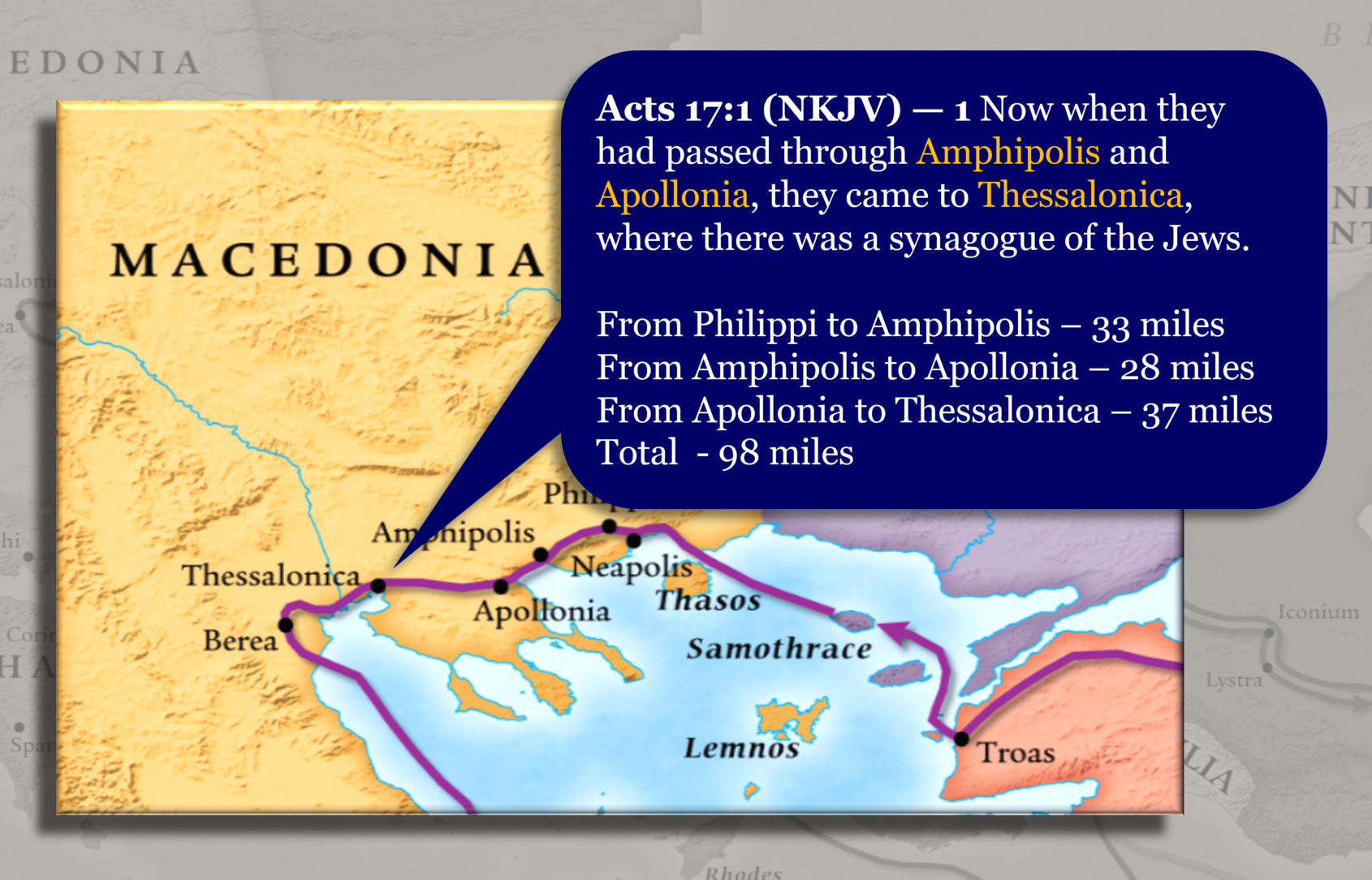
Thessalonica Acts 17:1–3 Paul enters the synagogue according to his established custom and reasons from Scripture over three Sabbaths.
Berea Acts 17:10–12 Upon arriving, Paul and Silas go into the Jewish synagogue, where their message receives a receptive hearing.
Athens Acts 17:17 Paul reasons with Jews and Gentile worshipers in the synagogue while also engaging people daily in the marketplace.
Corinth Acts 18:4–6 Paul reasons in the synagogue every Sabbath, addressing Jews and Greeks, before shifting his ministry following opposition.
Ephesus Acts 18:19; 19:8–10 On his initial visit, Paul enters the synagogue and reasons with the Jews. Upon returning, he teaches there for three months before moving to the school of Tyrannus.

Am I reading too much into the fact that he found a certain Jew? I do not think so. Luke’s account should be read in light of Paul’s deliberate missionary practice and express views on the priority of the nations when presenting the gospel. Finding a certain Jew named Aquila (Latin for eagle) is the outworking of high intention. Paul is looking for persons ready to receive the glad tidings of the gospel. Aquila, as a Jew, should be acquainted with the Torah, the prophecies, and the expectation that God would send a Messiah, King, and deliverer for them. (It is interesting, for those who might want to say that Paul happened to find Aquila, that the same verb and same grammatical form are found here and in Acts 11:25-26. In the earlier passage Barnabas found someone he was looking for — Paul of Tarsus; the search of Barnabas is explicitly stated where Paul’s intention in Corinth is easily inferred from his practice and the surrounding narrative.)

Aquila is not alone; he is in the company of his wife Priscilla (Latin and a diminutive for Prisca; it means ancient or venerable). But why are they in Corinth? That is, why are Aquila and Priscilla in this city at all? It was on account of persecution. Claudius Caesar, in approximately AD 49, commanded all the Jews to get out of Rome. This couple settled in Corinth. Upon finding this man and his wife, Paul came to them (προσῆλθεν αὐτοῖς, prosēlthen autois). The word translated came to is used elsewhere in the gospels and Acts. It often indicates that someone approaches with purpose or with a proposal (Matthew 8:5; Luke 23:52; John 12:21; Acts 9:1). Although it is not stated, the context, the calling on Paul’s life, and actions that follow indicate that Paul approached the couple to coach them in matters of the gospel, to collaborate in ministry, and to be coworkers in their common vocation of tentmaking (Acts 18:3).

3 So, because he was of the same trade, he stayed with them and worked; for by occupation they were tentmakers. 4 And he reasoned in the synagogue every Sabbath, and persuaded both Jews and Greeks.

(Acts 18:3-4; Acts 20:34; 1 Cor. 4:12; 9:14; 2 Cor. 11:7; 12:13; 1 Thess. 2:9; 4:11; 2 Thess. 3:8) – Staying with them was logical. Tools required for his work of tentmaking would already be present with the couple. The arrangement could benefit both of parties. Having Paul with them may have also made it possible for the couple to take on more business. And the apostle would get immediate customers and money needed to support himself while in Corinth. Practically speaking and most importantly, it provided money for Paul so that he was not a burden to Aquila and Priscilla or those whom he would reach and teach. Paul stayed with them and worked (Acts 18:3). They were tentmakers (σκηνοποιός, skēnopoios) by trade. This means, essentially, that Aquila, Priscilla, and Paul were skilled artisans that fitted and stitched material, assembled shelters, and perhaps repaired worn good (Berding, 2021, para. 6). But why was he doing this instead of giving himself continually to prayer and the Scriptures? He training is showing through:

This trade was closely connected with the principal product of Paul’s native province, a cloth of goats’ hair called cilicium, used for cloaks, curtains, and other fabrics designed to give protection against wet. In Judaism it was not considered proper for a scribe or rabbi to receive payment for his teaching, so many of them practised a trade in addition to their study and teaching of the law. Paul, as a matter of policy, earned his living in this way during his missionary career (cf. Acts 20:34; 1 Corinthians 9:3-18; 2 Corinthians 11:7; 1 Thessalonians 2:9; 2 Thessalonians 3:8). (Bruce, 1988, p. 346)

Take notice of the vocational versatility and cultural consideration of Paul when ministering to Gentiles.

Location Reference Significance
Ephesus — recalled in his address at Miletus Acts 20:34 Paul’s manual labor supplied his own needs and those of his companions. His work helped sustain the missionary team.
Corinth 1 Corinthians 9:3–18 Paul affirms the right of gospel ministers to receive financial support, yet voluntarily relinquishes that right among the Corinthians to avoid hindering the gospel and to offer it without charge.
Corinth 2 Corinthians 11:7 Paul preached without charging the Corinthians, humbling himself for their spiritual benefit. The following verses clarify that support from other churches also enabled this ministry.
Thessalonica 1 Thessalonians 2:9 Paul and his companions worked night and day while proclaiming the gospel so that they would not place a financial burden on their hearers.
Thessalonica 2 Thessalonians 3:8 They paid for their food through strenuous labor rather than depending on the Thessalonians. Their conduct also provided an example of diligence and responsibility for believers to imitate.

After working throughout the week as a tentmaker the same man then goes into the synagogue to work with the Scriptures to show Jews and Gentiles that Jesus is the Christ. But what are we to do with this? What is the relevance for the modern missionary, the contemporary carrier of the call to reach the lost, and the here-and-now person plying their trade but wanting to help make disciples.

Paul demonstrates that faithful missionary service leverages vocational versatility while considering culture. He challenges me to put skills to work, share the labor of others, and willingly bear personal costs so that financial demands do not hinder the gospel. And he reminds me that earning a living does not displace duty. He breaks away from the ministry to speak to me personally, “Look at me as I works at my trade and and still makes time to reasons with people about Christ.”

Paul’s example does not require every minister to practice a trade; he affirms his right to receive support (1 Corinthians 9:7–14). All things are permissible. But not all things are profitable. It does call every minister to place the advance of the gospel above personal convenience and the exercise of legitimate rights.

5 When Silas and Timothy had come from Macedonia, Paul was compelled by the Spirit, and testified to the Jews that Jesus is the Christ.

(Acts 18:5) – Something changed when his brethren arrived. Actually two things did. First, Paul is no longer alone. He has the support of gifted and trained coworkers to assist him with the task of telling the truth and telling it well. Second, he has monetary support for his ministry. Silas and Timothy arrived in Corinth from Macedonia with contributions for Paul’s needs. Before his coworkers and support arrived he worked with his own hands to support himself. He did this to prevent missions among the Corinthians from being misconstrued as a way of making money. Who gave to support the ministry? It was the church in Philippi.

15 Now you Philippians know also that in the beginning of the gospel, when I departed from Macedonia, no church shared with me concerning giving and receiving but you only. 16 For even in Thessalonica you sent aid once and again for my necessities. (Philippians 4:15-16)

7 Did I commit sin in humbling myself that you might be exalted, because I preached the gospel of God to you free of charge? 8 I robbed other churches, taking wages from them to minister to you. (2 Corinthians 11:7-8)

With the wages from other churches in hand, the apostle has been freed from the day-to-day grind of tentmaking by generosity of churches that he had planted; explicitly, the churche in Philippi gave to support their spiritual father in the work of evangelism and discipleship. Upon receiving his friends and the funding they brought, the Spirit compels the apostle to get to the point: he testified to the Jews that Jesus is the Christ. Is this unusual? That is, is it unexpected that there would be a surge or fervor in preaching because he is not working to make ends meet. No! The principle at work is clear:

Simpler days can mean greater focus on the calling of Christ. When fellow believers share our burdens and supply practical needs, they help create room for sustained attention to prayer, witness, and discipleship. Every Jesus follower can participate: some gain time to give themselves more fully to ministry, while others make that focus possible through generosity and service. The aim is to use the freedom we receive faithfully—giving our time, gifts, and attention to what advances the gospel. Simplify.

6 But when they opposed him and blasphemed, he shook his garments and said to them, “Your blood be upon your own heads; I am clean. From now on I will go to the Gentiles.” 7 And he departed from there and entered the house of a certain man named Justus, one who worshiped God, whose house was next door to the synagogue.

(Acts 18:6-7) – With the increased intensity and clarity in Paul’s preaching and teaching comes a corresponding counter of greater rejection; they opposed and blasphemed. Some of the Jews resisted the call to consider what the prophecies and work of Christ were indicating. Those same people went on to speak evil of Christ and the work that Paul was doing. What started with reasoning every sabbath had become a move of the Spirit to declare that Jesus is the Christ. Yes, the Spirit indwelling Paul is the force behind the increased intensity. He is in the world to convict, convince, and convert through the foolishness of the message preached.

Emphasis Supporting passages Significance
The Spirit empowers bold proclamation Acts 4:8, 31; Acts 18:5 Peter speaks filled with the Spirit; the gathered believers speak boldly after being filled. Acts 18:5, in the NKJV, explicitly connects Paul’s inward compulsion with the Spirit.
The Spirit convicts John 16:8–11 Jesus says the Spirit will convict the world concerning sin, righteousness, and judgment.
The Spirit testifies to Christ through witnesses John 15:26–27; 16:13–14 The Spirit bears witness to Jesus, guides the apostles into truth, and glorifies Christ. Their witness accompanies His.
The Spirit gives power to the preached message 1 Corinthians 2:4–5; 1 Thessalonians 1:5 Paul attributes the effectiveness of his proclamation to the Spirit’s power, so that faith rests on God rather than human wisdom.
God saves through the message preached 1 Corinthians 1:18, 21–24; Romans 10:14–17 God uses the proclamation of Christ crucified to bring people to faith. The message appears foolish to the world but manifests God’s wisdom and power.
The Spirit gives new life John 3:5–8; Titus 3:5–6 Conversion involves the Spirit’s life-giving work: new birth, regeneration, and renewal.
The Spirit’s work accompanies belief in the truth 2 Thessalonians 2:13–14 Paul connects salvation with the Spirit’s sanctifying work, belief in the truth, and God’s calling through the gospel.

Through the prophetic act of shaking the dust of the synagogue away from his clothing, he declared that he did not want to be judged with them. “When God comes to judge this synagogue and all that is in it for its wicked rejection of grace, I do not want to even have its dust on me.” And then he gives commentary for his conduct: “If I had not preached woe is me. Your blood would be on my head because I knew and did not warn you. But now, I have fulfilled my duty as the watchman. Your unwillingness to heed the warning is on you. I am clean.” F.F. Bruce says it well:

By a spectacular gesture (shaking out his cloak so that not a speck of dust from the synagogue might adhere to it) he expressed his resolve to have done with that building and his abhorrence of the slanderous talk in which his opponents were indulging—not so much against Paul himself as against the one whom Paul proclaimed as Messiah and Lord. He had discharged his responsibility to them, he assured them; if they would not accept the news of salvation which he brought, he was now free of blame. (Bruce, 1988, p. 349)

In the shaking out of his garment his attitude is made plain. He had stayed with his convention and policy of going to the Jews first. But he now spoke to these Jews a word of judgement that they would understand from their prophets.

We find the same language in Ezekiel’s picture of the prophet as a watchman over Israel (33:1–7; cf. 3:18). So Paul always fulfilled his role of witness to his fellow Jews. When it was no longer possible to bear that witness, he moved to the Gentiles. But in the next city he would be back to the synagogue, blowing his warning trumpet. (Polhill, 1992, pp. 384-385)

After saying that from now on he will to the Gentiles, notice what comes next. He goes out of the synagogue to the house next door; the house belongs to a Gentile named Justus. At some point a Gentile made it clear that his home could be used for the ministry rejected by the Jews of the synagogue. Justus is to be commended for using his worldly possession in the promotion of Jesus.

This man now placed his house at Paul’s disposal, and people who had been accustomed to attend the synagogue did not have to leave their habitual route if they wished to go on hearing Paul: they made their way toward the synagogue, as usual, but turned in next door. (Bruce, 1988, p. 350)

What does this say to us today?

The physical structure and religious rites of the synagogue were not required for the ministry to continue. The church is a people gathered around Jesus, receiving Jesus’ words, and learning to obey Jesus. Ministry flourishes where the ways of God are clearly revealed and patiently explained to promote faith in Christ, and where hearts hear and heed His will. Paul’s departure from the synagogue became the beginning of ministry next door. Justus reminds us that we can advance that same mission by opening our homes and placing our resources at Christ’s disposal (Acts 18:6–7). My dorm room, my apartment, or my house can become a place where people hear the gospel and grow as disciples. Keep speaking, recognize fresh opportunities, and consider what you can surrender so that others may hear. Surrender.

Acts 18:8 (NKJV)

8 Then Crispus, the ruler of the synagogue, believed on the Lord with all his household. And many of the Corinthians, hearing, believed and were baptized.

(Acts 18:8) – The apostle has left the building. But the word he preached has not. However, the showdown and departure was not in vain. It was a separation that needed to happen; nothing was gained by not getting to the point and calling for a decision. The ruler of synagogue had become a believer during the time that Paul had been reasoning in their midst on the sabbaths. But it was when Paul left that that something happened. The decision had to be made; if the ruler of the synagogue did not become a Jesus follower he would not have access to the preaching God was making available through Paul. And his household had come to the same conclusion. It seems to ripple out from Crispus because many of the Corinthians, hearing the word of truth or gospel of their salvation, believed and were baptized.

In public baptism their decision was openly declared. Now, in order to get more of the truth that had saved them, they would have to go to the house of a Gentile. Paul was no longer going to the Jews; any Jew that wanted to learn to become effective as a Jesus follower would have to come away from scoffers and blasphemers to a house that was owned by a Gentile. Based on later writings of Paul to the church in Corinth, this Jew stayed with the Gentiles.

[T]he ruler of the synagogue became a believer. He likely was the same Crispus mentioned in 1 Cor 1:14 as one of the few in Corinth upon whom Paul himself administered baptism. (Polhill, 1992, pp. 385)

For Crispus there was a willingness humble himself and become a learner. What does this say to us who are hearing the gospel and realizing that if we accept the offer of God to receive forgiveness and favor through faith in Christ that we are letting go of positions and people that have meant much to us? It is certain that his conversion was a significant change to the synagogue and encouragement to other Corinthians that also believed.

The gospel calls for a decision that becomes visible in our lives. Crispus believed on the Lord, and many Corinthians publicly declared their faith through baptism (Acts 18:8). Following Jesus may cost us status, familiar associations, and the approval of people we love. We receive salvation through faith, but allegiance to Christ means trusting Him with what obedience may cost. Will you believe on the Lord, openly identify with Him, and follow Him even when doing so means leaving something precious behind?

Acts 18:9–11 (NKJV)

9 Now the Lord spoke to Paul in the night by a vision, “Do not be afraid, but speak, and do not keep silent; 10 for I am with you, and no one will attack you to hurt you; for I have many people in this city.” 11 And he continued there a year and six months, teaching the word of God among them.

(Acts 18:9-11) – It has taken a toll on the man. Each of the prior outreaches with the varying degrees of opposition have had a negative effect of his person. His commitment to Christ has been costly. This is what he says about himself in a letter he will eventually write to the Corinthians:

3 I was with you in weakness, in fear, and in much trembling. (1 Corinthians 2:3)

By this time he is not the same. He has been weakened by his ordeals. Looking over his prior experiences I can imagine him in the night saying the following:

Missionary journey Statement Reference
Before the first journey — Damascus I preached Jesus in Damascus, and men plotted to kill me. They watched the gates day and night. I escaped in darkness, lowered through the wall in a basket. Acts 9:22–25; 2 Corinthians 11:32–33
Before the first journey — Jerusalem I spoke boldly about Jesus in Jerusalem, and again men tried to kill me. The brothers had to take me to Caesarea and send me away to Tarsus. Acts 9:28–30
First journey — Antioch in Pisidia In Antioch, crowds came to hear the word, but opponents contradicted me and blasphemed. They stirred up influential people, persecuted Barnabas and me, and drove us out of the region. Acts 13:44–50
First journey — Iconium In Iconium, many believed, but others poisoned people’s minds against us. Then a plot formed to mistreat and stone us. We learned of it and fled. But, Lord, they were going to stone me. Acts 14:1–6
First journey — Lystra I was actually stoned in Lystra. Opponents came from Antioch and Iconium and turned the crowd against me. They dragged me outside the city, believing I was dead. Remember that, Lord! Because I don’t actually remember all of that. Acts 14:19–20
Second journey — Philippi In Philippi, Silas and I were seized and dragged before the authorities. A crowd rose against us. Our clothes were torn off, and we were beaten with rods. Many blows. Did you count them, Lord? Because, I stopped counting after 40. Acts 16:19–23
Second journey — Philippi After the beating, they put us in the inner prison and fastened our feet in stocks. We had come to proclaim freedom in Christ, and there we sat as prisoners. I still worshiped you, though. Remember? Acts 16:23–24
Second journey — Thessalonica In Thessalonica, opponents gathered a mob and attacked Jason’s house, searching for us. When they could not find us, they dragged Jason and other brothers before the authorities. People tried to help us suffered too. Acts 17:5–9
Second journey — Thessalonica to Berea Once again, I had to leave under cover of darkness. The brothers sent Silas and me away to Berea that night. Acts 17:10
Second journey — Berea In Berea, people received the word eagerly. But opponents followed me from Thessalonica and stirred up the crowds there too. The brothers sent me away, while Silas and Timothy remained behind. Acts 17:11–15
Second journey — Athens In Athens, some called me a babbler. When I spoke about the resurrection, some mocked me. Acts 17:18, 32
Second journey — Corinth Now I am in Corinth. I have proclaimed Jesus as the Christ, and again there is opposition and blasphemy. I have left the synagogue and begun ministering next door. Will the hostility become violence again? Acts 18:5–7; the closing question is imagined.
Second journey — Corinth So here I am here in weakness, fear, and much trembling. I know what it can cost to keep speaking. 1 Corinthians 2:3; the closing sentence is imagined reflection.

Paul is so fearful that it is physically manifest in visible trembling of his body. Some translations say that Paul has departed (μεταβαίνω) the synagogue (Acts 18:7). He has done more than depart the synagogue. F.F. Bruce translates 18:7 this way:

7 So, quitting the synagogue, he went into the house of a God-fearer… (Acts 18:7) (Bruce, 1988, p. 349)

He has quit and more. It is in the words of Jesus to Paul that we gain insights into his contemplations. Jesus says, “Do not be afraid, but speak, and do not keep silent; 10 for I am with you, and no one will attack you to hurt you; for I have many people in this city.” What is implied by Jesus words of comfort to Paul? Jesus says, “Do not be afraid” because Paul is fearful. In his own words he was literally shaking with fear. Jesus says “speak, and do not keep silent” because the apostle has considered not speaking the truth and keeping silent about what he knows. You can disagree with my commentary but you will have to then say that Jesus is just saying stuff. Since we know that is not the truth and that the Lord sees Paul’s heart (1 Samuel 16:7), we have to say that he had become weak and was ready to stop speaking.

But Jesus has not and will not leave his follower and faithful servant. Right now he needs a word of encouragement from his friend. After telling the apostle not to be afraid, to speak, and not to be silent, Jesus gives him the basis for keeping these commands:

  • My Presence – for I am with you. Although Jesus says more, this is the foundation for casting out fear – the presence of God is more powerful than any persecution… even death. Paul, you are not alone. The fact that this needs to be stated says that in the moment that is not how he felt. His faith needed to be reminded of the facts.
  • My Protection – and no one will attack you to hurt you; for I have many people in this city. You are not going to be assaulted or harmed
  • My Purpose – for I have many people in this city. Your continued witness matters. Your work is not done and you are being protected in order to fulfill your purpose.

He can now focus on feeding sheep, caring for the new congregation, and the business of being a witness. But what about us? There are two takeaway. One is for the assailants and the other is for assaulted.

For those of us prone to cut with comments and otherwise hurt people that God has sent to help us, we need to know this: it is taking a toll. Our treatment of those who serve us matters. Cruel words, persistent hostility, and careless accusations can wound people who are already carrying heavy burdens. Let us speak truth with love and strengthen those who labor among us.

And when we are the wounded servants, Christ’s encouragement to Paul gives us reason to persevere: (1) Rejection does not mean that the Lord has abandoned us or that our work is finished. (2) Some people may refuse the ministry we offer, but others still need to hear. (3) We may need to change where or how we serve, as Paul did when he moved next door. We must not let fear alone decide whether we continue. (4) Stand firm in the calling of Christ, receive the encouragement He provides, and keep serving those He places before you. In Jesus’ name, move on.

References

Berding, K. (2021, October 18). Was Paul a tentmaker? Part 1: Did Paul make literal tents? The Good Book Blog. Biola University. https://www.biola.edu/blogs/good-book-blog/2021/was-paul-a-tentmaker-part-1-did-paul-make-literal-tents

Bruce, F. F. (1988). The Book of the Acts. Wm. B. Eerdmans Publishing Co.

Polhill, J. B. (1992). Acts. Broadman & Holman Publishers.

Missional Living – The Excellent Evangelism Example (Acts 17:22-34)


22 Then Paul stood in the midst of the Areopagus and said, “Men of Athens, I perceive that in all things you are very religious; 23 for as I was passing through and considering the objects of your worship, I even found an altar with this inscription:

TO THE UNKNOWN GOD

Therefore, the One whom you worship without knowing, Him I proclaim to you: (Acts 17:22–23, NKJV).

Paul does not begin with an indiscriminate blast of information. He has already:

  • observed the city’s idolatry (Acts 17:16),
  • conversed with its people (Acts 17:17–18),
  • listened to their questions (Acts 17:19–21), and
  • examined their objects of worship (Acts 17:23).

The altar is not genuine theological common ground so much as a conversational point of contact, something to seize as a segue to matters of salvation. Paul does not say, “You already worship my God.”

He begins with something familiar. In this way the apostle to the Gentiles shows us a gentle way of getting into spiritual conversations. Start, if
possible, where they are. But don’t stay. He takes them with him in a rational review of basic things and will eventually expose their ignorance. But these are not Jews and this is not the synagogue. By initiating conversation about Jesus with their cultural items, Paul contextualizes the presentation of the gospel.

If he had not gone any further, it would have been less truth than what is required for saving faith. Interesting banter, perhaps—but not the gospel. And so he will not stop at a point of mutual agreement for the sake of keeping the peace. That would have been a compromise of his calling to avoid conflict. He has to keep going.

He could have derided their superstition and immediately pointed them away from the foolishness of idols to the real deal. However, δεισιδαιμονεστέρους (deisidaimonesterous) can carry the sense of “very religious” or “very superstitious.” Paul’s wording is tactful enough to secure a hearing while leaving room for correction. The former would have been tacky—taking cheap shots at their culture as a way to shame them into leaving their false faith. His approach was tactful—gently guiding the listeners from their point of view into the truth.

Paul demonstrates that faithful evangelists are both tactful and truthful: they OBSERVE carefully, listen respectfully, and begin with a familiar point of contact. But they do not stop at common ground. The evangelists patiently leads people from where they are to the saving truth they do not yet know.

God, who made the world and everything in it, since He is Lord of heaven and earth, does not dwell in temples made with hands (Acts 17:24, NKJV).

The word translated dwell (κατοικέω, katoikeō) denotes inhabiting or dwelling. It goes beyond merely appearing somewhere temporarily to indicate living in a space as a home. Paul’s presentation of the truth about the Unknown God begins with creation:

If the God who made the world and everything in it required a temple as His residence, we would be saying that He was effectively homeless until we were created and capable of making a place for Him to live. The Unknown God is not contained within His creation—the world and everything in it — dependent upon His creatures for housing, or confined to a space made by men.

He was unafraid to compare his own knowledge of God as revealed in creation (Psalm 19:1–2) and the Scriptures (1 Kings 8:37; Isaiah 66:1-2) with what was being asserted through the practices of the Gentiles in Athens. Through their idols, temple practices, and teachings, they were making statements about the Unknown God. Paul was there to set the record straight.

Nor is He worshiped with men’s hands, as though He needed anything (Acts 17:25, NKJV).

God is not sustained by human service. The word translated worshiped (θεραπεύω, therapeuō) can mean to serve, attend, care for, or heal. In Acts 17:25, “served” or “attended” best fits the context: Paul is not teaching that human beings should never serve God. The controlling phrase is as though He needed anything. God may accept worship and service, but He is never sustained by them. The logic is devastatingly simple:

God is not the recipient of life’s necessities (Psalm 50:9-12; Micah 6:6-8). He is their source.

Paul has moved from what God does not need—a dwelling place or service—to the truth about Him: God continually gives life, breath, and all things.

26 And He has made from one blood every nation of men to dwell on all the face of the earth, and has determined their preappointed times and the boundaries of their dwellings, 27 so that they should seek the Lord, in the hope that they might grope for Him and find Him, though He is not far from each one of us; 28 for in Him we live and move and have our being, as also some
of your own poets have said, “For we are also His offspring.”
(Acts 17:26–28, NKJV).

Paul does not merely use cultural references to engage in polite disclosure about the One True God; he is engaged in an intentional attempt to deconstruct two dominant philosophical schools of Athens: the Epicureans and the Stoics.

1. Refuting the Epicureans—the Deistic Materialists

The Epicureans believed that if gods existed, they were distant, utterly detached from human affairs, and did not govern the world. They also believed that the soul dissolves at death, making a physical resurrection impossible.

Paul proclaims a God who created the universe and actively sustains it. He explicitly states that God is “not far from each one of us” (Acts 17:27). Further, he says that the Unknown God gives. In fact, in verse 25, Paul says that God gives (didous) to all life, breath, and all things. Didous is a present active participle. The present tense presents the action as ongoing. Paul does not say that God once gave life and then walked away. God remains the active giver of life, breath, and all things. This directly contradicts the Epicurean view of distant, unconcerned deities.

Do you see the conflict? Epicureans say that if there are gods, there are distant and detached. Paul asserts that there is really one God and that He is not far from each one of us (Acts 17:27) and actively gives to all life, breath, and all things (Acts 17:25).

2. Refuting the Stoics—the Pantheistic Fatalists

The Stoics were pantheists. They believed that “God” was an impersonal, divine spark or cosmic reason (Logos) infused throughout the material universe. To them, God was the world. They also believed in a cyclical, fatalistic universe. (That is, the Stoics believed that the universe passed through endlessly recurring cycles and that every event unfolded according to an inescapable, rationally ordered fate.) Paul agrees that humanity is dependent upon the divine, but he radically changes the relationship. God is not in the stone or identical with the cosmos. The cosmos exists within the boundaries established by a transcendent, personal Creator.

In Acts 17:28a, Paul states, “For in Him we live and move and have our being.” The apostle to the nations is quoting the 6th-century BCE Cretan religious teacher and philosopher Epimenides of Crete. The statement is traditionally attributed to the lost Cretica of Epimenides. Because the poem is no longer extant, the attribution and reconstructed surrounding lines should be presented with appropriate qualification. In Cretan mythology, King Minos addresses the supreme deity, Zeus, disputing the popular claim that Zeus had died and was buried in Crete:

They fashioned a tomb for thee, O holy and high one—
The Cretans, always liars, evil beasts, idle bellies!
But thou art not dead: thou livest and abidest for ever,
For in thee we live and move and have our being.

In its original Greek context, the line was an affirmation of pantheistic or panentheistic divine presence: God is not an idol made by hands or a dead entity trapped in a tomb, but the living sustainer of existence. (It should be noted that Paul will quote Epimenides again in Titus 1:12. In that epistle he says that he is quoting a Gentile prophet.)

He also quotes the Stoic poet Aratus of Cilicia (born 310 B.C.) from the fifth line of a work called the Phaenomena:

Let us begin with Zeus. Never, O men, let us leave him
unmentioned. All the ways are full of Zeus,
and all the market-places of human beings. The sea is full
of him; so are the harbors. In every way we have all to do with Zeus,
for we are truly his offspring.

When Paul says, as also some of your own poets have said, “For we are also His offspring” (Acts 17:28b), he quotes a line from Aratus’s Phaenomena, a poem about Zeus that would likely have been familiar to the Stoics among his hearers. The word translated we are (ἐσμέν , esmen), is the first-person plural, present active indicative form of “to be” (εἰμί, eimi). Aratus employed this language within a Stoic worldview in which divine reason permeated the material universe. Paul, however, does not use γένος (genos, “offspring”) to suggest that human beings possess a portion of God’s essence. Rather, he uses the poet’s words to affirm that all humanity owes its existence to God and therefore remains dependent upon Him. Every human being bears God’s image, but no human being shares His divine essence. Believers are personally indwelt by God the Holy Spirit and receive a new nature through regeneration, but they do not thereby become divine.

Paul demonstrates that evangelist learns the culture well enough to speak through its language, literature, and the ideas of its thought leaders. He or she can fearlessly affirm whatever truth the culture has perceived and then candidly expose where the culture is wrong; he or she will DISCERN, DELINEATE, and DECLARE. Cultural knowledge, for the evangelist, becomes a bridge and not a destination. The evangelist uses they bridges discover to lead hearers from familiar concepts to the truth of the living God and the gospel of Jesus Christ.

Therefore, since we are the offspring of God, we ought not to think that the Divine Nature is like gold or silver or stone, something shaped by art and man’s devising (Acts 17:29, NKJV).

Paul follows the quotations with verse 29: “Therefore, since we are the offspring of God, we ought not to think that the Divine Nature is like gold or silver or stone.” If we are the offspring of a personal being, God cannot be an inanimate, impersonal force or an idol carved by human hands. Paul exposes the irrationality of idolatry. The contrast between θεός (theos, “God”) and θεῖον (theion, “Divine Nature”) helps Paul move from humanity’s derivation from God to the nature of God Himself. The argument is:

  1. Humanity derives its life from God.
  2. Human beings possess life, reason, will, and personality.
  3. Therefore, humanity cannot adequately represent its Creator as a lifeless object.
  4. An idol fashioned by the creature must necessarily be inferior to both
    the creature and the Creator.

Or, in the memorable Roderick Barnes paraphrase:

“Don’t be stupid, Mr. Stoic. That don’t make no sense!”

The Stoic might immediately protest that the statue only represents the divine, Paul’s answer remains: the Divine Nature cannot be reduced to anything produced by “art and man’s devising.” Yes, “Even if pagan philosophers rationalize the images as material symbols of the invisible divinity, the great bulk of the worshipers will pay divine homage to the images themselves.” (Bruce, 1988, p. 340) These idolaters were no different from their Jewish counterparts. God forbade the making of images because fallen people would not leave them as mere representations; they eventually would bow before them, serve them, and seek from them the favor and deliverance that belong to God alone.

  • Exodus 20:4–5 — God joins the prohibition against making an image with the danger of worshiping it: You shall not make for yourself a carved image…you shall not bow down to them nor serve them.
  • Deuteronomy 4:15–16, 19 — Because Israel saw no visible form when God spoke, they were commanded to take careful heed to yourselves, lest you act corruptly and make for yourselves a carved image. Moses warned that they might be driven to worship them and serve them.
  • Exodus 32:4–6 — Israel fashioned the golden calf, identified it with the god who delivered them, built an altar before it, and offered sacrifices to it. The image did not remain a mere religious aid; it became an object of worship.
  • Isaiah 44:15–17 — A man uses part of a tree for ordinary fuel and makes the remainder into a god. He then falls down before it and worships it, prays to it and says, “Deliver me, for you are my god!” The idol becomes both the object of adoration and the source from which favor and deliverance are sought.
  • Jeremiah 2:27–28 — Judah said to wood, You are my father, and to stone, You gave birth to me. Yet in trouble they called upon these gods: Arise and save us.
  • Habakkuk 2:18–19 — The idolater trusts in the image he has made and appeals to it for help: Woe to him who says to wood, “Awake!” To silent stone, “Arise! It shall teach!”

30 Truly, these times of ignorance God overlooked, but now commands all men everywhere to repent, 31 because He has appointed a day on which He will judge the world in righteousness by the Man whom He has ordained. He has given assurance of this to all by raising Him from the dead.” (Acts 17:30-31, NKJV).

Paul finally removes the philosophical gloves: The Unknown God now commands a known response. The word translated ignorance (ἄγνοια, agnoia) means ignorance or lack of knowledge. Elsewhere Scripture certainly teaches that humanity suppresses available truth (Romans 1:18–23). Paul’s emphasis here is upon the end of divine forbearance. “Overlooked” does not mean that God approved, excused, or failed to notice their idolatry. It means that He temporarily withheld the final judgment now announced through the gospel. The Unknown God has now made known:

  • His command: everyone must repent.
  • His scope: all people everywhere.
  • His timetable: He has appointed a day.
  • His standard: righteousness.
  • His Judge: the Man whom He ordained.
  • His assurance: He raised that Man from the dead.

The resurrection is therefore not merely evidence that Jesus lives. It is God’s public certification that Jesus Christ is the appointed Judge of humanity and the Son of the true God.

32 And when they heard of the resurrection of the dead, some mocked, while others said, “We will hear you again on this matter.” 33 So Paul departed from among them. 34 However, some men joined him and believed, among them Dionysius the Areopagite, a woman named Damaris, and others with them. (Acts 17:32-34)

Paul has presented the gospel to the Gentiles. What we see next are three responses to the offer of reconciliation.

Response Description Result
Mocking Some mocked Immediate rejection
Interest We will hear you again on this matter Postponed consideration
Belief Some men joined him and believed Faith and identification with Paul

The second response should not automatically be treated as conversion or even sincere openness. We will hear you again may represent genuine interest, procrastination, or polite dismissal. Luke carefully distinguishes these people from those who believed. Paul’s responsibility was faithful proclamation; the hearers remained responsible for their response. The apparent modesty of the results does not indicate that the evangelistic undertaking failed. Dionysius, Damaris, and others unnamed passed from worshiping what they did not know to believing in the risen Christ whom Paul proclaimed. What we are saying is this:

Paul demonstrates that effective evangelism begins where people are but does not leave them there. It moves from the familiar to the Creator, from the Creator to human accountability, from accountability to repentance, and from repentance and judgment to the resurrection. Yes, the resurrection. It is in this that effective evangelism finds it cornerstone and most compelling argument for placing faith in Jesus – because he is risen. The evangelist finds a point of contact and faithfully brings the conversation to Christ and the nonnegotiable demand for a response; they APPEAL.

What are we to do with all of this? Here below are some key questions and actions for you and I.

Question Action Emphasis
How carefully have I observed and listened to the people I am trying to reach? Learn their questions, beliefs, language, literature, and cultural concerns. Look for a familiar point of contact that can open a spiritual conversation. Observe
Can I distinguish the truth within their worldview from the errors that distort it? Affirm what is true without endorsing what is false. Use familiar ideas as a bridge to explain the personal Creator upon whom all people depend. Discern, Delineate, Declare
Have I brought the conversation beyond common ground to Jesus Christ and the necessity of repentance? Clearly proclaim human accountability, the coming judgment, and the resurrection of Jesus. Earnestly appeal to the hearer to repent and believe, while entrusting the response to God. Appeal

References

Bruce, F. F. (1988). The Book of the Acts. Wm. B. Eerdmans Publishing Co.

On The Parables of Christ in the Gospel of Matthew

Introductory Matters

Chapter 1 – Reasons for Writing and Reading

Chapter 2 – The Context and Background of the Parables

The Author – Matthew the Tax Collector

The Audience – The Jews

The Architecture – Five Sections

The Aim – Matthew never says, “I wrote this so that you, reader, would know that or would believe ….” That is, Matthew does not supply a single purpose statement comparable to John 20:31. But we can derive or determine the aim of his account by considering its structure, opening, fulfillment themes, major discourses, and conclusion. From these we may say the following:

Matthew wrote to demonstrate that Jesus is Israel’s promised Messiah and royal Son of David, the fulfillment of the Scriptures and the authoritative presence of God among His people. Through Jesus’ words and works, Matthew explains the character of the kingdom of heaven and its King. In the narrative the former tax collector reveals how the Rabbi from Nazareth forms believers into obedient disciples, and commissions them to make disciples among all nations until the consummation of the age.

Division 1 (Matthew 7–12)

Chapter 3 – The Wise and Foolish Builders (Matthew 7:24–27)

Chapter 4 – New Cloth and New Wine (Matthew 9:16–17)

Chapter 5 – The Children in the Marketplace (Matthew 11:16–19)

Chapter 6 – The Strong Man (Matthew 12:29)

Division 2 (Matthew 13)

Chapter 7 – The Sower (Matthew 13:3–23)

Chapter 8 – The Wheat and the Tares (Matthew 13:24–30, 36–43)

Chapter 9 – The Mustard Seed (Matthew 13:31–32)

Chapter 10 – The Leaven (Matthew 13:33)

Chapter 11 – The Hidden Treasure and the Pearl of Great Price (Matthew 13:44–46)

Chapter 12 – The Dragnet (Matthew 13:47–50)

Chapter 13 – The Householder’s Treasures (Matthew 13:52)

Division 3 (Matthew 18)

Chapter 14 – The Lost Sheep (Matthew 18:12–14)

Chapter 15 – The Unforgiving Servant (Matthew 18:23–35)

Division 4 (Matthew 20–22)

Chapter 16 – The Laborers in the Vineyard (Matthew 20:1–16)

Chapter 17 – The Two Sons (Matthew 21:28–32)

Chapter 18 – The Wicked Vinedressers (Matthew 21:33–46)

Chapter 19 – The Wedding Feast (Matthew 22:1–14)

Division 5 (Matthew 24–25)

Chapter 20 – The Fig Tree (Matthew 24:32–35)

Chapter 21 – The Householder and the Thief (Matthew 24:43–44)

Chapter 22 – The Faithful and Evil Servants (Matthew 24:45–51)

Chapter 23 – The Wise and Foolish Virgins (Matthew 25:1–13)

Chapter 24 – The Talents (Matthew 25:14–30)

Chapter 25 – The Sheep and the Goats (Matthew 25:31–46)

Missional Living – Provoked (Acts 17:16-21)

Amen. Acts 17:16–21 shows what happens when a called missionary sees a city through the eyes of God. Paul’s solitude does not suspend his calling. What he sees provokes him; what provokes him moves him; and what moves him produces an intentional missionary response.

One important distinction should govern our treatment: Luke explicitly says Paul evangelized in the synagogue, but he does not explicitly say Paul went there to recruit additional laborers. That is a reasonable strategic inference—especially in light of Matthew 9:36–38—but it should be presented as an inference rather than Luke’s stated explanation.

Acts 17:16 — The missionary sees what others overlook

Now while Paul waited for them at Athens, his spirit was provoked within him when he saw that the city was given over to idols.

1. Paul’s Calling

Paul had been chosen to carry Christ’s name before Gentiles, kings, and Israel (Acts 9:15; 22:14–15; 26:16–18). Athens was therefore not merely a place where he had been forced to wait. It was part of the Gentile world to which Christ had sent him.

Paul was waiting for Silas and Timothy, but his calling was not waiting. Circumstances had separated him from his companions; they had not separated him from his commission.

2. The Missionary’s Mission

The missionary must first learn to see the mission field. Paul did not merely notice Athens’s buildings, art, history, schools, and sophistication. He perceived its spiritual condition.

Athens could be admired culturally while being devastated spiritually. The missionary sees beyond what a civilization has accomplished to what its people worship.

3. The Perceived Problem and Paul’s Provocation

Luke describes Athens as given over to idols. The Greek adjective κατείδωλος (kateidōlos) conveys the idea of being full of, covered with, or submerged in idols. Idolatry was not located in one isolated temple; it permeated the city.

Paul’s spirit was provoked—παρωξύνετο (parōxyneto). The word can describe intense irritation, indignation, or inward agitation. It is related to the English word paroxysm. Paul was not mildly disappointed. The sight of divine glory being given to created things produced a forceful spiritual reaction within him.

This was not merely cultural intolerance. Paul knew that idols dishonored God, deceived people, distorted human identity, and kept worshipers in spiritual bondage.

4. Paul and the Compassion of Jesus

When Jesus saw the multitudes, He was moved with compassion because they were weary and scattered, like sheep without a shepherd (Matthew 9:36). Paul’s reaction is expressed with a different Greek word and emphasizes indignation rather than compassion. Nevertheless, the pattern is similar:

  • Jesus saw the multitudes.
  • Jesus was moved inwardly.
  • Jesus ministered to them and called for more laborers.
  • Paul saw the idols and the people enslaved by them.
  • Paul was provoked inwardly.
  • Paul immediately began proclaiming Christ.

Jesus was moved by the suffering of shepherdless people. Paul was provoked by the idolatrous system that helped keep people shepherdless. Compassion for the people and indignation toward the bondage are not enemies. Properly ordered, they work together.

5. The Emerging Strategy

Before Luke describes Paul’s preaching, he describes Paul’s perception. Effective missionary strategy begins with spiritual discernment. Paul identified the city’s controlling spiritual problem: pervasive idolatry.

He would not merely denounce individual statues. He would confront the beliefs, loyalties, fears, philosophies, and distorted understanding of God that sustained the city’s idolatry.

6. The Unconventional Undertaking Method

Paul was alone in Athens. Barnabas had separated from him before the second missionary journey (Acts 15:36–40). Luke’s narrative movement suggests that Luke remained behind in Philippi, although Acts does not state this directly. Silas and Timothy were still in Macedonia, having received instructions to join Paul quickly (Acts 17:14–15).

Paul did not choose isolation as his preferred missionary model. He was waiting for his team. Nevertheless, he refused to make their absence an excuse for inactivity.

A missionary may be temporarily without the missionary company, but he is never without the missionary calling.

Acts 17:17 — Provocation becomes proclamation

Therefore he reasoned in the synagogue with the Jews and with the Gentile worshipers, and in the marketplace daily with those who happened to be there.

The word therefore connects Paul’s inward response in verse 16 with his outward action in verse 17. He did not simply complain about the idolatry. He did something about it.

1. Paul’s calling

Paul’s calling included both Israel and the Gentiles. His two locations reflect both dimensions:

  • The synagogue gave him access to Jews and Gentile worshipers.
  • The marketplace gave him access to the broader pagan population.

He did not choose between religious people and secular people. His calling compelled him toward both.

2. The missionary’s mission

Paul reasoned—διελέγετο (dielegeto). This was not uncontrolled shouting or mere denunciation. Paul engaged people through explanation, questions, answers, argument, and persuasion.

The missionary’s task is not merely to announce that people are wrong. It is to help them understand what is true and why the gospel demands their response.

3. Dealing with the problem

Advanced idolatry required a two-front strategy:

Location Audience Strategic purpose
Synagogue Jews and Gentile worshipers Begin with people who possessed some biblical and theological categories
Marketplace Whoever happened to be there Bring the gospel into the ordinary public life of the city

Paul neither abandoned the synagogue nor confined himself to it. He worked from the place of greater spiritual preparation into the place of broader cultural influence.

4. Paul and Jesus

Matthew 9 provides a meaningful parallel. After Jesus saw the shepherdless multitudes and was moved with compassion, He told His disciples to pray for laborers (Matthew 9:37–38). Paul’s movement toward the synagogue may similarly be viewed as seeking receptive people who could become believers, disciples, and eventually fellow laborers.

Still, Paul’s immediate stated activity was evangelistic reasoning. We should say that the synagogue was a place where additional laborers might be found and formed—not that Luke explicitly says recruiting laborers was Paul’s sole or primary purpose.

5. The missionary strategy

Paul’s strategy was both concentrated and dispersed:

  • Concentrated engagement with prepared hearers in the synagogue.
  • Dispersed daily engagement with the general population in the marketplace.

The phrase daily with those who happened to be there reveals disciplined availability. Paul did not wait for a formal speaking invitation. He repeatedly entered the place where people naturally gathered.

6. Going alone

Working alone, Paul created a sustainable missionary rhythm. He did not attempt one spectacular public event. He reasoned repeatedly and daily.

His solitude made the work more difficult, but it may also have driven him to look immediately for receptive people who could become part of the mission.

Acts 17:18 — The gospel encounters competing worldviews

Then certain Epicurean and Stoic philosophers encountered him.

1. Paul’s calling

Paul’s commission eventually brought him into contact with cultural and intellectual authorities. In Athens, his audience included representatives of two influential philosophical traditions.

He was not intimidated by an educated audience because his confidence rested in the risen Christ, not in his own social standing.

2. The missionary’s mission

Luke summarizes Paul’s message as Jesus and the resurrection. Whatever philosophical subjects entered the conversation, Paul kept returning to the person of Jesus and the historical reality of His resurrection.

Paul did not merely offer Athens another ethical system. He announced a crucified and risen Lord.

3. The advanced form of idolatry

Athens’s idolatry was not limited to carved images. It was reinforced by sophisticated worldviews.

  • Epicurean thought generally resisted divine involvement in human affairs and regarded death as the end of personal existence.
  • Stoic thought emphasized reason, fate, self-mastery, and a divine principle permeating the world.

Both systems contained observations that Paul could use as points of contact, but neither could accommodate the biblical Creator, human accountability, or bodily resurrection without fundamental correction.

Advanced idolatry can wear academic clothing. An idol does not cease to be an idol when it is defended by an impressive philosophical system.

4. Paul and Jesus

Jesus was moved by compassion not only to heal but also to teach (Mark 6:34). People needed more than relief; they needed truth. Similarly, Paul’s concern for Athens did not produce sentimental sympathy. It produced sustained engagement with the ideas holding the people captive.

5. The strategy

Paul allowed the philosophers to reveal their assumptions and misunderstandings. Some called him a babbler—σπερμολόγος (spermologos), literally suggesting a seed-picker who gathered disconnected scraps of information. Others misunderstood him as proclaiming foreign gods.

Their reaction exposed the gap Paul would need to cross. The gospel had been heard, but it had not yet been understood.

6. Going alone

Paul entered this intellectual confrontation without Barnabas, Silas, Timothy, or Luke standing beside him. Yet he did not retreat to safer subjects. He proclaimed the message most likely to provoke resistance: Jesus and bodily resurrection.

Courage is not the absence of a desire for companionship. It is faithfulness when companionship is temporarily unavailable.

Acts 17:19 — The missionary accepts an unfamiliar platform

And they took him and brought him to the Areopagus.

1. Paul’s calling

Paul’s calling was carrying him from casual marketplace conversations into a setting associated with Athens’s intellectual and civic establishment. The movement anticipates his later witness before governors, kings, and imperial authorities.

2. The missionary’s mission

The missionary must be prepared when informal witness unexpectedly becomes public testimony. Paul’s daily faithfulness in the marketplace created an opportunity before a more influential audience.

3. The problem

The Athenians regarded Paul’s teaching as new rather than recognizing it as truth. The culture possessed many religious ideas but lacked the framework necessary to understand the Creator, Christ, resurrection, judgment, and repentance.

Religious abundance had not produced knowledge of God.

4. Paul and Jesus

Jesus frequently accepted invitations into settings where the motives of the hosts were mixed. He ate with tax collectors, entered Pharisees’ homes, taught in synagogues, and answered hostile questions. Compassion did not require ideal circumstances or pure motives from the audience.

Likewise, Paul accepted the Areopagus opportunity without demanding that the philosophers first demonstrate spiritual sincerity.

5. The strategy

Paul allowed the marketplace encounter to lead him into a new venue. The missionary strategy was adaptable without becoming compromising.

He did not change his Lord or his gospel. He changed the setting and, as the following verses show, adjusted his point of entry.

6. Going alone

A lone missionary must be especially dependent on the Holy Spirit. There was no teammate present to take the next section, clarify a statement, watch the audience, or help Paul evaluate the encounter.

Yet Paul went. He treated an unexpected summons as a providential opening.

Acts 17:20 — Curiosity creates an opening

For you are bringing some strange things to our ears. Therefore we want to know what these things mean.

1. Paul’s calling

Paul had been sent to open Gentile eyes and turn them from darkness to light (Acts 26:17–18). Their confession that his message sounded strange demonstrated how much illumination was needed.

2. The missionary’s mission

The gospel must be explained, not merely mentioned. Hearing the words Jesus and resurrection was not the same as understanding their meaning.

Paul would need to explain:

  • who God is,
  • who Jesus is,
  • what resurrection means,
  • why humanity is accountable,
  • and what God now commands.

3. The problem

The Athenians’ ears were full of religious and philosophical ideas, yet biblical truth sounded foreign. That is evidence of an advanced stage of idolatry: truth appears strange while falsehood feels familiar.

4. Paul and Jesus

Jesus responded to confused and spiritually needy people by teaching them patiently. Paul likewise did not ridicule the Athenians for failing to understand. Their confusion became an opportunity for instruction.

Compassion interprets confusion as a call to greater clarity.

5. The strategy

Paul would begin with concepts they could recognize—the city’s religious character, an altar, creation, human dependence, and even statements from their poets. He would then lead them toward truths they did not yet accept.

Contextualization does not remove the offense of the gospel. It removes unnecessary confusion so that people can confront the gospel itself.

6. Going alone

Paul had to evaluate the audience and construct his response without immediate consultation with his companions. His years of scriptural formation and missionary experience had prepared him to speak faithfully when there was no time for a team meeting.

Acts 17:21 — Novelty without commitment

For all the Athenians and the foreigners who were there spent their time in nothing else but either to tell or to hear some new thing.

1. Paul’s calling

Paul had not been called merely to interest people. He had been called to summon them to turn from darkness to light and from Satan’s power to God (Acts 26:18).

An audience fascinated by new ideas was not necessarily an audience ready to repent.

2. The missionary’s mission

The missionary must move people from curiosity to accountability. Paul would not allow Jesus to become one more interesting subject in Athens’s endless exchange of ideas.

The gospel is news, but it is not novelty. It announces the reign of the risen Lord and demands repentance.

3. The mature problem of idolatry

Athens’s problem included more than images and temples. It included an appetite for constant novelty without settled submission to truth.

This is intellectual consumerism:

  • listen without obeying,
  • discuss without deciding,
  • examine without repenting,
  • and treat truth as entertainment.

A culture may be endlessly interested in spirituality while remaining deeply resistant to God.

4. Paul and Jesus

Jesus encountered crowds who wanted miracles, bread, debate, or spectacle without discipleship (John 6:26–27; Luke 11:29). Compassion did not lead Jesus to satisfy every appetite of the crowd. He redirected them toward repentance, faith, and obedience.

Paul would do the same. He would engage their curiosity but refuse to cater to it.

5. The strategy

Paul used the opening created by their curiosity, but he did not adopt their values. His Areopagus message would move deliberately:

flowchart TD
    A["Religious observation"] --> B["The unknown God"]
    B --> C["Creator and Lord"]
    C --> D["Human dependence"]
    D --> E["Repentance commanded"]
    E --> F["Judgment through Christ"]
    F --> G["Resurrection as proof"]

Paul began where they were, but he did not leave them there.

6. Going alone

Solitary ministry creates a particular danger: the desire for acceptance can become stronger when no fellow workers are present. Paul could have enjoyed being treated as an interesting new thinker. Instead, he remained a herald of Christ.

He was alone, but he did not become absorbed into the audience. He maintained his missionary identity.

The controlling movement of Acts 17:16–21

The passage moves through a powerful missionary sequence:

  1. Paul waited—but remained watchful.
  2. Paul saw the city’s spiritual condition.
  3. What he saw provoked him inwardly.
  4. His provocation produced redemptive action.
  5. He began among potentially receptive people.
  6. He entered the public marketplace daily.
  7. He engaged sophisticated opposing worldviews.
  8. He accepted an unconventional opportunity.
  9. He remained faithful while operating without his team.

The central preaching truth may be stated this way:

The calling of God causes the missionary to see differently, feel deeply, and act faithfully—even when he must act alone.

And the congregational challenge naturally follows:

What do we see in our city that grieves the heart of God, and what faithful action should that grief produce in us?

Missional Living – (Acts 17:5-15)

The Five A’s in Acts 17:5–15

  • Author: Luke continues his orderly account of the gospel’s movement from Jerusalem toward Rome (Luke 1:1–4; Acts 1:8). He repeatedly shows that persecution may relocate Christ’s witnesses (Acts 8:1-3), but it cannot restrain Christ’s Word (Acts 8:4).
  • Audience: The Acts of the Apostles or Acts is addressed to a particular Theophilus (Acts 1:1). Nevertheless, the comprehensive character of the narrative and its sustained attention to the church’s message, mission, suffering, leadership, and expansion suggest that Luke anticipated a wider Christian readership. In the passage that we are considering, the beloved physician shows believers how the apostolic mission advanced and how different audiences responded to the same message.
  • Atmosphere: Paul and Silas leave Thessalonica at night facing clear and present danger from envious religious adversaries, a mob manipulated and mobilized to attack them, and city leaders wanting to quell any uprising that might bring them unwanted attention (Acts 17:10). Berea initially offers a more receptive environment (Acts 17:11-12), but the peace is soon shattered by Thessalonian opponents who travel from Thessalonica to Berea to start trouble (Acts 17:13).
  • Architecture: Luke deliberately contrasts two synagogue responses. In Thessalonica, jealous leaders reject the message and recruit a mob (Acts 17:5). In Berea, hearers receive the message and investigate the Scriptures (Acts 17:11). The repeated word immediately (εὐθέως | eutheōs) in verses 10 and 14 gives the narrative a striding pace and urgency.
  • Aim: Luke shows that the Word advances through faithful preaching, thoughtful examination, courageous believers, and a team of workers who continue even when a leading missionary must leave.

Acts 17:5-15

5 But the Jews who were not persuaded, becoming envious, took some of the evil men from the marketplace, and gathering a mob, set all the city in an uproar and attacked the house of Jason, and sought to bring them out to the people. 6 But when they did not find them, they dragged Jason and some brethren to the rulers of the city, crying out, “These who have turned the world upside down have come here too. 7 Jason has harbored them, and these are all acting contrary to the decrees of Caesar, saying there is another king—Jesus.” 8 And they troubled the crowd and the rulers of the city when they heard these things. 9 So when they had taken security from Jason and the rest, they let them go.

10 Then the brethren immediately sent Paul and Silas away by night to Berea. When they arrived, they went into the synagogue of the Jews. 11 These were more fair-minded than those in Thessalonica, in that they received the word with all readiness, and searched the Scriptures daily to find out whether these things were so. 12 Therefore many of them believed, and also not a few of the Greeks, prominent women as well as men. 13 But when the Jews from Thessalonica learned that the word of God was preached by Paul at Berea, they came there also and stirred up the crowds. 14 Then immediately the brethren sent Paul away, to go to the sea; but both Silas and Timothy remained there. 15 So those who conducted Paul brought him to Athens; and receiving a command for Silas and Timothy to come to him with all speed, they departed.

Acts 17:5-9 The Continuing Ministry of Jesus Through Paul

This passage shows that the opposition to Paul and Silas was more than a spontaneous disagreement over doctrine. But the Jews who were not persuaded, becoming envious (Acts 17:5) responded to the success of the gospel by recruiting some of the evil men from the marketplace, gathering a mob, and setting the city in an uproar. Unable to find Paul and Silas, they dragged Jason and other believers before the rulers of the city and accused the missionaries of turning the world upside down and acting contrary to Caesar by proclaiming another king—Jesus (Acts 17:6–7). Their envy moved from inward resentment to public opposition, organized agitation, accusations before civil authorities, and ultimately an attempt to suppress the messengers and their message.

This response was not new. The ministry of Jesus had already revealed the pattern, and Jesus had warned His disciples that they should expect to experience it themselves. What Paul encounters in Thessalonica follows a path already visible in the Gospels and earlier in Acts.

Pattern of Opposition Seen First in Jesus’ Ministry Seen in Acts
1. The success of God’s work provokes envy. The problem is not merely disagreement with the message. The growing influence of the messenger threatens the position and influence of established religious leaders. Pilate recognized this motive: For he knew that they had handed Him over because of envy (Matthew 27:18; cf. Mark 15:10). The leaders themselves worried, If we let Him alone like this, everyone will believe in Him (John 11:48). The same motive appears explicitly when the gospel attracts large audiences. But when the Jews saw the multitudes, they were filled with envy (Acts 13:45). At Thessalonica, the Jews who were not persuaded, becoming envious organized opposition to Paul and Silas (Acts 17:5).
2. Envy produces contradiction. When opponents cannot simply ignore the message, they begin publicly challenging the messenger and attempting to undermine what is being taught. Jesus repeatedly faced opponents who challenged Him, not because they sincerely wanted instruction, but because they wanted to discredit Him. Then the Pharisees went and plotted how they might entangle Him in His talk (Matthew 22:15; cf. Matthew 12:14). At Pisidian Antioch the progression is explicit: contradicting and blaspheming, they opposed the things spoken by Paul (Acts 13:45). The disagreement becomes active resistance to the proclamation of the gospel.
3. Contradiction escalates into blasphemy and slander. When the work of God cannot easily be denied, opponents may attempt to redefine it as something evil. After Jesus delivered a demon-possessed man, His opponents claimed, This fellow does not cast out demons except by Beelzebub, the ruler of the demons (Matthew 12:24). They also said, You are a Samaritan and have a demon (John 8:48), and He has a demon and is mad. Why do you listen to Him? (John 10:20). Luke says that Paul’s opponents were contradicting and blaspheming (Acts 13:45). The pattern seen against Jesus now appears against those proclaiming Him.
4. Religious opposition recruits others and becomes organized. Private hostility eventually seeks allies, crowds, and political power capable of silencing the messenger. The religious leaders did not act alone. But the chief priests and elders persuaded the multitudes that they should ask for Barabbas and destroy Jesus (Matthew 27:20). Religious hostility was transformed into organized public pressure against Christ. At Thessalonica the envious opponents took some of the evil men from the marketplace, and gathering a mob, set all the city in an uproar (Acts 17:5). They then brought Jason and other believers before the civil authorities and framed the gospel politically: These are all acting contrary to the decrees of Caesar, saying there is another king—Jesus (Acts 17:7).
5. Jesus predicted that His servants would experience the same treatment. Opposition to the messengers of Christ is therefore not surprising; it is part of the pattern Jesus told His followers to expect. Jesus said, A disciple is not above his teacher, nor a servant above his master (Matthew 10:24). He later warned, If they persecuted Me, they will also persecute you (John 15:20), and specifically predicted religious persecution: They will put you out of the synagogues (John 16:2). Paul’s experiences in Pisidian Antioch and Thessalonica demonstrate the fulfillment of Jesus’ warning. As Paul carries the message of Christ into new cities, opposition to Christ becomes opposition to Christ’s messenger (Acts 13:45, 50; 17:5–9).
6. The pattern extends from Jesus to the apostles and then to Paul. Luke shows continuity between the ministry of Christ and the mission carried forward by His witnesses. Gospel fruit is repeatedly followed by hostility from those threatened by its success. Jesus’ ministry established the pattern: powerful works and growing crowds were followed by envy, contradiction, accusations, organized opposition, and eventually the involvement of civil authority (Matthew 12:14, 24; 27:18–20). Before Paul experienced this opposition, the Jerusalem apostles experienced it. After believers were increasingly added to the Lord (Acts 5:14), the high priest and his associates were filled with indignation (Acts 5:17; Greek ζήλου | zēlou). The same pattern later appears with Paul in Acts 13:45 and Acts 17:5.

Acts 17 contains a final irony. Paul’s opponents accuse the missionaries: These who have turned the world upside down have come here too (Acts 17:6), yet Luke has just told the reader who actually caused the public disorder: Paul’s opponents gathering a mob, set all the city in an uproar (Acts 17:5). The missionaries preached peace through Christ; their opponents organized the riot.

The experience of Paul and Silas therefore bears the marks of the ministry of their Master. Jesus proclaimed the kingdom, drew people to Himself, provoked the envy of threatened leaders, was contradicted and slandered, and finally faced organized religious and political opposition. He warned His disciples that the servant should expect the treatment received by his master. In Thessalonica, that prediction was being fulfilled. The gospel was advancing, people were believing, and those who carried the message of Jesus were beginning to experience the opposition that had first been directed against Jesus Himself.

When opposition, inspired by envy, begins gathering and organizing adversaries to stop a faithful ministry, there is reason to believe that you are on track. The enemies of Jesus are endeavoring to hinder the work of His servant. Why? Because Jesus, working through His people, is waging war successfully against wickedness. The gospel frees slaves, restores dignity, brings the forgiven into the family of God, and sends the redeemed into the mission of God. For this purpose the Son of God was manifested, that He might destroy the works of the devil (1 John 3:8). When that work advances, resistance should not surprise us. Jesus said, If they persecuted Me, they will also persecute you (John 15:20).

Acts 17:10: A New Family Protects the Mission

The people persuaded in Thessalonica (Acts 17:4) had done more than accept Paul’s conclusion that Jesus is the Christ. Luke now calls them the brethren (οἱ ἀδελφοί | hoi adelphoi). This family language indicates that some of the people in Thessalonica have been born again and that a new Christian community has come into existence. Former strangers in the Macedonian city of Thessalonica have become brothers and sisters in Christ. Why? Because they have been brought into the family of God through faith in Christ (John 1:12–13; Galatians 3:26). They have been baptized into the body of Christ through the Spirit of Christ (1 Corinthians 12:13). [Were they also water baptized? Water baptism is not explicitly mentioned in the Thessalonian account, so we should not claim more than Luke records. Nevertheless, baptism normally followed faith in the apostolic mission (Acts 2:41; 8:12; 16:33). It is therefore reasonable to recognize baptism as part of the larger apostolic pattern and assume that it took place. At the same time we acknowledge that Acts 17 does not specifically report it.] In the new family relationship there are new family responsibilities. Luke shows the Thessalonians embracing those new responsibilities.

The brethren do not merely enjoy their new fellowship. They act to protect those through whom they received the gospel. Luke says that they immediately (εὐθέως | eutheōs) sent Paul and Silas away by night. The Greek verb translated sent away is (ἐξέπεμψαν | exepempsan), while by night translates (διὰ νυκτός | dia nyktos). The darkness provided cover for the missionaries’ departure. The immediately (εὐθέως | eutheōs) says that there was urgency and indicates that the danger had not ended with Jason’s posting of a bond and release. But the part that we must see is that the new believers are already accepting personal responsibility for the missionaries; in this way they have also taken personal responsibility for the mission.

Paul and Silas are sent to Berea, a city lying southwest of Thessalonica and away from the Via Egnatia. Their movement toward Berea appears to have been forced by persecution. But the forced detour becomes a missionary opportunity. Hostile people force scattering and departure, but God leverages their leaving for His own glory, the good of the scattered, and the places where they will go (Genesis 50:20; Romans 8:28).

Upon arriving, Paul and Silas enter the synagogue of the Jews (τὴν συναγωγὴν τῶν Ἰουδαίων | tēn synagōgēn tōn Ioudaiōn). Notice that Paul will not stop. He has been beaten in Philippi, opposed in Thessalonica, and hurried out of that town at night. Yet, when he reaches the next city, he goes straight into the synagogue.  He is driven by the grace of God, his great affection for Christ, and the indwelling Spirit to press on in ways that are causing him to lose his life. But instead of quitting, he returns to the work and stays with the commands and conventions of Jesus.

  1. Command – When persecution prevents continued ministry in one place, proceed to another. Jesus said, When they persecute you in this city, flee to another (Matthew 10:23; see also Luke 9:5–6). Flight is not necessarily faithlessness. Sometimes leaving one location is how the witness continues.
  2. Command – Make disciples among all nations. The Great Commission required Christ’s followers to go, make disciples, baptize them, and teach them to observe Christ’s commands (Matthew 28:18–20). Paul cannot allow mistreatment to cancel the commission.
  3. Convention – Begin with those prepared by the Law and the Prophets. Paul’s synagogue-first pattern appears throughout Acts (Acts 13:5, 14–16; 14:1; 17:1–3; 18:4; 19:8). It corresponds with the gospel being for the Jew first and also for the Greek (Romans 1:16; see Acts 13:46). The Jewish people possessed the Scriptures, the covenants, and the promises concerning the Messiah (Romans 3:1–2; 9:4–5). The Law served as a tutor leading people toward Christ (Galatians 3:24), while the Prophets bore witness to the righteousness revealed through faith in Him (Romans 3:21–22).

The synagogue was therefore not merely a familiar meeting place. It was a strategic point of contact with people already acquainted with the vocabulary, promises, and expectations necessary for discussing the Messiah.

When the harvest is plentiful and the laborers are few, the synagogue is the first and best place to go and find people ready to receive redemption and a part in the ministry of reconciliation. Paul has the strength and strategy of Christ in his going to the world with the gospel.

Acts 17:11: Receptive Hearts and Examining Minds

Luke says that the Bereans were more fair-minded (εὐγενέστεροι | eugenesteroi) than those in Thessalonica. The comparative adjective comes from (εὐγενής | eugenēs) and means “noble,” “well-born,” or, in this context, “noble-minded.” Luke is not describing their ancestry or social status. He says their nobility, when compared to the Thessalonians, is a matter of how they responded to the Word. The comparison should not be broadened into a condemnation of everyone in Thessalonica. Some Thessalonians believed and joined Paul and Silas (Acts 17:4). Luke is especially contrasting the Berean synagogue hearers with the jealous and hostile Thessalonian leaders of verses Acts 17:5 and Acts 17:13. Let us take a moment to look more closely at Berean nobility; it had two parts:

  1. Attitude: They received the Word with readiness. They received (ἐδέξαντο | edexanto) the message with all readiness (μετὰ πάσης προθυμίας | meta pasēs prothymias).The noun (προθυμία | prothymia) communicates eagerness, willingness, or readiness of mind. They did not begin with a determination to reject Paul. They were willing to hear the argument fairly. Their hearts were open, but their minds were not switched off.
  2. Action: They examined the Scriptures daily. Luke describes them as examining (ἀνακρίνοντες | anakrinontes) the Scriptures. The participle comes from (ἀνακρίνω | anakrinō), a word associated with careful investigation, questioning, discernment, or judicial examination. Bereans were just accepting what Paul said and they were not casually glancing at a verse before rubber stamping the statements of the apostle. They were investigating Paul’s claims daily (τὸ καθ᾽ ἡμέραν | to kath’ hēmeran).

Their investigation had a specific purpose: to determine whether these things were so (εἰ ἔχοι ταῦτα οὕτως | ei echoi tauta houtōs). In context, these things reaches back to Paul’s claims in Acts 17:2–3: (1) the Messiah had to suffer, (2) rise from the dead, and (3) be identified as Jesus of Nazareth. The Bereans compared Paul’s explanation with the Law, the Prophets, and the Psalms. They did not reject Paul because his teaching was unfamiliar, nor did they accept it merely because he spoke confidently. They allowed the Scriptures to judge the message.

This resembles good science in its commitment to disciplined examination. In science claims are not accepted merely because of the reputation of the person making them. Evidence is examined, conclusions are tested, and reported results must be of the sort that can be independently verified. They were using the revelation they already recognized as authoritative to evaluate Paul’s interpretation. Their example brings together two qualities that are too often separated:

  • Readiness without examination can become gullibility.
  • Examination without readiness can become hardened skepticism.
  • Readiness joined with examination becomes noble discernment.

This is consistent with Paul’s later command: “Test all things; hold fast what is good” (1 Thessalonians 5:21). Ironically, that instruction was written to believers in Thessalonica. The Berean response has become a beacon to everyone that is wanting to consider the hope of the gospel and be thorough in review of the facts.

Acts 17:12: Examination Leads to Faith

Verse 12 begins with an important connection: Therefore many of them believed. Luke uses the inferential conjunction (οὖν | oun), meaning “therefore,” “then,” or “consequently.” Their faith was not disconnected from their examination. They received the Word, searched the Scriptures, discovered that Paul’s claims were consistent with God’s prior revelation, and consequently believed (ἐπίστευσαν | episteusan).

Investigation does not mechanically produces regeneration. Faith remains the result of God’s gracious work through His Word and Spirit (John 3:5–8; Romans 10:17). But this is a message to everyone who wants to know if Christianity can be questioned. It says emphatically that Christianity does not require people to suppress honest questions or ignore evidence. Paul’s preaching could withstand scrutiny because it was rooted in events that had occurred and Scriptures that had already been given.

The Christian faith is not a house of cards that collapses when touched by a sincere question. It is a house founded upon rock (Matthew 7:24–25). Its doors are open to those willing to come and see the truth contained therein (John 1:46). The gospel does not fear investigation; it calls people to investigate with intellectual honesty, moral humility, and a willingness to obey the truth they discover (John 7:17).

Luke also emphasizes the breadth of the response. Many Jews believed, along with prominent Greek women and men. The word translated prominent is the Greek adjective (εὐσχήμων | euschēmōn). In verse 12 it appears in the plural genitive form (εὐσχημόνων | euschēmonōn). The word can describe people who are honorable, respected, influential, or of high social standing. As in Thessalonica, the gospel is reaching Jews and Greeks, women and men, and people with influence in the city (Acts 17:4). Notice the contrast:

  • In Thessalonica, influential opponents use their position to stir up disorder.
  • In Berea, influential hearers submit their conclusions to Scripture and believe.

Status does not determine response. The disposition of the heart toward truth does.

Acts 17:13: Opposition Travels Too

When the Thessalonian detractors learn that the word of God (ὁ λόγος τοῦ θεοῦ | ho logos tou theou) had been proclaimed in Berea by Paul, they head there to stop his work. Notice the description of the message. Luke does not call it Paul’s philosophy, religious opinion, or personal interpretation. It is the Word of God. Paul is the preacher, but God is the source of the message. Luke uses the verb (κατηγγέλη | katēngelē), meaning “was proclaimed” or “was announced.” The verb is passive. The Word of God was being proclaimed by Paul (ὑπὸ τοῦ Παύλου | hypo tou Paulou). Paul is the human agent through whom the divine message is being made known.

The opponents travel to Berea and begin stirring up and troubling the crowds. Luke uses two vivid participles:

  • The participle stirring up (σαλεύοντες | saleuontes), from (σαλεύω | saleuō), means shaking, agitating, or causing instability.
  • The participle troubling (ταράσσοντες | tarassontes), from (ταράσσω | tarassō), means disturbing, unsettling, confusing, or throwing into disorder.

Do not miss the irony. In Thessalonica they accuse Paul and Silas of turning the world upside down. However, they are the ones coming in and causing tumults both in Thessalonica and now in Berea. And realizing they cannot defeat Paul’s argument from Scripture, they attempt to destabilize the audience. In Thessalonica they recruited wicked men from the marketplace and created a mob (Acts 17:5). In Berea they again agitate the crowds. Their strategy is not careful rebuttal but manufactured disorder.

Their persistence reflects the character and activity of Satan. I want to state this part with special care. Luke is not condemning the Jewish people as an ethnic group. Paul, Silas, Timothy, and many Berean believers were themselves Jews. The issue is not ethnicity but spiritual allegiance. Anyone who adopts the devil’s methods of deception, destruction, and murderous opposition begins to resemble the devil morally.

Jesus told hostile leaders that they were imitating the devil, who was a murderer from the beginning and a liar and the father of it (John 8:44). He described the devil as one who snatches away the Word before it can produce fruit (Matthew 13:19), while the tares are sown by the enemy, who is the devil (Matthew 13:38–39). The thief comes to steal, and to kill, and to destroy (John 10:10). Paul would later say explicitly, Satan hindered us (1 Thessalonians 2:18).

The pattern began in Eden. The devil entered a place made good by God, contradicted God’s Word, and sought to destroy innocent beings made in God’s image (Genesis 3:1–5). That same pattern continues whenever people:

  • enter a place where God’s Word is bearing fruit,
  • contradict or distort what God has said,
  • agitate people against God’s messengers,
  • and attempt to prevent reconciliation of rebels to God and one another through faith in Christ.

The gospel seeks restoration between God and humanity and reconciliation among people (2 Corinthians 5:18–20; Ephesians 2:14–18). Satan opposes that work by promoting blindness, confusion, accusation, and division (2 Corinthians 4:4; Revelation 12:9–10). His human agents do not rest merely because the gospel workers have relocated. When they hear that the Word is flourishing elsewhere, they follow in order to stop the advance of the kingdom.

The Thessalonian opponents travel roughly fifty miles to stop the gospel. Paul travels wherever necessary to preach the gospel. That contrast should make some supposed Jesus followers uncomfortable.

Acts 17:14: Remove Paul, and the Mission Continues

The opposition focuses particularly on Paul. Verse 13 says that the Word had been proclaimed in Berea by Paul, and verse 14 says that the brethren immediately sent Paul away. The brethren acted decisively to remove Paul from immediate danger.

The opponents appear to assume that removing the principal preacher will disable the ministry. Their strategy misunderstands the architecture of Christ’s church. The ministry is not built around one indispensable personality. Paul is prominent, but he is part of a missionary team, and the gospel is the power of God, not the power of Paul (Romans 1:16; 1 Corinthians 3:5–7). Silas and Timothy remained there. Luke uses (ὑπέμειναν | hypemeinan), from (ὑπομένω | hypomenō), meaning to remain, stay behind, endure, or continue in a place.

Silas and Timothy did not remain in Berea to twiddle their thumbs, stare sadly toward the sea, and wonder when the world’s most interesting man might return. Luke does not specify their exact activities, so we should avoid inventing a detailed itinerary. Nevertheless, their previous work and later assignments make the likely purpose clear. They remained to strengthen, instruct, and stabilize the new believers.

This was consistent with Paul’s established pattern. He and Barnabas returned to young churches, strengthening the souls of the disciples, and appointed elders (Acts 14:21–23). Paul later sent Timothy to Thessalonica to establish you and encourage you concerning your faith (1 Thessalonians 3:1–3). Silas was himself a prophet and respected leader who strengthened believers through exhortation (Acts 15:22, 32). Paul’s departure therefore demonstrates successful discipleship.

A ministry that collapses whenever its principal leader leaves has gathered an audience but has not advanced their abilities of enough for the mission. Paul could leave because others had been equipped to continue.

There is also an understated detail in verse 14: the brethren (οἱ ἀδελφοί | hoi adelphoi) again act to protect Paul. The gospel has produced more people who will now assume personal risk and inconvenience for the sake of its messenger. Conversion is creating not merely listeners, but participants in the mission.

Acts 17:15: The Body Conducts and Coordinates the Mission

Those escorting Paul brought him all the way to Athens. Luke describes them with the phrase (οἱ καθιστάνοντες τὸν Παῦλον | hoi kathistanontes ton Paulon), literally “those conducting Paul” or “those escorting Paul.” The participle (καθιστάνοντες | kathistanontes) comes from (καθιστάνω | kathistanō), a form related to (καθίστημι | kathistēmi). In this context, it carries the idea of conducting, accompanying, or bringing someone safely to a destination. Luke does not explicitly identify every escort as a recent Berean convert, but the context strongly suggests that members or associates of the new Christian community were involved.

This was no casual trip to the edge of town. Athens lay a considerable distance from Berea. Whether the entire journey was by sea or included an overland portion is not stated. Luke’s concern is not the transportation schedule but the devotion shown by those who conducted Paul safely to his destination.

They went out of their way to ensure through personal escort the welfare of their brother and apostle. How are we caring for our spiritual leadership and people who are called to promote the gospel?

Athens was a renowned center of religion, philosophy, art, and public discussion. Yet Paul did not arrive there as an impressive philosopher accompanied by an academic delegation. He arrived as a persecuted missionary escorted by ordinary believers. God was bringing His witness to one of the great intellectual centers of the ancient world through the loving service of the body of Christ.

Before the escorts departed, they received a command for Silas and Timothy to come to him with all speed. The word translated command is (ἐντολήν | entolēn), and with all speed translates (ὡς τάχιστα | hōs tachista). The expression means “as quickly as possible” or “with all possible speed.”

Paul valued his coworkers and did not view himself as a self-sufficient spiritual celebrity. His urgency shows both the demands of the mission and his dependence upon the team Christ had assembled. The escorts then departed, presumably carrying Paul’s instructions back to Berea. Thus, the believers serve as more than bodyguards. They become part of the mission’s communication network. The work advances because some preach, some teach, some remain, some travel, some protect, and some carry instructions.

Opposition separated Paul from Silas and Timothy temporarily, but it did not destroy their coordination. The enemy could disrupt the team’s location, but he could not dissolve their fellowship or terminate their work.

Practical Application of the Passage

Text Missional Principle What We Do
Acts 17:5–7 Expect resistance when Christ’s mission advances. Opposition does not automatically prove faithfulness, but resistance should not surprise faithful believers. Refuse to be intimidated out of obedience.
Acts 17:6–9 Accept personal cost for the sake of the mission. Jason and the other believers suffered because they identified themselves with Christ’s servants and their work. Put something at risk for the mission.
Acts 17:10 Protect the messenger without abandoning the mission. The brethren sent Paul and Silas away, but the missionaries immediately continued their work in Berea. Protect the people. Preserve the mission.
Acts 17:10–12 Make Scripture central to mission. The Bereans received Paul’s message and examined it against the Scriptures. Open the Bible with someone.
Acts 17:11–12 Receive truth eagerly and examine it carefully. The Bereans combined readiness to hear with disciplined biblical discernment. Receive the Word. Search the Word.
Acts 17:13–15 Keep going when opposition follows you. Opposition followed Paul from Thessalonica to Berea, but it did not stop the mission. Do not let opposition stop your obedience.
Acts 17:14–15 Mission is team ministry. Paul, Silas, Timothy, Jason, and unnamed believers from Thessalonica nd Berea played different roles in advancing the same mission. Find your place and move the mission forward.

Find your place and move the mission forward.

Old Testament Material That Illuminates the Passage

1. Ezra 7:10: The Berean Pattern Before Berea

Ezra prepared his heart to seek the Law of the LORD, and to do it, and to teach statutes and ordinances in Israel.

This verse brings together the essential elements seen in Berea:

  1. a heart prepared to receive,
  2. a determination to search,
  3. submission to what is discovered,
  4. and readiness to communicate it to others.

The Bereans were not searching merely to win an argument. Their examination was connected to believing and obeying.

2. Isaiah 8:20: Revelation Tests Religious Claims

To the law and to the testimony! If they do not speak according to this word, it is because there is no light in them.

Isaiah establishes the principle that new religious claims must be tested by God’s existing revelation. The Bereans did not evaluate Paul according to novelty, popularity, or eloquence. They asked whether his teaching agreed with what God had already spoken.

3. Deuteronomy 13:1–5: Even Impressive Claims Must Be Tested

Moses warned Israel that even signs and wonders did not excuse them from testing a teacher’s message according to prior revelation. A spectacular ministry was not sufficient evidence of faithfulness. This explains why examining an apostle was not disrespectful. The Bereans were obeying a principle already embedded in the Law. Paul’s authority did not require unquestioning credulity.

4. Deuteronomy 18:15–22: The Coming Prophet and the Testing of Speech

This passage promises a prophet like Moses whom God’s people must hear, while also providing standards for evaluating prophetic claims. It therefore supports both parts of the Berean response: readiness to hear God’s promised messenger and care in determining whether a message truly comes from God. It may also have formed part of Paul’s argument that Jesus was the promised prophet and Messiah (Acts 3:22–26).

5. Proverbs 18:13, 17: Hear Fully and Examine Carefully

He who answers a matter before he hears it, it is folly and shame to him (Proverbs 18:13).

The first one to plead his cause seems right, until his neighbor comes and examines him (Proverbs 18:17).

These proverbs describe the intellectual fairness lacking among the Thessalonian opponents and present among the Bereans. The Bereans heard Paul’s case and then examined it. They were neither prematurely dismissive nor carelessly accepting.

6. Psalm 1:1–3 and Joshua 1:8: Daily Attention to Scripture

The Bereans examined the Scriptures daily (τὸ καθ᾽ ἡμέραν | to kath’ hēmeran). Psalm 1 describes the blessed person meditating in God’s law day and night, while Joshua 1:8-9 commands continual meditation upon the Book of the Law.

Daily examination was therefore more than academic curiosity. It reflected the Old Testament portrait of the faithful person whose life is continually shaped by God’s Word.

7. The Messianic Texts They May Have Examined

Because these things (ταῦτα | tauta) refers back to Paul’s claims in Acts 17:2–3, the Bereans were likely examining passages related to the Messiah’s suffering, resurrection, reign, and identity. Luke does not list the exact scrolls they opened, but the following passages were central to apostolic preaching:

  • Genesis 3:15: The promised offspring is wounded yet defeats the serpent.
  • 2 Samuel 7:12–16: The promised Davidic king receives an enduring throne.
  • Psalm 2: God establishes His Anointed King despite the nations’ opposition.
  • Psalm 16:8–11: God’s Holy One will not be abandoned to the grave. Peter and Paul both apply this passage to Jesus’ resurrection (Acts 2:25–32; 13:35–37).
  • Psalm 22: The righteous sufferer is mocked, afflicted, vindicated, and ultimately praised among the nations.
  • Psalm 110:1: David’s Lord is exalted to God’s right hand.
  • Isaiah 52:13–53:12: The Servant suffers for the sins of others, is cut off, and afterward sees the fruit of His sacrificial work.
  • Daniel 7:13–14: The Son of Man receives everlasting dominion.
  • Zechariah 12:10: God’s people look upon the one who was pierced and mourn.

Paul’s message was not that Jesus surprisingly became the Messiah after an unfortunate crucifixion. His argument was that the Scriptures had always anticipated a Messiah who would suffer, be vindicated, rise, and reign.

8. Genesis 3:1–15: The Pattern Behind the Opposition

Genesis 3 supplies the theological background for verse 13. The serpent:

  1. enters what God has made good,
  2. questions and contradicts God’s Word,
  3. deceives human beings,
  4. attacks those made in God’s image,
  5. and opposes God’s purposes.

The Thessalonian agitators reenact this pattern when they enter Berea, disturb people who are receiving God’s Word, and attempt to prevent its life-giving results. Yet Genesis 3:15 also promises the serpent’s defeat. The opposition may wound God’s servants, but it cannot overturn God’s redemptive purpose.

The controlling truth of Acts 17:10–15 is therefore this:

The messengers may be driven from city to city, but the Word keeps arriving and birthing new believers before the opposition can stop it.

Missional Living – Pressing On (Acts 17:1-4)

17:1 Now when they had passed through Amphipolis and Apollonia, they came to Thessalonica, where there was a synagogue of the Jews. 2 Then Paul, as his custom was, went in to them, and for three Sabbaths reasoned with them from the Scriptures, 3 explaining and demonstrating that the Christ had to suffer and rise again from the dead, and saying, “This Jesus whom I preach to you is the Christ.” 4 And some of them were persuaded; and a great multitude of the devout Greeks, and not a few of the leading women, joined Paul and Silas.

Pressing On (Acts 17:1)

Although Paul and Silas had been shamefully treated in Philippi, their ministry there had been remarkably fruitful. The gospel was preached to a gathering of Gentile women (Acts 16:13); Lydia and her household believed and were baptized (Acts 16:14–15); a demonically oppressed girl was delivered (Acts 16:16–18); prisoners heard prayers and praises offered to God (Acts 16:25); and the Philippian jailer and his household were brought to faith in Christ and baptized (Acts 16:30–34). Before leaving Philippi, Paul and Silas returned to Lydia’s home, encouraged the newly formed fellowship of believers, and departed (Acts 16:40). The Now of Acts 17:1 introduces the next stage of Paul’s second missionary journey.

From Philippi, Paul and Silas pressed onward through Amphipolis and Apollonia until they reached Thessalonica (Acts 17:1). The journey covered approximately one hundred miles along the Via Egnatia. Traveling westward from Philippi along the Via Egnatia, they passed approximately 33 miles through Amphipolis. They may have lodged there, but Luke records no extended ministry. They were traveling through. They continued approximately 28 miles to Apollonia and then another 37 miles to Thessalonica. Altogether, they traveled nearly 100 miles on foot before beginning their next recorded season of ministry.

Their perseverance becomes even more striking when we remember what they had just endured. They had been stripped, severely beaten, confined in the inner prison, and fastened in stocks (Acts 16:22–24). Paul later reminded the Thessalonians that he and Silas had “suffered before and were spitefully treated at Philippi” (1 Thessalonians 2:2). Yet they did not retire from their mission. Although they were still recovering from persecution and may have borne its visible marks, they entered another city and began proclaiming Christ again.

Figure 1 – From Philippi to Thessalonica

We possess advantages Paul did not have: automobiles, airplanes, telephones, livestreams, social media, printed Bibles, electronic libraries, and instant communication. We can carry the gospel farther in hours than Paul could travel in days or weeks. Yet greater convenience is not necessarily accompanied by greater commitment.

Paul did not remember the journey principally as an impressive feat of physical endurance. He remembered that, after suffering in one city, God gave them boldness to preach in the next (1 Thessalonians 2:2). They pressed on!

Their wounds did not silence their witness. Their mistreatment did not diminish their mission. Their disappointment did not determine their direction.

How do we compare? Paul and his companions traveled nearly 100 miles on foot, perhaps while still bearing the wounds of Philippi, to tell strangers that Jesus is the Christ. We often find it burdensome to go next door, to cross the street, to drive across town, to alter an evening’s schedule, or to endure an uncomfortable conversation to speak about Jesus.

The question raised by this journey is not merely, “How far would we walk?” It is:

What inconvenience, discomfort, rejection, or sacrifice are we willing to endure so that someone else may hear that Jesus is the Christ?

Paul’s 100-mile trek makes me see the relative weakness of my own Christianity; it is often the case that it serves only when service is convenient. These missionaries did not wait until they were completely rested, emotionally restored, socially appreciated, and physically comfortable. They went because Christ was worthy, the gospel was true, and Thessalonica needed to hear it.

They had been beaten, but they kept walking. They had been rejected, but they kept their resolve to carry the message of reconciliation where it was needed. They had suffered for Christ in Philippi, and they were still willing to speak for Christ in Thessalonica.

A Strategic Starting Point (Acts 17:2)

Why did they stop in Thessalonica? That is, why did Paul and Silas not stop to preach Christ in Amphipolis or Apollonia? Luke supplies a strategically important detail and deciding factor:

where there was a synagogue of the Jews. (Acts 17:1)

Paul was not wandering aimlessly hoping to meet people with whom he could have dialogue about religious stuff. He was moving purposefully toward population centers in which he had common ground for conversation about the Christ. The synagogue provided people who also knew the Scriptures and would have copies (Luke 4:16-21; Acts 15:21), who also anticipated the Messiah, and who also could understand an argument drawn from Moses and the Prophets. Paul, therefore, was being strategic when he entered the synagogue, and for three Sabbaths reasoned with them from the Scriptures (Acts 17:2). His ultimate goal was to reach everyone with the offer of reconciliation. But the laborers were few (Matthew 9:37-38; Luke 10:2). Paul’s custom of going to the synagogue was two-pronged in purpose. First, it was part of his hope to reach his brethren (Romans 1:16; 9:1-3; Acts 13:46). Second, it was his strategy for getting help in bringing the gospel to the nations (Acts 18:1-4, 24-28). Synagogues gathered God-fearers and Jews already grounded in the Law and the Prophets; the attendees were, again,  the most prepared candidates to receive Christ and immediately assist in carrying the gospel to the surrounding Gentile world.

Explaining and Demonstrating (Acts 17:3)

How did the apostle go about reaching the people in the synagogue with the gospel? In Acts 17:3, Luke uses two vivid, complementary Greek verbs—dianoigō (διανοίγω – explaining) and paratithēmi (παρατίθημι – demonstrating)—to describe how Paul methodically engaged the synagogue in Thessalonica from the Scriptures.

  • Explaining: dianoigō (διανοίγω) – The verb dianoigō (διανοίγω) literally means “to open thoroughly” or “to open completely” (dia, “through,” + oignymi, “to open”). In classical and biblical usage, it describes unbarring what was closed or bringing clarity to what was hidden. Luke uses dianoigō three times in Luke 24 to establish the post-resurrection pattern of scriptural illumination:
    • Luke 24:31: In this case the opening of eyes is not literal but figurative. After His crucifixion and resurrection, two of Jesus’ followers were joined by Him as they walked to Emmaus.  Although they were walking and talking with Someone they had been in close company with for years, they did not realize it was Jesus in their company. During time together in the house they broke bread together; then their eyes were opened (diēnoichthēsan) and they recognized Him. When it says that their eyes were opened it does not mean they had been walking with their eyes closed for seven miles. Their eyes had been restrained (Luke 24:16). It means that they were finally given the ability to perceive who the Stranger in the midst really was (Matthew 11:27; John 12:39-40).
    • Luke 24:32: It is more than an epiphany. Looking back they realized that something was happening as He explained the fact that the Christ had to suffer. Scriptures that they had formerly not seen as clearly stating the necessity of the Christ suffering as he redeemed His people were made plain. The disciples on the Emmaus road asked, “Did not our heart burn within us while He talked with us on the road, and while He opened (diēnoigen) the Scriptures to us?”
    • Luke 24:45: “And He opened (diēnoixen) their understanding, that they might comprehend the Scriptures.”
In Acts 17:3, Paul follows the exact rabbinic and Christological method of Jesus in Luke 24: he “opened” the Hebrew Scriptures by unfolding texts that had previously seemed veiled or obscure, revealing how the Messianic prophecies directly required suffering and resurrection. The veil of their meaning was taken away.
  • Demonstrating: Paratithēmi (παρατίθημι) – The verb paratithēmi combines para (“beside”) and tithēmi (“to place” or “to set”). It literally means “to place side by side” or “to set before.” In this context, paratithēmi carries the sense of adducing evidence or setting proofs side-by-side. Paul placed the Old Testament prophecies of the suffering Servant and Messiah (e.g., Isaiah 53, Psalm 16, Psalm 22) alongside the historical facts of Jesus’ life, death, and resurrection.

By placing the prophecy next to the historical fulfillment, the conclusion was inescapable: “This Jesus whom I preach to you is the Christ” (Acts 17:3). Paul was not the only one capable of doing this. On Pentecost, Peter had done the same thing (Acts 2:14–36). Using passages from Joel and the Psalms (Joel 2:28–32; Psalm 16:8–11; Psalm 110:1), the big fisherman explained the recent crucifixion and resurrection of Jesus and the strange occurrence of people speaking in other languages as evidence that Jesus of Nazareth is both Lord and Christ (Acts 2:4–11, 22–24, 31–36).

After years under the teaching of Peter and the other apostles, this skill is also seen in members of the Jerusalem church (Acts 2:42; 5:42; 6:7). Philip was able to show the Ethiopian eunuch that the passage he was reading from Isaiah was a prophecy concerning Jesus of Nazareth (Isaiah 53:7–8; Acts 8:26–35). Philip was not an outlier. When persecution broke out, the church was scattered (Acts 8:1–3). The people who had been discipled in Jerusalem went everywhere preaching the word (Acts 8:4; 11:19–21). What word? They preached Christ and explained the connection between the Scriptures and the life, death, and resurrection of Jesus (Acts 8:5, 12, 35). Being separated from the apostles did not render the church members incapable of advancing the cause of Christ. After being mentored by the apostles, they were able to speak about Christ effectively and to give a reason for the hope that was in them (1 Peter 3:15).

This raises an important question for modern Jesus followers: Can we do this? Are we developing the skill needed to explain and demonstrate from the Scriptures that Jesus is the Christ? Are the people whom we are discipling being taught to do this? The apostles taught the believers in Jerusalem this skill through their doctrine and public witness (Acts 2:42; 4:33; 5:42). When persecution broke out and the church was scattered, they went everywhere preaching the word (Acts 8:1, 4). This is how the early church spread.

The Outcome – Persuaded People Join the Mission (Acts 17:4)

So, what came out of all that explaining, demonstrating, and reasoning? Luke says that Paul’s reasoning from the Scriptures produced results. The beloved physician says that some of the Jews were persuaded. Luke presents their persuasion as the result of sustained reasoning from the Scriptures. Paul explained the prophetic testimony, placed it alongside the historical facts concerning Jesus, and called his hearers to consider the conclusion. They were convinced by the evidence Paul presented from the Scriptures. The prophecies concerning the suffering and resurrection of the Messiah corresponded with the historical facts concerning Jesus of Nazareth (Acts 17:2–3). Their faith was reasonable because it rested upon revelation and evidence.

But persuasion was not the end of their response. Those who were persuaded joined Paul and Silas. The word translated joined indicates that they associated themselves with the missionaries and became part of the new community being formed around Jesus. They did more than agree with Paul’s interpretation. They publicly aligned themselves with Paul, Silas, and the gospel they preached. In Thessalonica, where opposition would soon become violent, this identification required courage (Acts 17:5–9; 1 Thessalonians 2:14). Genuine faith produces a change in allegiance and association.

The response extended beyond the Jewish members of the synagogue. A great multitude of the devout Greeks believed. These were Gentiles who had turned away from pagan religion to worship the God of Israel and had become associated with the synagogue, although they had not necessarily become full Jewish proselytes. Paul’s message showed them that they did not have to become Jews before coming to God. Through faith in Jesus Christ, believing Jews and Gentiles were brought into the same redeemed community (Acts 10:34–35, 43; 15:7–11; Galatians 3:26–29).

Luke also reports that not a few of the leading women joined Paul and Silas. His expression means that a significant number of prominent and influential women believed. Women had already played an important role in the Macedonian mission. In Philippi, Lydia believed the gospel, opened her home to Paul’s company, and helped provide a place from which the new church could grow (Acts 16:14–15, 40). Leading women would also respond to the gospel in Berea (Acts 17:12). Luke refuses to treat these women as incidental or invisible. Their conversion mattered both to the church and to the cities in which they lived.

Acts 17:4 presents a diverse beginning for the Thessalonian church: some Jews, a great multitude of God-fearing Greeks, and a significant number of leading women. The gospel crossed ethnic, cultural, and social boundaries. These people had different backgrounds, but they were brought together by one conviction: Jesus is the Christ. Their shared faith created a new fellowship and gave them a new allegiance. This verse also shows the relationship between explanation, persuasion, and identification. Paul explained and demonstrated the truth from the Scriptures; the hearers were persuaded; and those who were persuaded joined themselves to the people advancing the gospel. Healthy evangelism seeks more than momentary agreement. It calls people to believe in Jesus, identify with His people, and participate in His mission (Matthew 28:19–20; Acts 2:41–42).

In His grip by His grace,
Roderick L. Barnes, Sr.

Questions for Discussion

  1. What does Paul and Silas’s decision to continue toward Thessalonica reveal about their understanding of calling, suffering, and perseverance?
  2. How does the fruitful ministry in Philippi help us see that hardship is not necessarily evidence that a ministry has failed (Acts 16:13–40)?
  3. Paul and Silas traveled approximately one hundred miles after being beaten and imprisoned. What physical, emotional, or spiritual wounds are most likely to cause us to withdraw from serving Christ?
  4. Why did Paul begin his ministry in the synagogue? What does his choice reveal about intentional and strategic evangelism?
  5. Paul “reasoned,” “explained,” and “demonstrated” from the Scriptures that Jesus is the Christ (Acts 17:2–3). What does each of these activities contribute to an effective presentation of the gospel?
  6. How well prepared are we to show someone from Scripture that the Christ had to suffer, die, and rise from the dead?
  7. Paul’s message was not merely that a Messiah would come. His conclusion was, “This Jesus whom I preach to you is the Christ.” Why must faithful evangelism bring the conversation specifically to Jesus?

Questions for Prayer

  1. Where have disappointment, mistreatment, or exhaustion caused me to lose momentum in serving Christ?
  2. What wounds do I need to bring honestly before God so that they do not become reasons for disobedience?
  3. Am I asking God only to remove difficulties, or am I also asking Him for strength to remain faithful through them?
  4. Do I know the Scriptures well enough to explain clearly why Jesus is the Christ? In what area do I need greater preparation?

Closing Prayer

Lord, give us the courage to press on when obedience is costly. Heal the wounds that tempt us to retreat, and keep hardship from turning into bitterness or fear. Ground us deeply in Your Word so that we can reason clearly, explain faithfully, and demonstrate that Jesus is the Christ. Lead us to people who are ready to hear, and work through the gospel to persuade them. Make us faithful in going, speaking, praying, giving, and supporting others until the work You have entrusted to us is complete. In Jesus’ name, amen.

Before I Was Born

Our message this morning is not part of a series. It is not the conclusion of weeks spent going through a book or a topic. Today’s sermon is standalone, it is set apart, and singular among those that you will typically hear at Compass Church. On 9 August 2026 we break from routines, programs, and preaching schedules for a special installment: Your Calling, Your Courage, and Your Consequences.

Why do you care about this message? Real success can not be separated from insight and intention. Excellence is never an accident. If you and I are going to be successful we must have clarity on our calling, courage to do what is right, and an a deep appreciation of what awaits us when we begin keeping His commands.

This message is based on Jeremiah chapter 1. The words of this prophet’s book are often referenced in the New Testament.

  • Jeremiah the rejected prophet → Jesus the rejected Prophet — Matt. 16:14; 21:13
  • Jerusalem and temple judgment→ Jesus’ judgment upon Jerusalem — Jer. 7; Matt. 21; 23
  • Rachel’s sorrow followed by restoration → Messiah’s arrival — Jer. 31:15–17; Matt. 2:17–18
  • No boasting in human strength → boasting in the Lord/Christ — Jer. 9:23–24; 1 Cor. 1:31; 2 Cor. 10:17
  • The promised New Covenant → accomplished through Christ — Jer. 31:31–34; Heb. 8:8–12; 10:16–17
  • Judgment of Babylon → final judgment of “Babylon” — Jer. 51:63–64; Rev. 18:21

The opening of the book introduces the reader to Jeremiah the prophet and the unshakable foundation of his ministry and yoir ministry.

The Creation and Call of Jeremiah (Jeremiah 1:1-5)

When Jeremiah hears God say, “Before I formed you in the womb I knew you, before you were born I set you apart” (Jeremiah 1:5), it strips away any illusion that ministry is a career path he chose, an enterprise he managed, or a brand he built. It is an ordination that predates his birth and breathing. Like Paul echoes in Ephesians 2:10, he is workmanship crafted beforehand for good works, not frantic human industry.

Assigned Attributes and Abilities – My physical features, intellectual abilities, and background are part of God’s work to make me fit for my function.

Decisions not Merely Defects – My shortcomings are not just unwanted aspects of my person. They are decisions that somehow can help with making Him known. Consider the man born blind (John 9). Notice also Matthew’s vocation and then his contribution to canon (Matthew 9; Ephesians 2:10).

I believe I am fearfully and wonderfully made to do God’s will. I have been born and born again to succeed in my mission.

The Courage Required for Jeremiah’s Calling (Jeremiah 1:6-10)

Jeremiah does not respond with “Let’s go!” He is like Moses making excuses and like Gideon getting down on himself. He is like us looking for loopholes and a way out of doing God’s will.

The Consequences of Answering the Call

Conclusion

Complementarian and Egalitarian Views of Women in Church

Women in Church Leadership: A Conservative Exegetical Examination

The strongest forms of complementarianism and egalitarianism are not distinguished by whether Scripture is authoritative. Conservative advocates on both sides may affirm inspiration, inerrancy, grammatical-historical interpretation, the unity of Scripture, and the binding authority of apostolic teaching. The disagreement concerns what the inspired texts actually teach and whether certain apostolic restrictions are:

  1. Creation-grounded and permanent, or
  2. Situation-specific applications of broader gospel principles.

The decisive question is not, “Did women minister in the New Testament?” Clearly they did. The question is:

Does the New Testament reserve the governing and doctrinal leadership of the local church to qualified men, even while authorizing women to pray, prophesy, teach, evangelize, serve, and exercise significant ministry?

My assessment, after a prayerful review of the Scriptures, is that the complementarian interpretation makes better sense of the clearest restrictive texts, especially 1 Timothy 2:11–15 and the elder qualifications in 1 Timothy 3 and Titus 1. Nevertheless, in my view, some customary complementarian restrictions go beyond what those passages actually say. That is, some complementarian restrictions, in the view of this interpreter, are extrabiblical. The New Testament depicts women participating far more broadly in ministry than some traditional church cultures have permitted.

1 Hermeneutical Principles

Before examining individual passages, several conservative principles should govern the discussion.

1.1 Clear Texts Should Interpret Examples

Narratives report what happened. They do not necessarily commend the conduct or situation in the context to the reader. What do I mean with this? I mean that those who would hold a biblical position on the role of women in the church or in ministry most consider the following:

  • Deborah’s judgeship
  • Priscilla’s instruction of Apollos
  • Junia’s relationship to the apostles
  • Phoebe’s ministry

Again, narratives do not necessarily commend the conduct of the characters or convey an implicit command. The examples in Scripture that show women serving have context (covenant, culture, and behaviors that are to be either imitated or avoided). Examples should not automatically cancel explicit apostolic instruction. Didactic passages explicitly teach what churches should do and how individual Christ followers should live; teaching passages should be used to evaluate examples. Conversely, prohibitions should not be interpreted so broadly that they erase ministries Scripture positively attributes to women.

1.2 Immediate Context Comes Before Reconstructed Background

Historical background can illuminate the meaning of a biblical passage. Responsible interpretation therefore considers the social setting, religious environment, political circumstances, and cultural assumptions of the original audience. (In other writings I encourage would-be Bible scholars to get the five A’s of study: author, audience, aim, atmosphere, and architecture.) Such background, however, must remain subordinate to the textual evidence. A proposed reconstruction should not be allowed to replace, reverse, or render inert what the author explicitly states. This is especially true when the reconstruction depends upon circumstances the author never mentions.

This principle is particularly important in interpreting 1 Timothy 2:11–15. Some interpreters have argued that Paul was responding specifically to domineering Ephesian women who had been influenced by the cult of Artemis, myths of female primacy, or emerging Gnostic ideas about Eve’s superiority to Adam (Glahn, 2023; Kroeger & Kroeger, 1992). These proposals may contribute useful information about the broader religious environment of Ephesus, but their supposed or actual presence in the background does not by itself establish that they constitute the situation Paul is addressing.

Indeed, Paul does not mention Artemis, female priestesses, a matriarchal Ephesian movement, or a teaching that Eve created Adam. Nor does he explain his instruction by saying that certain women were temporarily prohibited because they were uneducated, domineering, or spreading an Artemis-influenced heresy. Instead, he explicitly grounds his reasoning in the biblical creation and fall narratives: “For Adam was formed first, then Eve. And Adam was not deceived, but the woman being deceived, fell into transgression” (1 Timothy 2:13–14, NKJV).

Consequently, an interpretation that depends upon an otherwise unmentioned group of domineering women, the theology of the Artemis cult, or a reconstructed proto-Gnostic mythology bears a heavier burden of proof than an interpretation grounded in Paul’s stated rationale. Historical reconstruction may help explain the circumstances in which the instruction was given, but it should not displace the reason Paul himself supplies. The interpreter must begin with Paul’s explicit appeal to Genesis and then ask how the Ephesian setting may illuminate that argument—not begin with a proposed Ephesian setting and use it to explain away the argument.

1.3 Creation Arguments are Normally Transcultural

When an apostolic command is grounded in (a) local disorder, (b) contemporary shame, (c) missionary expediency, or (d) temporary circumstances, its application may vary. When it is grounded in the pre-Fall creation narrative, the argument ordinarily carries broader normative force. That does not solve every question, but it strongly influences the interpretation of 1 Timothy 2:13.

1.4 Scripture Must be Harmonized without Flattening Distinctions

The interpreter must hold together all of the following:

  • Women are depicted praying and prophesying in the gathered Christian community, provided they do so in a manner consistent with the order Paul prescribes (1 Corinthians 11:5).
  • Older women are specifically instructed to teach what is good and to train younger women in godly conduct, marriage, family life, and household faithfulness (Titus 2:3–5).
  • Priscilla, together with her husband Aquila, privately explains “the way of God more accurately” to Apollos, an already eloquent and knowledgeable man who needed fuller instruction concerning Christ (Acts 18:24–26).
  • Paul prohibits a woman from teaching or exercising authority over a man in the setting addressed in 1 Timothy 2, and he grounds that prohibition in the order of creation and the account of the fall rather than in a stated local Ephesian circumstance (1 Timothy 2:11–14).
  • The qualifications for an overseer/elder are consistently expressed in male and household-head terms, including being “the husband of one wife” and one who manages his own household well (1 Timothy 3:1–7; Titus 1:5–9).

A sound interpretation must explain all of these; it will not build a theology from only one group of texts.

1.5 Equality Does Not Automatically Imply Interchangeability

Equal dignity does not logically require identical functions. The Father and the Son are equally divine (John 1:1; John 5:18; John 10:30; Colossians 2:9), yet the Son is sent by the Father (John 3:16–17; John 5:23–24; John 6:38). Without losing His divine dignity and authority (Daniel 7:13–14; John 17:5; Philippians 2:6), the Son willingly submits Himself to the Father (John 4:34; John 5:30; John 6:38; 1 Corinthians 15:28). The Holy Spirit is likewise clearly presented as divine (Acts 5:3–4; 1 Corinthians 2:10–11; 2 Corinthians 3:17), yet He performs a distinct work: He glorifies the Son, bears witness concerning Him, convicts the world, and brings believers into the knowledge of the truth (John 14:26; John 15:26; John 16:8–14; Titus 3:5–6). Likewise, the members of Christ’s body possess equal standing while performing different functions (Romans 12:4–8; 1 Corinthians 12:4–27).

Sons and Daughters of Levi – The qualification for certain roles under the Old Covenant was, in part, based upon one’s God-appointed identity. Only those who were physically descended from Aaron were permitted to serve in the priesthood (Exodus 28:1; Numbers 3:10; Numbers 18:1–7). Likewise, the Levites alone were entrusted with the care and transportation of the tabernacle and its furnishings (Numbers 1:47–53; Numbers 4:1–33; Deuteronomy 10:8–9).

Good intentions did not authorize a person to assume responsibilities that God had assigned to another.

Those who attempted to minister in capacities for which they had neither been called nor authorized incurred divine judgment. Korah and his company sought the priesthood and were judged by God (Numbers 16:1–40). King Uzziah, though a godly king, presumed to burn incense before the Lord and was struck with leprosy because that ministry belonged exclusively to the priests descended from Aaron (2 Chronicles 26:16–21). Likewise, when Uzzah reached out to steady the Ark of the Covenant, his action appeared sincere and well-intentioned, yet he died because the Ark was to be handled only in the manner God had prescribed through the Levites (Numbers 4:15; Numbers 7:9; 1 Chronicles 15:2, 13–15; 2 Samuel 6:6–7). These examples from Scripture demonstrate a principle:

Sincerity is not a suitable substitute for obedience, and giftedness or good intentions do not nullify the qualifications God establishes for particular offices and ministries.

Sons of David – And then consider what may be said concerning the Messiah? His identity and qualification were not determined merely by good intentions, personal ability, or a general connection to Israel. Scripture required Him to be the promised Son of David, the royal heir through whom God would establish an everlasting kingdom (2 Samuel 7:12–16; Psalm 89:3–4, 29–37; Isaiah 9:6–7; Jeremiah 23:5–6). A sincere descendant of Simeon, for example, could not simply assume the messianic office. Why? God had already located the coming King within the tribe of Judah and, more specifically, within the house of David (Genesis 49:10; Ruth 4:17–22; Matthew 1:1; Romans 1:3; Revelation 5:5). The Messiah is therefore called the “Branch” from the stem and roots of Jesse (Isaiah 11:1–10) and the righteous Branch raised up for David (Jeremiah 23:5; Jeremiah 33:14–17). Even within David’s royal house, however, the problem of Jeconiah’s judgment had to be resolved, since his descendants were declared unfit to prosper as kings upon David’s throne (Jeremiah 22:24–30). The New Testament presents Jesus as possessing the legal royal claim through Joseph’s Davidic line, which passed through Solomon and Jeconiah (Matthew 1:6–16), while His actual human descent from David did not depend upon Joseph’s biological fatherhood. He was conceived by the Holy Spirit and born of the virgin Mary – a descendant of David through his son Nathan (Matthew 1:18–25; Luke 1:30–35). Thus, the Messiah’s office belonged neither to the merely willing nor to the generally gifted, but to the One who fulfilled the precise identity, lineage, promises, and divine appointment established beforehand in Scripture (Luke 1:31–33; Acts 2:29–36; Acts 13:22–23).

Scripture consistently distinguishes equality of dignity from interchangeability of function.

Just as God assigned particular priestly duties to qualified descendants of Aaron without declaring them more valuable than the rest of Israel, so the equal worth and spiritual giftedness of men and women do not require that every ecclesial role be open to both.

In the church, divine calling is governed not by sincerity, ability, or cultural preference alone, but by the qualifications and order God has revealed. Therefore, men and women should be understood as equal and mutually necessary members of Christ’s body, while not interchangeable in every office or ministry function (Romans 12:4–8; 1 Corinthians 12:12–27; 1 Timothy 2:11–15; 1 Timothy 3:1–13).

2 Genesis 1–3: Creation, Order, and the Fall

2.1 Genesis 1:26–28: Equal image-bearing and shared dominion

The Bible says that “male and female he created them.” (Genesis 1:27) The position of the complementarian begins here; likewise, the position of the egalitarian also begins here. Yes, you read that right. If you are new to this whole discussion, they both begin here. What does the underlying text say? The Hebrew terms are:

  • זָכָר — zāḵār, male
  • נְקֵבָה — nəqēḇâ, female

Together, male and female bear the image of God, receive the blessing, and are commanded to fill the earth and exercise dominion.

2.2 The Egalitarian Reading

Egalitarians emphasize that no hierarchy is explicitly stated in Genesis 1:26-28. The dominion mandate is given jointly. Male and female are equally commissioned as God’s royal representatives. Let me say, that is a sound observation. Any doctrine portraying women as less intelligent, less spiritual, less responsible, or less representative of God is incompatible with Genesis 1.

2.3 The Complementarian Reading

Complementarians agree concerning equal dignity but argue that Genesis 1 does not give a detailed account of marital or ecclesial order. They would say that those concepts emerge in Genesis 2 and in Paul’s interpretation of it. Complementarians assert that a doctrine should not be built on Genesis 1 without its accompanying details for the narrative about the creation of humanity found in Genesis 2.

2.4 Exegetical Conclusion

Genesis 1 decisively establishes equality of nature, dignity, and vocation. By itself, however, it neither proves nor disproves differentiated leadership roles. But something is more than suggested about a distinction of roles in (1) the text of Genesis 2 and (2) interpretation of an apostle. What is suggested in the former?

3 Genesis 2:18 — “A helper corresponding to him”

The woman is called:

עֵזֶר כְּנֶגְדּוֹ — ʿēzer kĕneḡdô

This may be rendered as either (a) “a helper corresponding to him,” (b) “a helper suitable for him,” or (c) “a helper who is his counterpart.”

3.1 The meaning of ʿēzer

The Hebrew word ʿēzer (עֵזֶר), translated “helper,” does not denote inferiority, servility, or lesser personal worth. In the Old Testament, the term frequently describes God Himself as the helper of His people.  The word is used to describe the LORD as one who delivers, protects, strengthens, and supplies what they cannot provide for themselves (Exodus 18:4; Deuteronomy 33:7, 26, 29; Psalm 33:20; Psalm 70:5; Psalm 115:9–11; Psalm 121:1–2; Psalm 124:8; Hosea 13:9). Therefore, when the woman is called an ʿēzer (עֵזֶר) for the man in Genesis 2:18, the word cannot legitimately be reduced to “servant,” “junior assistant,” or “subordinate being.” Rather, it identifies her as the necessary companion and corresponding partner whom God provides because the man is unable to fulfill the human vocation alone (Genesis 1:27–28; Genesis 2:18–24). The term establishes the woman’s indispensable contribution. It is not good man should be alone (Genesis 2:18). And yet, by itself this truth about ʿēzer (עֵזֶר) does not settle every question concerning order, responsibility, or role within marriage and the church.

3.2 The meaning of kĕneḡdô

The expression means something like “corresponding to him,” “opposite him,” or “matching him.” Eve is neither identical to Adam nor beneath him in humanity. She is the counterpart without whom his mission cannot be fulfilled.

3.3 The Egalitarian Argument

Egalitarians argue that the phrase expresses mutuality, correspondence, and strength rather than hierarchy. They are right in rejecting the idea that “helper” means a naturally inferior assistant.

3.4 The Complementarian Argument and Roderick’s Table of Examples

Complementarians readily affirm that the Hebrew word helper (עֵזֶר, ʿēzer) does not imply weakness, servility, inferiority, or lesser worth. Scripture repeatedly uses ʿēzer of God Himself, whose help is powerful, indispensable, and often decisive for the deliverance of His people (Exodus 18:4; Deuteronomy 33:26, 29; Psalm 121:1–2). The strength of the term, however, does not by itself settle the question of relational order. A person may provide essential assistance to another person and possess greater strength, wisdom, or ability that the person they serve. The one serving has a different calling calling or commission that the person they serve.

But, Roderick, you will say, where did you get this? Scripture offers several examples of this distinction. Aaron possessed the speaking ability Moses lacked, yet Moses had received the original commission to confront Pharaoh (Exodus 4:10–16). The seventy elders received the Spirit and helped Moses bear the burden of governing Israel, yet their assistance did not erase Moses’ distinctive responsibility and prior call to be primary leader (Numbers 11:16–17, 24–25). Abigail exercised better judgment than David and prevented him from committing bloodshed, but her wisdom in that moment did not make her Israel’s anointed king (1 Samuel 25:23–35). In each case, indispensable help coexists with differentiated responsibility.

This distinction is significant in Genesis 2. Adam is formed first, placed in the garden “to tend and keep it,” and given the command concerning the tree before the woman is created (Genesis 2:7, 15–17, NKJV). The woman is then made because the man’s solitary condition is “not good” and because he cannot fulfill the human vocation alone (Genesis 2:18). She is not an inferior servant but a strong, necessary, corresponding partner who shares his humanity and the divine mandate of Genesis 1:27–28. Nevertheless, the narrative presents her formation in relation to Adam’s need and prior commission. Thus, ʿēzer establishes the woman’s dignity, strength, and indispensability, but the term alone does not disprove an ordered relationship of responsibility. Here below is a table of cases where someone is called to help another and where the helper is not lesser in ability or dignity.

Biblical example Strength or importance of the helper Relational order or prior commission References
God helping Israel God is infinitely stronger than those He helps. His help provides protection, deliverance, and victory. The word ʿēzer cannot imply inferiority. At the same time, the word “helper” by itself does not define the structure of every relationship in which it appears. Exodus 18:4; Deuteronomy 33:7, 26, 29; Psalm 33:20; 70:5; 121:1–2
Aaron helping Moses Aaron possessed the speaking ability Moses believed he lacked and became his spokesman. Moses had already received the divine call and commission. Aaron’s indispensable assistance did not transfer Moses’ commission to Aaron. Exodus 3:10; 4:10–16, 27–30; 7:1–2
Hur and Aaron supporting Moses Moses could not keep his hands raised without their physical support. Israel’s success in battle depended upon their assistance. Moses remained the appointed leader through whom God visibly directed the battle, although he could not fulfill that role alone. Exodus 17:8–13
Joshua assisting Moses Joshua was a capable military commander and eventually succeeded Moses as leader of Israel. During Moses’ ministry, Joshua served in relation to Moses’ prior commission and authority. His strength did not make their roles identical. Exodus 17:9–14; 24:13; 33:11; Numbers 27:18–23
The seventy elders assisting Moses The elders received the Spirit and helped bear the burden of governing Israel. Their assistance was necessary because the task was too heavy for Moses alone. God had commissioned Moses to lead Israel. The elders shared the burden without erasing Moses’ distinctive responsibility. Numbers 11:10–17, 24–25
Bezalel and Aholiab assisting in the tabernacle work They possessed Spirit-given wisdom, artistic skill, and technical ability necessary to construct the tabernacle. Their gifts served the larger sanctuary commission God had entrusted to Moses. Expertise did not eliminate ordered responsibility. Exodus 31:1–11; 35:30–35; 36:1–2
David’s mighty men supporting David These warriors were often stronger in battle than David and performed extraordinary acts of courage. Their military power supported David’s God-given kingship rather than making each warrior king. 1 Chronicles 11:10–25; 12:1–23
Joab commanding David’s army Joab was an experienced and formidable military commander upon whom David repeatedly depended. Joab’s military strength and authority remained related to David’s royal office. His abilities did not make him Israel’s king. 2 Samuel 8:15–16; 10:7–14; 18:1–5
Abigail helping David Abigail displayed greater wisdom and restraint than David at a critical moment and prevented him from committing bloodshed. Her superior judgment in that situation did not make her Israel’s anointed king. She strengthened David by helping him act consistently with his calling. 1 Samuel 25:23–35
Deborah helping Barak Deborah was a prophetess, judge, and the spiritually perceptive figure in the narrative. Barak refused to go without her. Her strength demonstrates that female assistance is not weakness or inferiority. Yet the narrative still distinguishes Deborah’s prophetic role from Barak’s commission to assemble and lead the troops. Judges 4:4–10, 14–16; 5:1, 12
Priscilla and Aquila helping Apollos Priscilla and Aquila possessed theological knowledge that Apollos lacked and explained “the way of God more accurately” to him. Their corrective assistance strengthened Apollos for his ministry; it did not imply inferiority on their part or sameness of every function. Acts 18:24–28
Phoebe assisting many believers Paul describes Phoebe as a servant of the church and a benefactor or patron of many, including himself. Her material and ministerial support was substantial. Her strength and importance demonstrate that assistance can be honorable, influential, and indispensable without requiring that every ecclesial role be identical. Romans 16:1–2
The woman created as man’s helper The woman supplies what the man cannot provide for himself: corresponding human companionship, partnership, procreation, and the shared fulfillment of humanity’s vocation. Adam is created first, receives the garden commission and prohibition, and is then given the woman as the strong counterpart corresponding to him. Genesis 1:27–28; 2:7, 15–18, 21–23; 1 Corinthians 11:8–9; 1 Timothy 2:13

3.5 Assessment

The word ʿēzer (עֵזֶר) does not imply inferiority or lesser worth. Any complementarian argument for an ordering of responsibility between man and woman must therefore be established from the structure of the Genesis narrative and the later apostolic use of that narrative, not from the meaning of the word “helper” itself.

3.6 The Creation Order

Genesis presents the following sequence:

  1. Adam is formed. (Genesis 2:7)
  2. Adam receives the command. (Genesis 2:16–17)
  3. Adam names the animals. (Genesis 2:19–20)
  4. Eve is formed from Adam. (Genesis 2:21–22)
  5. Adam names her ʾiššâ (אִשָּׁה), woman. (Genesis 2:23)
  6. The two become one flesh. (Genesis 2:24)

Complementarians see leadership significance in Adam being created first. Paul explicitly appeals to this in 1 Timothy 2:13: “For Adam was formed first, then Eve.” (See also my table from section 3.4 The Complementarian Argument and Roderick’s Table of Examples). Complementarian writers therefore argue that creation order is not a later cultural imposition but part of Paul’s own reasoning.

Egalitarians offer several responses to the complementarian appeal to the order of creation:

  • Chronological priority does not, by itself, establish authority. The fact that Adam was created before Eve is not regarded as sufficient evidence that God thereby established Adam as Eve’s ruler or leader (Payne, 2009; Belleville, 2000).
  • The order of creation cannot consistently be treated as a hierarchy of authority. Animals were created before human beings, yet Genesis explicitly places the animals under human dominion rather than giving them authority over those created later (Payne, 2009; Mowczko, 2017).
  • Eve’s creation from Adam emphasizes their shared humanity, correspondence, and unity. Adam recognizes the woman as “bone of my bones and flesh of my flesh,” indicating sameness of nature rather than inferiority of status (Payne, 2009; Bartlett, 2019).
  • The woman may be understood as the culmination of the creation narrative rather than as a subordinate addition to it. On this reading, the movement of Genesis 2 reaches its resolution when the man’s aloneness is remedied by the creation of the woman who corresponds to him (Payne, 2009; Bartlett, 2019).

The animal analogy, however, is not completely parallel. Paul himself, not merely modern complementarians, assigns theological significance to Adam’s being formed first: “For Adam was formed first, then Eve” (1 Timothy 2:13). Thus, my fellow believers, while chronological priority does not inherently establish authority, the Christian interpretation must still account for Paul’s inspired appeal to that sequence. The real exegetical question is therefore not simply whether being first ordinarily conveys authority, but why Paul considers Adam’s formation before Eve relevant to his instruction in 1 Timothy 2:11–12.

4 Genesis 3:16 — Is Ruling Part of Creation or Part of The Curse?

God tells the woman, “Your desire shall be for your husband, and he shall rule over you.” The verb is מָשַׁל — māšal, “rule.”

4.1 The Egalitarian Interpretation

Egalitarians commonly argue that male rule is a consequence of the Fall, not God’s original intention. Redemption should overcome domination rather than sanctify it. That is substantially correct: sinful domination is not presented as an ethical command. God does not tell Adam, “You must rule harshly over your wife.” He describes a fractured relationship resulting from their disobedience.

4.2 The Complementarian Interpretation

Complementarians distinguish between (1) benevolent order before the Fall, and (2) sinful domination after the Fall. They argue that the Fall corrupts an existing order rather than creating every relational distinction from nothing.

4.3 Assessment

Genesis 3:16 cannot legitimately be used to authorize male domination, for the husband’s sinful rule over the woman is presented as a consequence of the Fall, not as a command to be obeyed. The central interpretive question is whether Genesis 2 already reveals a benevolent ordering of responsibility before sin entered the world.

Paul’s appeal to the creation order in 1 Timothy 2:13 (“For Adam was formed first, then Eve”) shows that he understood Genesis 2 to contain a meaningful pre-Fall distinction in responsibility and order.

Thus, the Fall did not create male headship; it corrupted it, turning responsible, self-giving leadership into the temptation toward domination. Biblical order must therefore be distinguished from sinful control: the former is rooted in creation and expressed through sacrificial responsibility, while the latter belongs to the disorder introduced by sin (Genesis 2:15–23; Genesis 3:16; 1 Timothy 2:11–13; Ephesians 5:25–29).

5 Equality in Christ (Galatians 3:28)

Let us consider another passage that is central to the argument of egalitarians. It comes from one of the letters written by Paul. He says, in writing to the churches in Galatia, “There is neither Jew nor Greek, there is neither slave nor free, there is no male and female, for you are all one in Christ Jesus.” In Greek this is

οὐκ ἔνι ἄρσεν καὶ θῆλυ
ouk eni arsen kai thēly
“There is no male and female.”

Paul, is a Jew. Thus he is both aware and likely echoing the wording of Genesis 1:27.

5.1 The Egalitarian Reading

Egalitarians understand this as a major declaration in support of their position. In Christ, gender cannot be used to restrict access to covenant status, the Spirit, gifts, inheritance, or ministry. They contend that the gospel breaks down social structures that privilege one group over another. The Spirit’s gifting, not gender, should determine ministry.

5.2 Complementarian Reading

Complementarians respond that Galatians 3:28 must be interpreted in light of the immediate argument of the passage. Paul is not discussing whether every social, biological, or ecclesial distinction has been abolished. His concern is how sinners are justified, how they become members of God’s family, how they are united with Christ, and how they receive the promised inheritance.

The surrounding verses make these subjects plain:

  • Justification by Faith: “For you are all sons of God through faith in Christ Jesus” (Galatians 3:26, NKJV).
  • Union with Christ through Baptism: “For as many of you as were baptized into Christ have put on Christ” (Galatians 3:27, NKJV).
  • Equal Standing in Christ: “There is neither Jew nor Greek, there is neither slave nor free, there is neither male nor female; for you are all one in Christ Jesus” (Galatians 3:28, NKJV).
  • Participation in Abraham’s Promise: “And if you are Christ’s, then you are Abraham’s seed, and heirs according to the promise” (Galatians 3:29, NKJV).

Paul’s declaration is therefore about equal access to salvation and equal membership in the covenant family of God. Jews do not possess a superior claim to Christ over Gentiles. Free persons do not receive a higher grade of salvation than slaves. Men are not more justified, more baptized, more united to Christ, or more entitled to the inheritance than women. All who belong to Christ stand on the same ground of faith and receive the same saving promises.

Complementarians argue that egalitarian interpretations sometimes require Galatians 3:28 to accomplish more than Paul is attempting to establish. The passage declares the removal of spiritual privilege and exclusion; it does not remove every distinction of identity, vocation, relationship, or responsibility. Becoming one in Christ did not cause Jewish and Gentile identities to disappear. Paul continued to describe himself as an Israelite and a member of the tribe of Benjamin (Romans 11:1; Philippians 3:5), and he continued to speak of Jews and Gentiles as recognizable groups within the church (Romans 9:24; 1 Corinthians 10:32; Galatians 2:14–15). Their ethnic distinctions remained, although neither group possessed a superior standing before God.

Likewise, “male and female” did not cease to describe created, embodied realities. Paul continued to address men and women as men and women and to give instructions that recognized sexual distinction within marriage, family life, and the gathered church (1 Corinthians 11:3–16; 14:34–35; Ephesians 5:22–33; Colossians 3:18–19; 1 Timothy 2:8–15). Whatever conclusions one reaches about those particular passages, Galatians 3:28 cannot simply be assumed to cancel them. Paul’s affirmation of equal standing in Christ must be held together with the other distinctions he continues to recognize elsewhere.

The slave-and-free statement provides an especially useful comparison. Paul’s words established that a slave and a free person possessed equal standing before Christ. Both were justified by faith, clothed with Christ in baptism, and made heirs of the promise. Yet this spiritual equality did not immediately erase every social and household relationship in the first-century world.

Onesimus is a clear example, my fellow Jesus followers. He was apparently separated from his master Philemon and later encountered Paul, through whom he became a believer. Paul calls him “my son Onesimus, whom I have begotten while in my chains” and says that he had become “profitable” to both Paul and Philemon (Philemon 10–11, NKJV). Paul then sent Onesimus back, describing him no longer merely as a servant but “more than a slave—a beloved brother” (Philemon 12, 16, NKJV). Onesimus’ conversion radically transformed his spiritual and relational standing. He was now Paul’s son in the faith, Philemon’s brother in Christ, and a fellow member of the covenant community.

Nevertheless, and this is key, Paul still recognized the existing social relationship (slavery) and Onesimus back to Philemon rather than simply declaring the relationship nonexistent (Philemon 12–14). He appealed to Philemon to receive Onesimus as he would receive Paul himself and offered to repay any debt Onesimus owed (Philemon 17–19). Elsewhere, Onesimus is called “a faithful and beloved brother,” yet he is still identified as one who belonged to the Colossian community from which Philemon apparently came (Colossians 4:9, NKJV).

The case of Onesimus therefore illustrates the distinction between equality of standing and the immediate elimination of every social structure. The gospel profoundly changed how Philemon was obligated to regard and treat Onesimus: not as a disposable possession, but as a beloved brother in the Lord. Yet Paul did not present baptismal unity as though all social relationships vanished the moment a person believed.

Complementarians apply the same principle to the phrase “male and female.” Galatians 3:28 excludes any claim that men possess greater access to Christ, greater spiritual worth, or a superior inheritance. It does not, by itself, prove that every distinction of responsibility between men and women has been abolished. Such questions must be answered from the full range of Paul’s teaching rather than by making one statement about salvation carry conclusions beyond its immediate subject.

5.3 Conservative assessment

Galatians 3:28 emphatically establishes:

  • equal salvation,
  • equal covenant membership,
  • equal inheritance,
  • equal access to Christ,
  • equal reception of the Spirit.

It does not directly discuss qualifications for eldership. Using it as though Paul had written, “There is neither male nor female in eligibility for every church office,” imports the debated conclusion into the text. At the same time, complementarians must not reduce the verse to a thin statement that men and women merely “go to heaven the same way.” Union with Christ creates profound ecclesial fellowship and overturns systems of spiritual privilege.

Conclusion: Galatians 3:28 establishes equality but does not by itself settle role differentiation.

6 Acts 2:17–18: Sons and Daughters Prophesy

Peter quotes Joel the prophet when he says, “Your sons and your daughters shall prophesy … even on my male servants and female servants … I will pour out my Spirit, and they shall prophesy.”

6.1 The Egalitarian Argument

The Spirit is poured out without sexual distinction. Women receive revelatory speech and proclaim God’s word. Therefore, attempts to confine women to passive or invisible ministry contradict Pentecost. This is a very strong argument against blanket female silence. I have mentioned this repeatedly from the pulpit and it is the basis for my strong belief that women have a voice in the church.

6.2 Complementarian response

Complementarians generally agree that women may prophesy. They distinguish prophecy from the regular, governing teaching office of an elder. In the New Testament:

  • Prophecy may be spontaneous and congregational.
  • Prophecy must be weighed or evaluated.
  • Teaching preserves and transmits the apostolic deposit.
  • Elders have continuing responsibility for doctrine and oversight.

This distinction is debated, but it is not invented simply to evade Acts 2. Paul permits women to prophesy in 1 Corinthians 11 while restricting some form of teaching or authoritative activity in 1 Timothy 2.

6.3 Assessment

Acts 2 proves that women are:

  • recipients of the Spirit,
  • authorized witnesses,
  • speakers of God’s truth,
  • participants in the church’s prophetic ministry.

It does not explicitly identify women as elders or overseers. But, fellow Christ followers, it decisively refutes any model in which women are merely silent spectators.

7 Women Praying and Prophesying (1 Corinthians 11:2–16)

This passage is one of the most important controls on the interpretation of 1 Corinthians 14 and 1 Timothy 2. Why? Paul writes, “Every woman who prays or prophesies with her head uncovered dishonors her head.” Notice that, whatever the head-covering practice means, Paul assumes women are praying and prophesying. This is key to saying that women have a voice and are to be heard in the church.

7.1 Was this public worship?

The context concerns church tradition, communal honor, and practices leading into the Lord’s Supper in 11:17–34. Most interpreters therefore understand public or congregational activity to be in view. A reading that says women may never speak in the assembled church cannot easily reconcile itself with this passage. Even complementarian interpreters acknowledge that Paul does not prohibit women from prophesying in Corinth.

7.2 The meaning of kephalē: “head”

Paul says, “The head of every man is Christ, the head of a woman is the man, and the head of Christ is God.” The Greek noun is κεφαλή — kephalē. The primary literal meaning is “physical head.” The debate concerns its metaphorical meaning.

7.2.1 Complementarian Understanding: Authority or Leadership

Complementarians argue that kephalē (κεφαλή) can designate one who holds a position of authority or leadership. They understand the sequence as relational order:

  • Christ over man,
  • man over woman,
  • God over Christ.

The passage’s concern with honor and dishonor supports a representative or authoritative relationship.

7.2.2 Egalitarian Understanding: Source or Relational Origin

Egalitarians frequently argue that kephalē means “source”:

  • Christ is the source of man.
  • Man is the source of woman because Eve came from Adam.
  • God is the source of Christ in the incarnation.

Egalitarian studies also emphasize the head-body metaphor as one of unity and interdependence rather than domination.

7.2.3 Problems with a Simple “source” Rendering of κεφαλή

“Source” is not the ordinary or universally valid lexical replacement for kephalē (“head”) in every Pauline context. Paul frequently uses kephalē to describe Christ’s position of authority, supremacy, leadership, and organic relationship to His people. God placed all things under Christ’s feet and appointed Him “head over everything for the church” (Ephesians 1:22). Christ is also the Head from whom the whole body receives direction, unity, and growth (Ephesians 4:15–16; Colossians 2:19). Likewise, “Christ is the head of the church” as its Savior and covenantal leader (Ephesians 5:23), “the head over every ruler and authority” (Colossians 2:10), and “the head of the body, the church,” holding first place in everything (Colossians 1:18). What am I saying here? I am trying to show that the meaning of kephalē must be determined from each passage’s immediate context rather than replaced automatically with the word “source.”

Similarly, saying that “God is the source of Christ” may be orthodox when it refers to the Father’s sending of the Son, the Son’s incarnate mission, or His human birth. Scripture teaches that the Father sent the Son into the world (John 3:16–17; Galatians 4:4) and that Christ came from God in the sense of divine mission (John 8:42; 16:27–28). Such language must nevertheless be carefully qualified so that it does not imply that the Son’s divine nature was created, began to exist in time, or is a lesser form of deity. The Son existed eternally with God and was Himself God (John 1:1–3), possessed glory with the Father before the world existed (John 17:5), and is the one through whom all created things came into being (Colossians 1:16–17; Hebrews 1:2–3). He is therefore eternally begotten, not made, and fully shares the one divine nature with the Father.

7.2.4 Problems with a Simplistic “boss” Rendering

The English metaphor “head” can easily evoke the image of a corporate executive issuing commands from the top of an organizational chart. Paul’s use of kephalē (κεφαλή) however, is richer and more distinctly Christian. Headship is relational, organic, covenantal, responsible, and self-giving. Christ, the supreme model of headship, does not merely exercise authority over the church; He loves her, gives Himself for her, nourishes her, cherishes her, and works for her holiness and flourishing (Ephesians 5:23–29). Likewise, the head and the body are inseparably connected, with the body receiving unity, nourishment, and growth through its relationship to the head (Ephesians 4:15–16; Colossians 2:19). Therefore, Paul’s teaching cannot be reduced to the crude formula, “the man is the boss.” Biblical headship is not a license for domination, self-interest, or unilateral control; it is a summons to Christlike responsibility, sacrificial love, and service for the good of another.

7.3 Verses 8–9: Origin and purpose

Paul’s appeal to creation order sounds distinctly complementarian: “Man was not made from woman, but woman from man. Neither was man created for woman, but woman for man” (1 Corinthians 11:8–9). He does not treat the details of Genesis 2 as incidental. The woman’s formation from the man and her creation as a corresponding helper carry theological significance for the relationship between men and women.

Yet Paul immediately prevents this ordering from being twisted into male superiority or self-sufficiency: “Nevertheless, in the Lord woman is not independent of man nor man of woman; for as woman was made from man, so man is now born of woman. And all things are from God” (1 Corinthians 11:11–12). Woman originally came from man, but every man since Adam has come through woman. Both therefore depend upon one another, and both ultimately depend upon God.

Paul neither erases the creation order nor permits it to become a basis for pride. Distinction does not imply greater worth, and headship does not imply independence. Men and women are mutually dependent in the Lord, equally accountable to God, and equally recipients of His grace, even while the order established in creation retains theological significance.

7.4 Assessment

First Corinthians 11 teaches all of the following:

  • Women may pray and prophesy in Christian worship.
  • Sexual distinction remains significant “in the Lord.”
  • Paul sees theological significance in woman’s creation from and for man.
  • Men and women are mutually dependent.
  • All ultimately comes from God.

The passage supports ordered interdependence more naturally than either domination or complete role interchangeability.

8 “Let the Women Keep Silent” (1 Corinthians 14:33–40)

We had to get to this. And now we are here. In his letter to the church in Corinth, Paul says

“The women should keep silent in the churches.”

Before we do anything else, let us consider the Greek:

αἱ γυναῖκες ἐν ταῖς ἐκκλησίαις σιγάτωσαν
hai gynaikes en tais ekklēsiais sigatōsan

In this text the verb for silent is σιγάω — sigaō (“be silent,” “stop speaking,” or “hold one’s peace”). The same verb occurs three times in the chapter:

  • The tongue-speaker must be silent when there is no interpreter — verse 28.
  • A prophet must be silent when another receives a revelation — verse 30.
  • Women must be silent — verse 34.

This pattern shows that sigaō need not mean permanent, absolute voicelessness. It can mean refraining from a particular kind of speech in a particular circumstance. Egalitarian treatments rightly stress this threefold pattern.

8.1 What kind of speaking is prohibited?

The verb λαλέω — laleō, “speak,” is broad. Its meaning must be determined contextually. Four major interpretations exist.

  • Absolute Silence – Women may not speak at all during worship. The problem with this view is that it contradicts 1 Corinthians 11:5 unless chapter 11 concerns a different setting, which is unlikely. Few careful conservative interpreters now adopt absolute silence.
  • Disruptive Questioning – Women, perhaps wives in particular, were interrupting the service with questions. Paul tells them to ask their husbands at home. There is actually some supporting evidence for this view. Verse 35 says: “If they desire to learn anything, let them ask their own husbands at home.” The expression τοὺς ἰδίους ἄνδρας means “their own husbands,” not men generally. Ah! This suggests married women are particularly in view. Egalitarians therefore understand the command as correction of disorderly or disruptive speech rather than a prohibition of female preaching or leadership. But there is a difficulty with this position. Paul does not explicitly use a word meaning “interrupt,” “chatter,” or “ask disruptive questions.” That must be inferred from verse 35.
  • Evaluating Prophecies – Because verses 29–33 concern prophets and the weighing of prophecy, some complementarians argue that women are prohibited from participating in the authoritative judgment of prophetic messages. This passage would indicate that the following situation was in view:  (1) Prophets speak. (2) Others evaluate. (3) Women refrain from the evaluative activity that would place them in doctrinal judgment over men. There is a strength to this view. This harmonizes chapters 11 and 14: (1) Women may prophesy and (2) women may not authoritatively evaluate male prophets. But there is a difficulty with this positon. The text does not explicitly say, “Let women not judge prophecies.” The connection depends on the surrounding subject matter.

8.2 Other Interpretive Questions in 1 Corinthians 14

8.2.1 A Corinthian Quotation Rejected by Paul

Some egalitarians propose that verses 34–35 quote a Corinthian restriction, which Paul rejects in verse 36: “Or was it from you that the word of God came?” On this view, Paul is not commanding women to be silent; he is rebuking men who say they must be silent. However, ancient Greek manuscripts do not use quotation marks. Although Paul sometimes quotes and refutes Corinthian slogans, no quotation formula clearly marks verses 34–35. This theory is possible but too uncertain to bear major doctrinal weight. There is another issue. In some Western manuscripts, verses 34–35 occur after verse 40 rather than after verse 33. This shows scribal uncertainty about placement. The important thing is that the verses are present in the manuscript tradition. For those who argue against their inclusion, displacement does not by itself prove interpolation. That is, this shows early scribal uncertainty about where the verses belonged. However, the verses themselves are consistently preserved in the manuscript tradition; their displacement in some witnesses does not, by itself, demonstrate that they were a later addition to Paul’s letter.

A conservative textual approach should not remove the verses merely because they are difficult.

8.2.2 “As the law also says” (1 Corinthians 14:34)

Paul says women should be in submission:

καθὼς καὶ ὁ νόμος λέγει
“as the law also says.”

No Old Testament verse says verbatim, “Women must be silent in church.” So, what is going on here? Paul may be appealing more generally to the creation order of Genesis 2–3. That favors a complementarian reading, although the precise nature of the silence remains uncertain.

8.3 Assessment

First Corinthians 14 does not require absolute female silence. The most plausible options are:

  • a restriction on disruptive questioning, or
  • a restriction connected to the authoritative evaluation of prophecy.

In my view, because the precise activity is uncertain, it should not serve as the principal foundation for the doctrine. First Timothy 2 is much clearer.

9 1 Timothy 2:8–15: The Central Passage

This is the decisive text in the debate.

11 Let a woman learn in silence with all submission. 12 And I do not permit a woman to teach or to have authority over a man, but to be in silence.

What is the Greek for this text. I have provided it below:

γυνὴ ἐν ἡσυχίᾳ μανθανέτω ἐν πάσῃ ὑποταγῇ· διδάσκειν δὲ γυναικὶ οὐκ ἐπιτρέπω οὐδὲ αὐθεντεῖν ἀνδρός, ἀλλ᾽ εἶναι ἐν ἡσυχίᾳ.

Let us begin the work of prayerfully considering what God is saying to us through this passage.

9.1 Verse 11 begins positively: “Let a woman learn”

γυνὴ … μανθανέτω
gynē … manthanetō

Manthanetō is a present active imperative:

“Let a woman learn,” or even, “A woman must learn.”

In a setting where women might receive less formal theological education, this is not merely restrictive. Paul directs that women be instructed as disciples. Now, how is this to be done? The manner is:

  • ἐν ἡσυχίᾳ — en hēsychia, in quietness
  • ἐν πάσῃ ὑποταγῇ — en pasē hypotagē, in all submission

Note that Hēsychia (ἡσυχίᾳ) does not mean complete silence. The noun normally denotes quietness, settledness, or peaceable conduct. In 2 Thessalonians 3:12, people are told to work “quietly.” Paul is not commanding them never to speak at work. Moreover, 1 Timothy 2:2 uses a related word for Christians living a “peaceful and quiet life.” It means tranquil conduct, not muteness. Thus, from the perspective of this amateur Greek student,  “quietly” is better than “silently.”

9.2 Verse 12: “I do not permit”

οὐκ ἐπιτρέπω — ouk epitrepō

The verb epitrepō (ἐπιτρέπω) is a present active indicative: literally, “I do not permit” or “I am not permitting.” Some egalitarian interpreters attach significance to this form. Payne (2009) argues that the present-tense expression fits a current prohibition better than a permanent one and further argues that the New Testament and Septuagint uses of epitrepō (ἐπιτρέπω) do not characteristically express universal or permanent regulations. Mowczko (2015) similarly emphasizes the wording “I am not permitting” and understands it as an ad hoc restriction addressing circumstances in Ephesus rather than a universal prohibition.

The grammatical point deserves consideration, but the present tense cannot by itself establish that Paul’s policy was temporary. Greek present-tense forms may describe an action as presently occurring, but they are also routinely used for habitual, continuing, general, and standing instructions. Paul himself uses present-tense forms when expressing principles or directives whose application plainly extends beyond the immediate moment. For example, “I say to everyone among you” (legō, Romans 12:3), “I urge you, imitate me” (parakalō, 1 Corinthians 4:16), “to the married I command” (parangellō, 1 Corinthians 7:10), and “we command you, brethren” (parangellomen, 2 Thessalonians 3:6) all employ present-tense verbs without implying that the instruction remains valid only while Paul is presently speaking or writing (Mounce, 2023).

Indeed, Payne (2009) himself recognizes that Paul can use first-person present-tense expressions with continuing or general force, although Payne argues that such instances are frequently accompanied by universalizing language. Consequently, the form οὐκ ἐπιτρέπω can appropriately be translated “I am not permitting,” but the translation does not settle the duration of the prohibition.

The decisive question must therefore be answered from the surrounding argument rather than from the tense alone. Does Paul explain his restriction by appealing to a temporary Ephesian circumstance, or does he give a rationale that reaches beyond it? Verses 13–14 are especially important because Paul immediately introduces his reason with γάρ (gar), “for”: “For Adam was formed first, then Eve.” Thus, even if ouk epitrepō (οὐκ ἐπιτρέπω) describes what Paul is presently requiring, the scope and continuing force of that requirement must be determined from the creation-based rationale that follows.

9.3 “A woman” and “a man,” or “wife” and “husband”?

The Greek words gynē and anēr can mean:

  • woman and man, or
  • wife and husband.

Because there are no separate Greek words corresponding exactly to English “wife” and “husband,” context determines the sense. Some egalitarians argue that Paul prohibits a wife from dominating or falsely teaching her husband. But the absence of possessive language weighs against this. In 1 Corinthians 14:35, Paul specifies “their own husbands.” Here he says simply andros, “a man.” The broader man-woman sense is more probable.

9.4 “To teach” — didaskein

διδάσκειν — didaskein

In the Pastoral Epistles, teaching is a weighty ministry involving the preservation and communication of apostolic doctrine:

  • “Command and teach these things” — 1 Timothy 4:11.
  • “Teach and urge these things” — 1 Timothy 6:2.
  • Timothy must entrust the teaching to faithful people able to teach others — 2 Timothy 2:2.
  • The overseer must be “able to teach” — 1 Timothy 3:2.
  • The elder must hold firm to the trustworthy word and refute error — Titus 1:9.

Thus, “teach” in 1 Timothy 2:12 is unlikely to mean all communication of information. Paul cannot be forbidding women from teaching children, other women, unbelievers, or men in every possible circumstance, because other texts show women instructing and prophesying. The likely concern is authoritative doctrinal teaching within the ordered life of the congregation, particularly the teaching associated with elders. Complementarian treatments commonly make this contextual connection.

9.5 “Exercise authority” — authentein

αὐθεντεῖν — authentein

This is the only occurrence of the verb in the New Testament. It is therefore a major lexical dispute. Suggested translations include:

  • exercise authority,
  • assume authority,
  • domineer,
  • usurp authority,
  • control,
  • act independently,
  • instigate violence—found in some much earlier or different forms and contexts.

Egalitarian argument

Egalitarians often argue that authentein carries a negative sense: to dominate, seize authority, or behave abusively. Paul would then prohibit women not from legitimate authority but from domineering men. Some argue that the combination means something like:

“I do not permit a woman to teach in a domineering manner.”

Complementarian argument

Complementarians respond that lexical evidence near the first century commonly supports the neutral sense “exercise authority.” A rare word’s etymology or much earlier violent uses should not override its contextual usage.

Further, if Paul meant merely “domineer,” the prohibition would be morally universal: neither women nor men may domineer. But Paul specifically grounds his instruction in the creation of Adam and Eve.

The lexical dispute is real, but the evidence does not require a negative meaning. Complementarian scholarship argues that authentein can carry a positive or neutral authority sense in this construction.

So what is the best conclusion. I humbly submit that “exercise authority” or possibly “assume authority” is preferable. “Domineer” is possible in the abstract but is not demanded by the word itself and would be a peculiar prohibition for just women.

9.6 The force of oude: one activity or two?

Paul writes: “not to teach nor to exercise authority.” The conjunction is οὐδέ — oude. Two primary readings exist.

  • Two related prohibitions – Paul prohibits: (1) teaching men, and (2) exercising authority over men. The two activities are closely related in congregational leadership but remain distinguishable.
  • One combined activity – Some egalitarians argue for a hendiadys: (1) “to teach in a domineering way,” or (2) “to teach with assumed authority.” On this reading, Paul prohibits abusive teaching, not ordinary teaching.

Here is my grammatical assessment: A hendiadys is grammatically possible, but it is not the natural default. When two infinitives are connected with oude, the ordinary reading is that both share the same force: “I do not permit A or B.” The grammatical studies most often cited by complementarians conclude that the two verbs are distinct but related and have either both positive/neutral or both negative force; the construction does not naturally make the second verb an adverbial qualifier of the first.

9.7 Verse 13: “For Adam was formed first”

Ἀδὰμ γὰρ πρῶτος ἐπλάσθη, εἶτα Εὕα
“For Adam was formed first, then Eve.”

The conjunction γάρ — gar, “for,” gives Paul’s reason. This is the most difficult feature for the temporary-local interpretation. Paul does not say:

  • “For women in Ephesus are uneducated.”
  • “For Artemis worship has confused these women.”
  • “For certain women are teaching Gnosticism.”
  • “For social convention does not permit it.”
  • “For the reputation of the church is endangered.”

He appeals to the creation order. The prohibition is grounded in a pre-Fall pattern and therefore transcultural.

Egalitarians propose several alternatives:

  1. Adam’s priority corrects a false teaching that Eve was created first. But there is a problem with this assertion. It depends on a reconstructed false doctrine not stated in the letter. First Timothy certainly addresses false teaching, but Paul never identifies the error as the claim that Eve preceded Adam.
  2. The point is that women must learn before teaching, just as Eve’s deception resulted from inadequate instruction. The second response of the egalitarian is creative but does not fully explain why Paul prohibits teaching and authority rather than merely requiring proper education. Further, it supposes that Adam failed to teach Even properly or that she lacked a good understanding of the prohibition. Her citation of the command should not be used to say that Adam was deficient or that she was lacking an understanding. She should be seen as speaking in summary about what was explained to her.
  3. Paul uses Genesis illustratively rather than establishing hierarchy or the order shows chronological origin but not universal authority. People who use this argument struggle to explain why Paul cites the order immediately after a gender-specific restriction.

It seems obvious to me that a conservative grammatical-historical reading should give the explicit reason priority over speculative background. This substantially favors complementarianism.

9.8 Verse 14: Eve was deceived

“And Adam was not deceived, but the woman being deceived, fell into transgression.”

Paul is not teaching that Adam was innocent. Romans 5 places the entrance of sin and death squarely upon Adam. Adam sinned knowingly and bears covenantal responsibility. Nor should the verse be used to claim that all women are intellectually more gullible than all men. Scripture includes many foolish men and wise women.

  • Foolish men: Manoah (Judges 13:8–23); Nabal (1 Samuel 25:2–38); Saul (1 Samuel 13:8–14; 15:13–23); Rehoboam (1 Kings 12:6–16); Ahab (1 Kings 21:1–29); Uzziah (2 Chronicles 26:16–21); Haman (Esther 5:9–14; 7:6–10); the rich fool (Luke 12:16–21); Ananias (Acts 5:1–10)
  • Wise women: Abigail (1 Samuel 25:23–35); Deborah (Judges 4:4–9, 14); Huldah (2 Kings 22:14–20); the wise woman of Abel Beth Maacah (2 Samuel 20:16–22); the wise woman of Tekoa (2 Samuel 14:1–20); Ruth (Ruth 2:11–12; 3:10–11); Esther (Esther 4:15–17; 5:1–8; 7:1–6); Elizabeth (Luke 1:41–45); Mary (Luke 1:38, 46–55); Priscilla (Acts 18:24–26)

What do the complementarians say? Paul describes the inversion of the created order:

  • The serpent approaches Eve.
  • Eve acts apart from Adam’s faithful leadership.
  • Adam follows rather than guarding and obeying.
  • The result is transgression.

The point concerns order and representative responsibility, not female inferiority.

What does the egalitarians say? Egalitarians argue that Eve’s deception may explain a temporary educational restriction. Since she was deceived, women vulnerable to false teaching should first learn quietly. I think this view has some merit.

Where do I stand on this? Well, the emphasis on learning is certainly present in the passage, and some egalitarian interpreters understand Eve’s deception as an example of what can happen when an inadequately instructed person attempts to teach. On this reading, Paul’s concern is not female authority as such, but the danger of teaching before one has been properly instructed. The difficulty is that Paul does not appeal only to Eve’s deception. He first says, “Adam was formed first, then Eve,” and then adds that Eve was deceived. By placing creation order and deception together, Paul appears to be making an argument about the relationship between Adam and Eve and the reversal of that order in the Fall, rather than merely stating the general principle that uninstructed people should learn before teaching. If lack of instruction were the controlling principle, the same prohibition would apply equally to uninstructed men.

9.9 Verse 15: “She will be saved through childbearing”

Greek:

σωθήσεται δὲ διὰ τῆς τεκνογονίας
sōthēsetai de dia tēs teknogonias

Possible interpretations include:

  1. Women will be spiritually saved by bearing children.
  2. Women will be preserved safely through childbirth.
  3. Eve or woman will be saved through the childbirth, namely the birth of Christ.
  4. Women work out their faithful Christian calling in ordinary domestic life rather than grasping forbidden authority.
  5. Despite Eve’s role in the Fall, women are not excluded from salvation; they persevere in faith, love, holiness, and self-control.

The first interpretation would contradict justification by faith. The second is difficult because godly women have died in childbirth. The messianic interpretation is attractive, but “the childbearing” is an unusual way to refer to Christ’s birth. The final clause is therefore especially important:

“if they continue in faith and love and holiness, with self-control.”

Paul is not saying that a woman is saved because she bears children. Rather, he points to persevering faith and godly character as the marks of those who belong to Christ. Eve’s deception does not make women spiritually inferior, nor does it place them outside the saving grace and holy calling shared by all believers. But women are being saved as well as they focus on doing what only they can do: childbearing.

9.10 Overall conclusion on 1 Timothy 2

The strongest reading is:

Paul does not permit women to perform the authoritative doctrinal teaching and governing function over men that belongs to the ordered leadership of the gathered church. As we work out our salvation with fear and trembling, theirs is the sole honor of childbearing. Men cannot serve in this capacity. And there are some capacities in which women should not serve.

The passage does not say:

  • women may never speak in church,
  • women may never teach anything to a man,
  • women may not offer testimony,
  • women may not evangelize,
  • women may not prophesy,
  • women may not participate in theological discussion,
  • women are mentally or spiritually inferior.

The transition immediately into qualifications for overseers in 1 Timothy 3 strengthens the connection between 2:12 and local-church governance.

10 1 Timothy 3 and Titus 1: Overseer Qualifications

10.1 “The husband of one wife”

Greek:

μιᾶς γυναικὸς ἄνδρα — mias gynaikos andra

Literally:

“a one-woman man.”

This occurs of:

  • overseers — 1 Timothy 3:2,
  • deacons — 1 Timothy 3:12,
  • elders — Titus 1:6.

10.2 Complementarian argument

The overseer is described as a man who is faithful to his wife and manages his household well. The analogy between household and church leadership is explicit:

“If someone does not know how to manage his own household, how will he care for God’s church?”

This supports male eldership.

10.3 Egalitarian response

Egalitarians argue that masculine language may be generic. Paul addresses the usual case without excluding women, just as other instructions written grammatically to men may apply to women. They also note that a literalistic reading would exclude:

  • unmarried men,
  • widowers,
  • and possibly childless men.

Therefore, “husband of one wife” is a character requirement—sexual faithfulness—not necessarily a sex requirement.

10.4 Assessment

The phrase alone is not conclusive. It primarily describes marital fidelity. But the cumulative context matters:

  • the candidate is an anēr, a man or husband;
  • he manages his household;
  • his relationship to wife and children is examined;
  • this follows directly after 1 Timothy 2:12–15;
  • the elder must be able to teach;
  • teaching and authority are precisely the activities addressed in 2:12.

The complementarian case rests not on masculine pronouns alone but on the integration of chapters 2 and 3.

10.5 Women and deacons: 1 Timothy 3:11

“Women likewise must be dignified…”

Greek:

γυναῖκας ὡσαύτως — gynaikas hōsautōs

This can mean:

  • “their wives likewise,” or
  • “women likewise,” possibly female deacons.

The absence of a possessive pronoun—“their”—and the use of hōsautōs, “likewise,” favor the possibility that Paul addresses women deacons. Phoebe is called a diakonos in Romans 16:1. Complementarianism does not require rejection of female deacons unless one assumes that deacons exercise elder-like governing authority. Many conservative complementarians affirm women deacons while reserving eldership to men.

11 Women Teaching and Instructing

11.1 Titus 2:3–5: Women Teaching Women

“Older women likewise are to be reverent … teaching what is good, so that they may train the young women.”

The participle is:

καλοδιδασκάλους — kalodidaskalous
“teachers of what is good.”

This proves that Paul does not categorically forbid women from teaching Christian truth.

The content includes:

  • loving husbands and children,
  • self-control,
  • purity,
  • diligent household life,
  • kindness,
  • appropriate submission.

Complementarian significance

Paul positively assigns women a formal intergenerational teaching ministry. Women’s ministry is not a concession; it is apostolically commanded.

Egalitarian argument

Egalitarians ask why the gifting evident in women should be confined to women when Scripture does not always draw that boundary. To this the complementarian may respond with arguments around roles like the Levites. God is free to designate not based on ability but based on calling.

Assessment

Titus 2 directly mandates women teaching women. To be fair, this passage alone neither clearly authorizes nor forbids women teaching the entire congregation. It does show that an application of 1 Timothy 2 that suppresses women’s theological instruction of other women is seriously deficient.

11.2 Acts 18:24–26: Priscilla and Apollos

Apollos was eloquent and competent in the Scriptures but knew only John’s baptism.

“Priscilla and Aquila heard him, they took him aside and explained to him the way of God more accurately.”

Greek:

ἀκριβέστερον αὐτῷ ἐξέθεντο τὴν ὁδὸν τοῦ θεοῦ
“They explained to him the way of God more accurately.”

The verb is plural: they explained. Priscilla participated. Think on that for a moment. A woman instructed an educated male preacher in theology. Therefore, 1 Timothy 2 cannot mean women may never teach men. That conclusion is sound. I use it myself when dealing with hardliners who will not allow women to participate in helping men to learn. The caveat, as we consider this example, is that it is not commanded or commended. It is merely communicated that it took place. In the absence of a criticism, it seems to have at least implied support as a means of helping to ensure that sound teaching is promoted in the church.

What is the complementarian response? The instruction occurred:

  • jointly with her husband,
  • in a private or semi-private setting,
  • as correction of an individual,
  • not necessarily as authoritative congregational teaching from the office of elder.

The text says they “took him aside,” which distinguishes the situation from an elder’s regular teaching of the assembled congregation. This is also important. Priscilla aided but was not alone; she was with her husband. The teaching was not in the view of the general public and was for a single person.

So what is my final assessment? Priscilla proves that women may participate in serious theological instruction of men. Think on that for a moment. The passage does not establish that she served as an elder, but it should prevent crude rules such as, “A woman may never explain Scripture to a man.” The distinction between all teaching and authoritative elder-teaching is essential to a coherent complementarian interpretation.

12 Women in Romans 16

12.1 Phoebe (Romans 16:1–2)

Paul commends:

“Phoebe, our sister, who is also a servant/deacon of the church at Cenchreae.”

Greek:

οὖσαν διάκονον τῆς ἐκκλησίας
ousan diakonon tēs ekklēsias

She is also called:

προστάτις — prostatis

Possible meanings include:

  • patron,
  • benefactor,
  • protector,
  • helper,
  • leader.

Was Phoebe a deacon?

Diakonos can mean a servant or minister generally, but Paul associates her specifically with “the church at Cenchreae.” That sounds more official than merely saying she was a helpful Christian.

It is quite plausible that she held the recognized ministry of deacon.

Was she the carrier of Romans?

Many scholars infer that Phoebe carried Paul’s letter to Rome. If so, she would likely have been trusted to answer questions about its origin and contents. That is plausible historical inference, though Romans does not explicitly state it.

Complementarian response

The office of deacon need not be identical to elder. Deacons serve the church without necessarily exercising the authoritative doctrinal oversight reserved to elders.

Egalitarian argument

Phoebe’s designation, patronage, and apostolic commission demonstrate substantial leadership inconsistent with narrow traditional roles.

Assessment

Phoebe strongly supports women serving as deacons, patrons, trusted emissaries, and major ministry partners. She is not explicitly called an elder or overseer.

12.2 Junia “Among the Apostles” (Romans 16:7)

“Greet Andronicus and Junia … who are notable among the apostles.”

The key Greek phrase is:

ἐπίσημοι ἐν τοῖς ἀποστόλοις
episēmoi en tois apostolois

Two questions dominate.

Was Junia a woman?

The accusative form Ἰουνίαν — Iounian could theoretically represent:

  • the feminine name Junia, or
  • a hypothetical masculine shortened form Junias.

The historical and linguistic evidence strongly favors a woman named Junia. Ancient interpreters commonly understood the person as female, and the masculine name “Junias” is poorly attested. Egalitarian scholarship is especially strong on this point. (CBE International)

Modern complementarians increasingly concede that Junia was a woman.

Was she an apostle or merely known to apostles?

The phrase may mean:

  • “outstanding among the apostles,” meaning Andronicus and Junia belonged to a wider apostolic group; or
  • “well known to the apostles,” meaning the apostles knew them favorably.

Both are grammatically possible. “Outstanding among” has substantial support.

What does apostolos mean here?

Even if Junia is called an apostle, apostolos can be used more broadly than “one of the Twelve”:

  • Barnabas is called an apostle.
  • Epaphroditus is called the churches’ apostolos, often translated “messenger.”
  • Representatives of churches may be called apostoloi.

CBE materials correctly observe that the New Testament uses “apostle” for persons beyond the Twelve. (CBE International)

Assessment

The most probable reading is:

  • Junia was a woman.
  • She and Andronicus were highly regarded.
  • They may well have been called apostles in the wider missionary sense.

That establishes a prominent female missionary or commissioned envoy. It does not necessarily answer whether she held the settled office of elder in a local congregation.

Egalitarians sometimes make “apostle” here carry the entire later institutional meaning of supreme church governor. Complementarians sometimes minimize Junia merely because her prominence is uncomfortable. Both moves should be avoided.

12.3 Other Women in Romans 16

Paul names numerous women as coworkers:

  • Mary “worked very hard.”
  • Tryphaena and Tryphosa were “workers in the Lord.”
  • Persis “worked hard in the Lord.”
  • Priscilla risked her life for Paul.
  • Rufus’s mother acted as a mother to Paul.
  • Julia and the sister of Nereus belonged to the Roman Christian network.

The verb κοπιάω — kopiaō, “labor” or “work hard,” is used elsewhere for strenuous ministry.

These greetings make it impossible to claim that Paul marginalized women. Women were deeply involved in:

  • house churches,
  • missionary labor,
  • patronage,
  • teaching,
  • hospitality,
  • suffering,
  • apostolic networks.

But “coworker” is not necessarily a technical synonym for elder.

13 Philippians 4:2–3: Euodia and Syntyche

Paul says these women:

“labored side by side with me in the gospel.”

Greek:

συνήθλησάν μοι ἐν τῷ εὐαγγελίῳ
“contended together with me in the gospel.”

The verb evokes athletic or military struggle. These women were not peripheral volunteers. They were serious gospel workers.

Again, the text establishes meaningful ministry but does not identify their ecclesial office.

14 Deborah, Huldah, and Other Old Testament Women

14.1 Deborah — Judges 4–5

Deborah was:

  • a prophetess,
  • a judge,
  • a leader who rendered decisions,
  • one who summoned and instructed Barak.

Egalitarian argument

God plainly raised a woman to exercise authority over men and over Israel. Therefore, female leadership cannot be intrinsically immoral.

That is correct. Scripture never portrays Deborah as disobedient merely because she led.

Complementarian response

Complementarians argue that:

  • Judges describes an exceptional and disordered period.
  • Deborah’s leadership may expose male failure, particularly Barak’s hesitation.
  • The office of judge is not identical to New Testament eldership.
  • Exceptional divine appointments do not necessarily establish the ordinary order of local churches.

Assessment

Deborah proves that God may call, authorize, and use a woman in remarkably high leadership. She prevents an absolute claim that women can never exercise authority over men in any setting.

She does not by herself establish the qualifications for a New Testament elder.

14.2 Huldah — 2 Kings 22:14–20

Huldah authoritatively delivers the word of the Lord to royal officials during Josiah’s reform.

This proves that men, including powerful leaders, may receive authoritative divine revelation through a woman.

Complementarians must therefore distinguish:

  • receiving God’s prophetic word through a woman, from
  • holding the continuing pastoral office of elder.

Whether that distinction is convincing depends substantially on the New Testament passages, not on a denial of Huldah’s authority.

15 Ephesians 5:21–33 and Mutual Submission

Although primarily about marriage, this passage shapes the broader debate.

15.1 Verse 21: “Submitting to one another”

ὑποτασσόμενοι ἀλλήλοις
“submitting to one another.”

Egalitarians argue that verse 21 governs the entire household code. In fact, the Greek of verse 22 in many early witnesses does not repeat the verb “submit”; it borrows it from verse 21:

“Submitting to one another … wives to their own husbands…”

Therefore, they understand marital submission as mutual.

Egalitarian sources emphasize this grammatical connection and argue that the husband submits by sacrificially loving his wife. (CBE International)

15.2 Complementarian response

Complementarians agree that every Christian should display a submissive, self-denying posture. But allēloi, “one another,” does not always mean that every person performs exactly the same action toward every other person.

For example:

  • believers do not all teach one another in precisely the same office,
  • children and parents do not obey one another identically,
  • masters and servants in the ancient household code do not exchange the same social roles.

Paul explicitly tells wives to submit to husbands and husbands to love wives sacrificially. He does not use the verb hypotassō for husbands’ relation to wives in this passage.

15.3 “The husband is head”

Verse 23 says:

“The husband is the head of the wife as Christ is the head of the church.”

The analogy with Christ weighs against reducing kephalē to mere chronological source. Christ is Savior and head of the body.

Yet the manner of Christ’s headship is self-giving:

“Christ loved the church and gave himself up for her.”

Thus, any notion of headship built around entitlement, control, or getting the deciding vote misses Paul’s central picture.

15.4 Assessment

Ephesians teaches a universal ethos of Christian self-submission and a particular summons for wives to submit to husbands. Husbands are not commanded to demand submission but to imitate Christ’s cruciform love.

The passage more naturally supports differentiated responsibility, but it radically redefines leadership as self-sacrifice.

16 Evaluating the Egalitarian Hermeneutic

The best conservative egalitarian case has significant strengths.

16.1 Its strongest points

It rightly emphasizes the whole canon

Women prophesy, teach, evangelize, labor, host churches, support missions, serve as patrons, and possibly function as apostles and deacons.

It prevents overreading restrictions

Neither 1 Timothy 2 nor 1 Corinthians 14 can mean that women are never permitted to speak, teach, or convey theological truth to men.

It takes Pentecost seriously

The Spirit gifts both sons and daughters for verbal ministry.

It challenges culturally inherited restrictions

Some churches have called themselves complementarian while restricting women in ways Scripture never does:

  • forbidding women from praying publicly,
  • refusing to let women read Scripture,
  • discouraging theological education,
  • treating female insight as inherently suspect,
  • barring women from all leadership,
  • tolerating male incompetence while distrusting female competence.

Those practices cannot simply be equated with biblical faithfulness.

16.2 Its principal weaknesses

It often relies too heavily on reconstructed background

The theory that 1 Timothy 2 addresses a particular Artemis-inspired female heresy may be possible, but the details are not stated in the text. The more an interpretation depends upon an unmentioned reconstruction, the less secure it is.

It sometimes allows broad theological trajectories to override specific instructions

Galatians 3:28 and Acts 2 are foundational, but neither directly answers who may serve as overseer.

A conservative hermeneutic should not let a general equality principle dissolve an explicit sex-specific apostolic restriction without compelling textual evidence.

It struggles with Paul’s appeal to creation

The words “for Adam was formed first, then Eve” make a merely temporary Ephesian explanation difficult.

It sometimes collapses all forms of ministry into church office

Being a prophet, missionary, patron, deacon, coworker, or apostle in a broad sense does not necessarily equal being an elder responsible for settled congregational governance and doctrine.

17 Evaluating the Complementarian Hermeneutic

The strongest complementarian case also has notable strengths.

17.1 Its strongest points

It follows the explicit logic of 1 Timothy 2

Paul grounds his instruction in creation, not merely Ephesian culture.

It connects teaching, authority, and eldership

The movement from 1 Timothy 2:11–15 to the qualifications for overseers in chapter 3 is significant.

It distinguishes equality from identical office

This is logically coherent and canonically possible.

It can account for women’s extensive ministry

A careful complementarianism can affirm:

  • female missionaries,
  • theologians,
  • apologists,
  • professors,
  • counselors,
  • ministry directors,
  • deacons,
  • prophets,
  • evangelists,
  • worship participants,
  • teachers of children and women,
  • and some instruction of men outside the governing elder function.

17.2 Its principal weaknesses and dangers

Some applications exceed the text

First Timothy 2 does not explicitly say:

  • women cannot read Scripture publicly,
  • women cannot give testimony,
  • women cannot lead singing,
  • women cannot pray before men,
  • women cannot participate in a theological panel,
  • women cannot teach a mixed adult class under any circumstances,
  • women cannot serve as deacons.

Each application requires separate argument.

“Authoritative teaching” can become an undefined escape hatch

Some complementarians call nearly anything a woman says “non-authoritative” when they want to permit it and “authoritative teaching” when they do not.

The more biblically grounded formulation is to connect the restriction to the teaching and governing responsibility of elders, rather than to the emotional force, location, furniture, or duration of a woman’s speech.

A woman speaking behind a pulpit is not automatically exercising elder authority; a man speaking from a chair is not automatically avoiding it.

It may confuse patriarchy with Christlike headship

Biblical leadership is not male privilege. Elders bear responsibility, endure stricter judgment, protect the flock, refute error, and lay down their lives.

It can neglect women’s gifts

A church that affirms male eldership but fails to educate, commission, hear, and deploy gifted women may be formally complementarian while practically disobedient.

18 The Major Interpretive Options

Position Basic interpretation
Full egalitarian Every ministry and church office is open to qualified men and women. The restrictions in 1 Timothy 2 and 1 Corinthians 14 address temporary local abuses.
Soft complementarian Eldership is reserved for qualified men, but women may perform many public teaching and leadership functions under elder oversight.
Function-based complementarian Both the elder office and the regular authoritative preaching/teaching function of elders are reserved for qualified men.
Broad traditionalist Men should occupy most visible, teaching, and governing roles; women should primarily minister to women and children.

The final position often restricts women more broadly than the New Testament explicitly does.

19 My Exegetical Judgment

On balance, a conservative grammatical-historical and canonical reading most naturally supports the following conclusions.

19.1 Men and women possess complete equality before God

They are equally:

  • created in God’s image,
  • fallen,
  • redeemed through Christ,
  • indwelt by the Spirit,
  • gifted for ministry,
  • heirs of grace,
  • members of Christ’s body.

There is no spiritual caste system.

19.2 Women performed broad and consequential ministry

Women in Scripture:

  • prayed,
  • prophesied,
  • taught,
  • evangelized,
  • labored alongside apostles,
  • supported missions,
  • hosted churches,
  • delivered apostolic communications,
  • instructed men,
  • served churches,
  • and exercised genuine influence.

19.3 First Timothy 2 prohibits a particular combination of teaching and authority

The passage is not a ban on all female speech or all instruction of men.

Its location, vocabulary, and transition into elder qualifications indicate that Paul is addressing the authoritative doctrinal and governing work associated with local-church oversight.

19.4 Paul grounds the restriction in creation

This makes it very difficult to treat the rule as merely temporary, Ephesian, or culturally conditioned.

19.5 The office of elder or overseer is therefore most probably reserved for qualified men

Not all men—qualified men.

Malachi is not qualified merely because Mary is female. A gifted, godly woman may be wiser and more theologically mature than many men while still not being called to the elder office.

19.6 Deacon ministry is probably open to women

Romans 16:1 and 1 Timothy 3:11 provide substantial support for female deacons, provided deacons are distinguished from governing elders.

19.7 Churches should avoid extending the restriction beyond its textual purpose

A healthy complementarian church should create abundant avenues for women to:

  • study theology deeply,
  • teach women and children,
  • contribute insights to church leadership,
  • evangelize,
  • participate verbally in worship,
  • pray publicly,
  • serve as deacons where appropriate,
  • counsel,
  • write,
  • lead non-elder ministries,
  • assist in theological instruction,
  • assist in training the flock in core skills and the facts of our faith
  • and exercise every gift consistent with Scripture.

20 Final Synthesis

The egalitarian case is strongest when it demonstrates that women were not silent, marginal, or spiritually subordinate in the apostolic church. It is weakest when it explains away Paul’s appeal to creation through speculative local reconstructions.

The complementarian case is strongest when it connects 1 Timothy 2:11–15 with the teaching and governing office of the elder. It is weakest when it turns that focused restriction into a generalized suspicion of female leadership or speech.

The most textually disciplined conclusion is therefore:

Women and men are equal image-bearers, equal heirs of salvation, and equally gifted members of Christ’s body. Women should exercise extensive, visible, intellectually serious, and spiritually consequential ministry. Nevertheless, the New Testament appears to assign the continuing responsibility for authoritative doctrinal oversight and governance of the local congregation—the office of elder or overseer—to qualified men.

That is a focused complementarianism, not a claim of generalized male superiority. It preserves Paul’s creation-grounded restriction without silencing the women whom the same Paul praises as coworkers, ministers, patrons, teachers, prophets, and fellow laborers in the gospel.

References

Bartlett, A. (2019). Men and women in Christ: Fresh light from the biblical texts. InterVarsity Press.

Belleville, L. L. (2000). Women leaders and the church: Three crucial questions. Baker Books.

Glahn, S. L. (2023). Nobody’s mother: Artemis of the Ephesians in antiquity and the New Testament. InterVarsity Press.

Kroeger, R. C., & Kroeger, C. C. (1992). I suffer not a woman: Rethinking 1 Timothy 2:11–15 in light of ancient evidence. Baker Book House.

Mounce, W. D. (2023, January 9). Does the present tense necessarily mean “now but not later”? (1 Tim 2:12). Biblical Training.

Mowczko, M. (2017, May 9). Is a gender hierarchy implicit in Genesis 2? Marg Mowczko.

Payne, P. B. (2009). Man and woman, one in Christ: An exegetical and theological study of Paul’s letters. Zondervan.