The Ministry of the Spirit in Stephen (Acts 6:8-15)
8 And Stephen, full of faith and power, did great wonders and signs among the people. 9 Then there arose some from what is called the Synagogue of the Freedmen (Cyrenians, Alexandrians, and those from Cilicia and Asia), disputing with Stephen. 10 And they were not able to resist the wisdom and the Spirit by which he spoke.
The Special Abilities of Stephen (Acts 6:8) — The former mentions of signs and wonders among the people were about work done by the Spirit through the apostles (Acts 2:43; 3:1-9; 4:33; 5:12, 15). This is the first time that we hear of supernatural work being done by the Spirit through people outside of the twelve. Why? That is, (1) why were these abilities formerly only seen in the apostles and (2) what changed?
The signs, miracles, and wonders of the apostles, and Jesus before them, served to certify that they were sent by God (John 3:1-2; Acts 2:22). Think with me on the purpose of such power in the life of the Lord. Jesus pointed to the signs and wonders being done through Him when He encountered detractors. He used them to reinforce His claims when people expressed reservations about receiving a Messiah from Nazareth:
- The Works Were Given to Help Get Over Unbelief (John 10:37-38) — If I do not do the works of My Father, do not believe Me; but if I do, though you do not believe Me, believe the works, that you may know and believe that the Father is in Me, and I in Him.
- The Works Were to Help Deal with Doubt (John 14:11) — Believe Me that I am in the Father and the Father in Me, or else believe Me for the sake of the works themselves.
The supernatural works being done through Jesus were aimed at helping people believe in Jesus. Through the works the Father attested to the veracity of the Son’s claims (Acts 2:22). The ministry of Jesus was validated by His miracles.
The ministry of the apostles was also validated by signs, wonders, and miracles (Hebrews 2:3-4). Through supernatural acts Jesus was made more credible. And through similar works the apostles were also validated. And so it is with the new deacons. That is, the signs and wonders serve as validation for deacons Stephen (Acts 6:8) and Philip (Acts 8:5-8). Stephen is now doing great wonders and signs among the people (Acts 6:8). In this way the new deacon is authenticated. Like Jesus and his apostles, the man upon whom the apostles have laid their hands is now being certified by miracles. Through the miracles Stephen is given a platform for promoting faith in Christ. Like Jesus and the apostles, Stephen is using the spotlight created by the miracles for declaring the word of God. And the Holy Spirit is on board with this plan; it is all part of the plan. Stephen is now someone to be regarded as having sound doctrine and speaking the words of life (Titus 1:9; 1 Timothy 3:9). And he was teaching!
The Speech of Stephen (Acts 6:9-10) — The teaching ministry of Stephen was controversial. He was saying things that disturbed both the camps of the Pharisees and the Sadducees. On account of Stephen’s teachings there arose men from five different synagogues disputing with him.
Freedmen were former slaves (or the children of former slaves) who had been emancipated by their owners; if their owners were Roman citizens, their freedmen were enrolled as members of their family. Many Jews who were taken captive to Rome at the time of Pompey’s conquest of Judaea (63 B.C.) were subsequently emancipated and thenceforth had the status of freedmen. (Bruce, 1988, p. 125)
Those who argued with Stephen were Hellenists; they were Greek-speaking Jews that were formerly dispersed among the nations. They have now come back to Jerusalem and gather according to cultural affinities.
In this verse, the term “synagogue” is singular, but Luke named five of them. First, there was the synagogue of the Libertines, a word that means “freedmen.” These were Jews who were once slaves of Rome or sons of Jewish slaves of Rome, but now had been freed. They came from Rome and built their own synagogue. Second, there was the synagogue of the Cyrenians, Jews from North Africa. Third, there was the synagogue of the Alexandrians, Jews from Egypt. The Jerusalem Talmud states that they built their synagogue at their own expense. The Babylonian Talmud tells the story of Rabbi Eliezer Ben Zadok, who acquired from some Alexandrian Jews a building formerly used as a private synagogue[ 148] “and turned it to his own use.”[ 149] Fourth, there was the synagogue of Cilicia, built by Jews who came from Asia Minor or present-day Turkey. The province of Cilicia included the city of Tarsus. Hence, these were people who came from the same region as Paul, and this synagogue of the Cilicians may very well have been his place of worship. That may also mean that he would have been involved in the disputations with Stephen and would have been among those who lost their arguments with him. Finally, there was the synagogue of Asia, meaning other parts of Asia Minor. (Fruchtenbaum, 2020, Kindle Locations 2805-2815)
But in their midst is a Hellenist full of faith and power, performing miracles, and preaching things that sound like blasphemy. They tried to take Stephen on and refute his statements. But he defeated all of them; they were not able to resist the wisdom and the Spirit by which he spoke (Acts 6:10). What is going on? Is Stephen so smart that he can best anyone in an argument? While he was likely intelligent and certainly wise (Acts 6:3), that is not why he has become unbeatable in debate. Stephen, my fellow Jesus follower, is filled with the Spirit. (See the previous post in this series.) His invincible power in verbal combat is actually the outworking of God’s presence in a chosen vessel.
- The Precedent of God’s Presence for His Servant’s Speech (Exodus 4:12; Numbers 11:17) — Between 1,300 and 1,500 years before Jesus, God told a man who was not a capable speaker that he be helped with speaking. What man? Moses. Here below is Moses’ self assessment of his speaking abilities:
O my Lord, I am not eloquent, neither before nor since You have spoken to Your servant; but I am slow of speech and slow of tongue. (Exodus 4:10, NKJV)
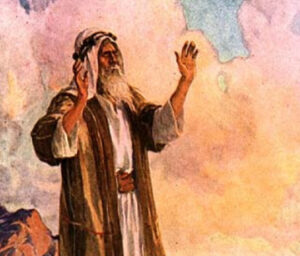
Figure 1 – Moses protested his calling to lead based on his difficulty speaking.
Do you see it? That is, do you see Moses’ low view of his own speaking abilities? In his own words he was not eloquent. No. Instead he had some problem speaking that made his oration slow in delivery and perhaps pronunciation. Did he stammer? Whatever the problem was, in light of the help he had, it was actually not a problem. In the moment and as needed God would enable Moses to speak. His mouth was aided by the indwelling Spirit in saying what the occasion required. This is God’s response of encouragement and about the help His servant would have in speaking:
Now therefore, go, and I will be with your mouth and teach you what you shall say. (Exodus 4:12, NKJV)
- The Power is Unbeatable (Isaiah 54:17) — Between 700 and 740 years before Christ, Isaiah the prophet will add some clarity to what God will do through to make his spokespersons effective. Isaiah says that dealing successfully with opposition in our response to attacks is our heritage; when the time comes, we do not back down from the difficulty or danger associated with declaring the truth. This will be played out in the text that follows. The weapons formed against Stephen will not prosper.
“No weapon formed against you shall prosper,
And every tongue which rises against you in judgment
You shall condemn.
This is the heritage of the servants of the Lord,
And their righteousness is from Me,”
Says the Lord. (Isaiah 54:17, NKJV)
Further, instead of being condemned, the man of God will speak cutting truth about his accusers (Acts 7:54).
- The Promise of In-the-Moment Provisions of Irresistible Speech (Luke 21:12-15) — Jesus prepared his disciples for the moments when they would need to give an answer to their adversaries. He told them that they would be put on trial for the benefit of His Person and program (Luke 21:12). Jesus said those trials will look, at first glance, like a day of triumph for the enemy. However, it will be your opportunity! The Son of Man says, in effect, “What the devil would use as a time to demean you and discourage you will become a singular time of telling them the truth about who I am” (Luke 21:13); “The setback of being made to stand before your accusers will actually be a setup for you to stand for the Truth” (John 14:6).
What do we do with this? We are not far enough through the narrative of what happens to Stephen to say. Not enough of Luke’s account of the trial of Stephen has been considered. We need more to know how to operate in our day to face opposition? But here are some questions that will help us to think deeply about the text and God’s reasons for wanting us to be filled with the Spirit.
Questions for Group Discussion
- What is the purpose of exceptional or supernatural work in the life of a believer?
- Am I ever guilty of taking credit for what God is doing through me for His own purposes?
- What would God have me do with the attention garnered through great work?
- Am I preparing to use the platform occasioned by good performance to proclaim the truth about Jesus? Things that can help me to prepare for questions are (1) a time to pray for understanding, (2) a reading plan, and (3) study aimed at learning to explain the truth to others (Ezra 7:10).
- Do I regard the company of God as sufficient equipping for everything I will face (Joshua 1:9; Matthew 28:20)? In what ways do I discount the value of God’s help? How could I be more positive about the provisions of God (Luke 21:12-15; Philippians 4:8)?
Note: The featured image for this post is of a friend and mentor — Pastor Dave Smith. One thing that Dave has taught me about being effective as a speaker is the importance of reviewing the entire message a few times before presenting. In the photo it is Sunday, 21 March 2021 and Pastor Dave is guest speaking at Communion Chapel.